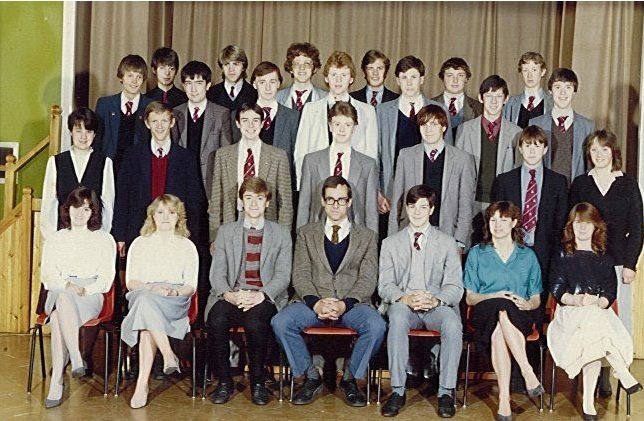
The headmaster at Lewes Grammar at the time was Roy Mead. He was a very authoritarian figure and ran the school how he saw fit. It was a small school and still is. There were only two forms per year with each form taking about 14 boys. It had a junior department on the other side of town and a girls’ school just a few doors down on the High Street. There had been a boys’ grammar school on this site since 1714. The school was founded in 1512 at Southover near Lewes. Lewes is the county town of East Sussex and is surrounded by the South Downs, the chalky hills that run parallel to the south coast.
I joined in the summer term of 1979 aged 12 years old. I was very shy and didn’t make friends easily. I was collected with about twelve other boys in a minibus driven by one of the teachers. I was so shy that at first, I waited in my mother’s canary yellow Ford Escort Estate for the minibus to arrive at my pick-up point near St. Johns Park a short walk from home. I’d had an extended Easter holiday because I had left my father’s house at the end of March where I had been living with my two brothers. I returned to live with my mother and stepfather of my own volition because I was being emotionally abused at my father’s house. The first day at my new school was on 8th May, being the day before Margaret Thatcher’s new parliament assembled for the first time. I had not spent much time with my mother in the preceding twelve months and I was upset and homesick for the first week or so. I fought back tears each morning before lessons started.
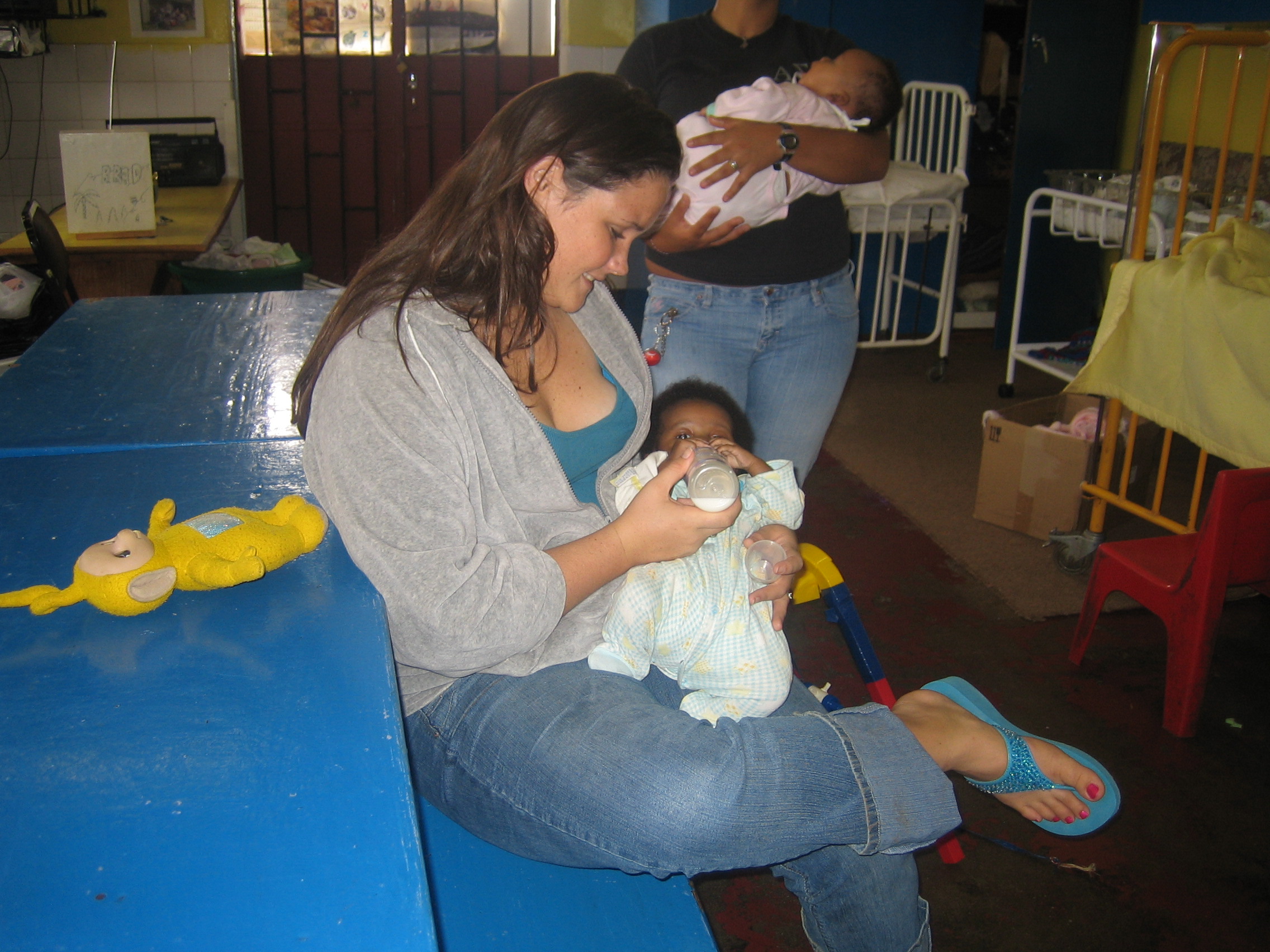
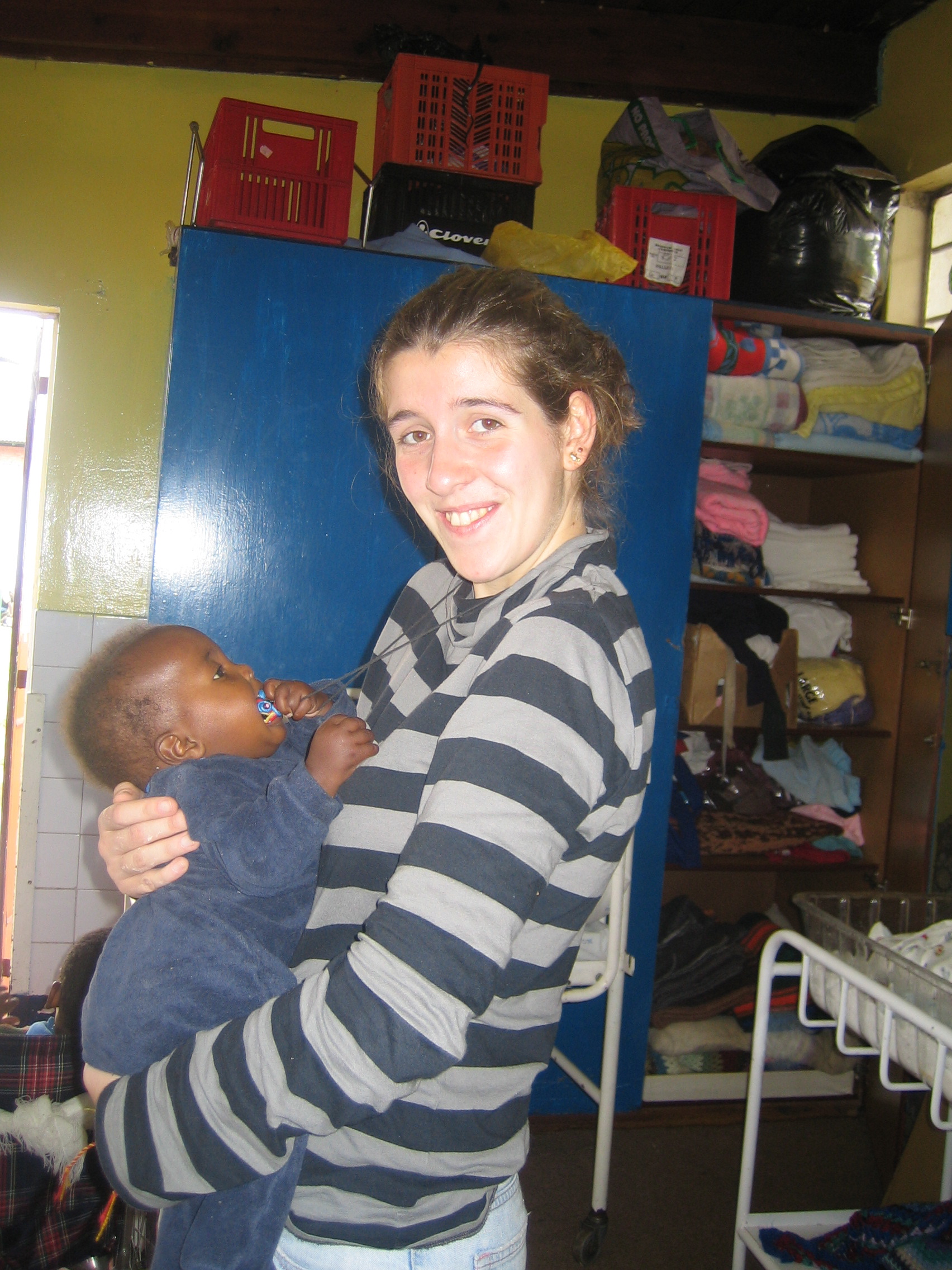
In 2006, I was living and working in Swaziland. I was teaching mathematics and science at a well-known school in the capital city, Mbabane. I also helped out with a community service project which fifth and sixth forms were involved in. At Mbabane General Hospital on the children’s ward, Ward 8, was a single room where abandoned babies, handicapped children and young adults were housed. There was a row of cots, a table and benches and a television in a metal cage that was left on permanently during the day. I took the school children down to the hospital on a Friday afternoon in a minibus and we usually took the residents of the ward to Coronation Park to play. These children weren’t sick for the most part but desperately in need of human interaction.
There is only one government children’s home in Swaziland, a country with tens of thousands of orphans. It does not take handicapped children. There are several private orphanages funded by evangelical Christian churches as well as organisations such as SOS Children’s Village and these do a great job. However there are not enough of them.
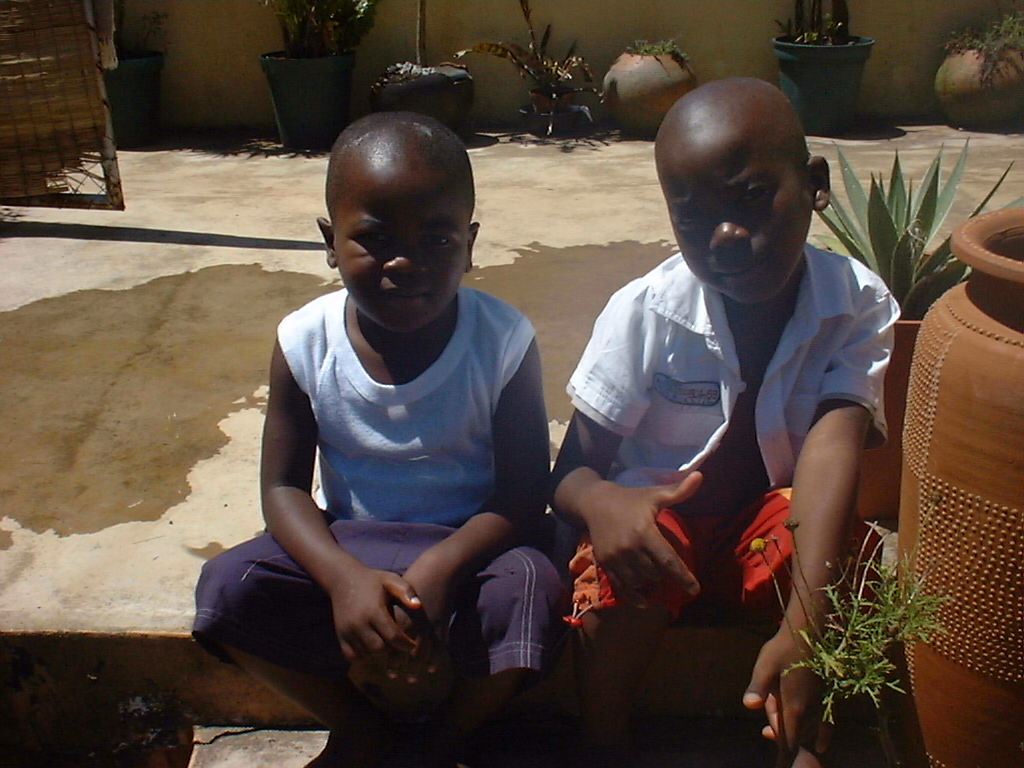
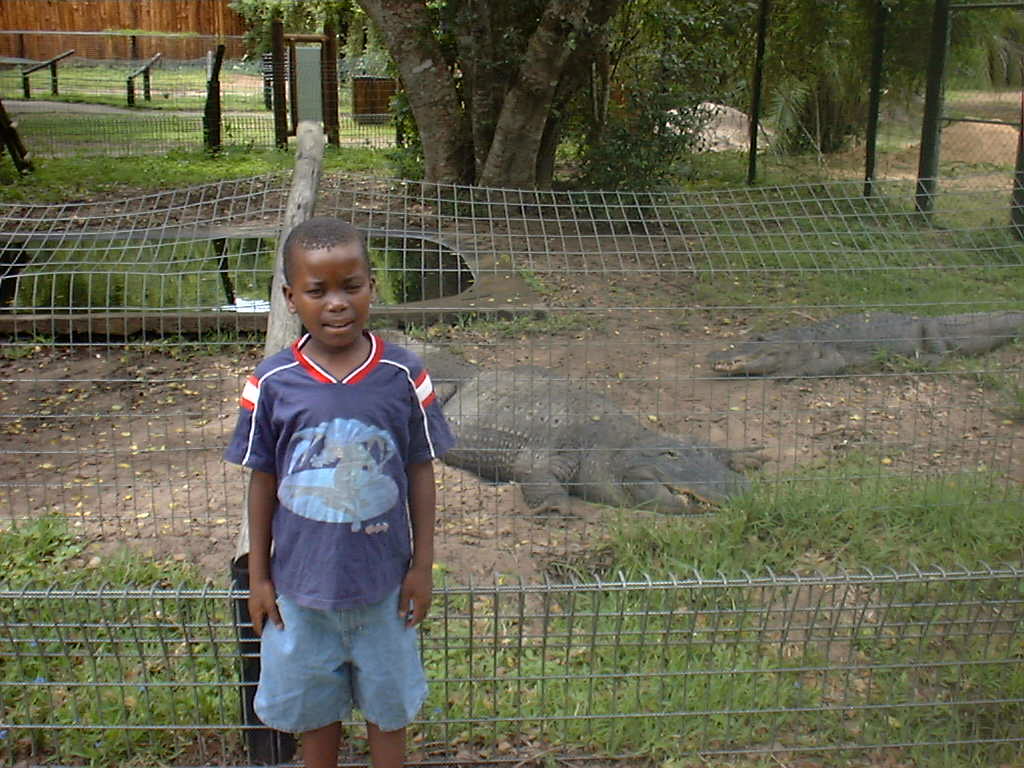
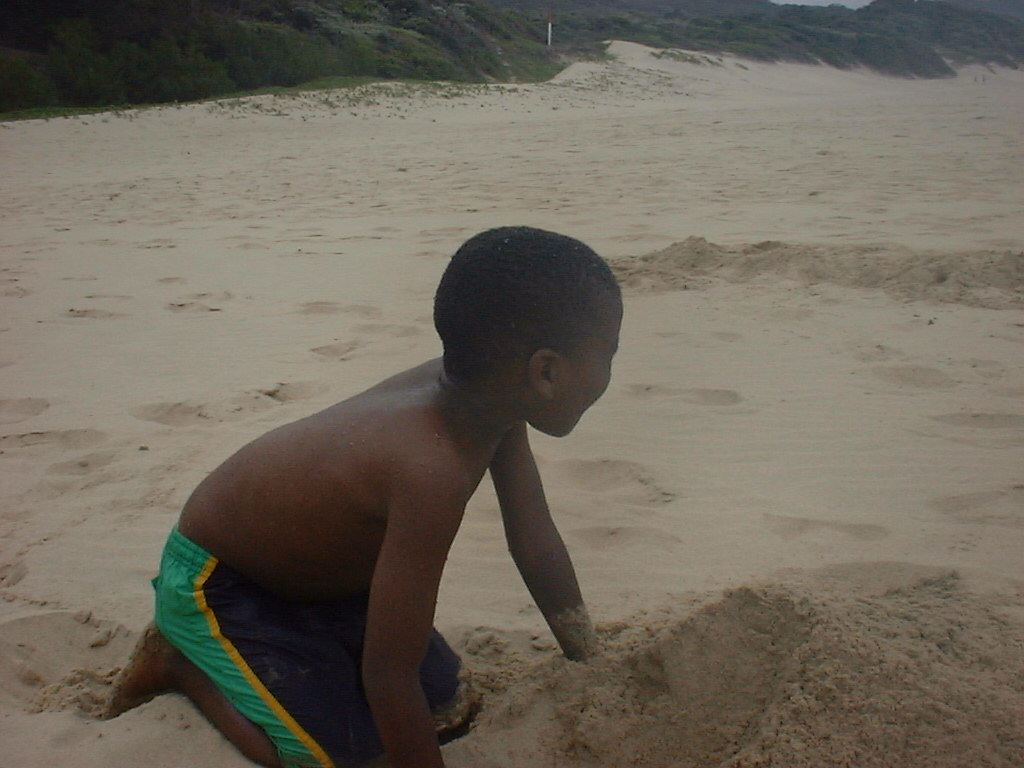
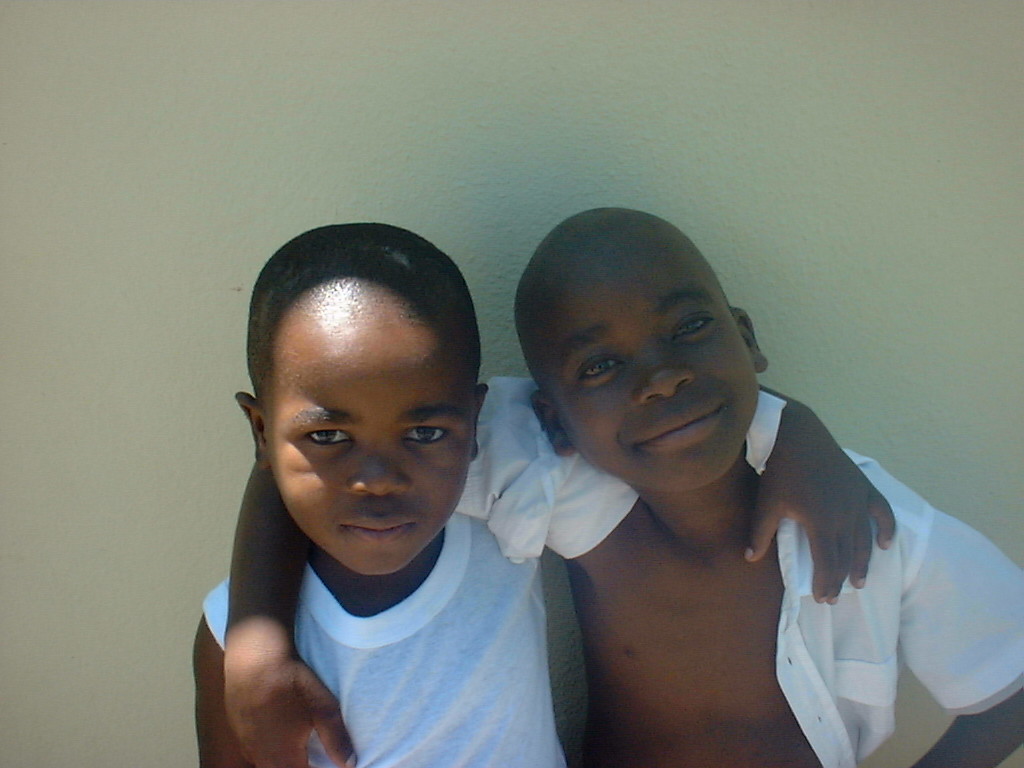
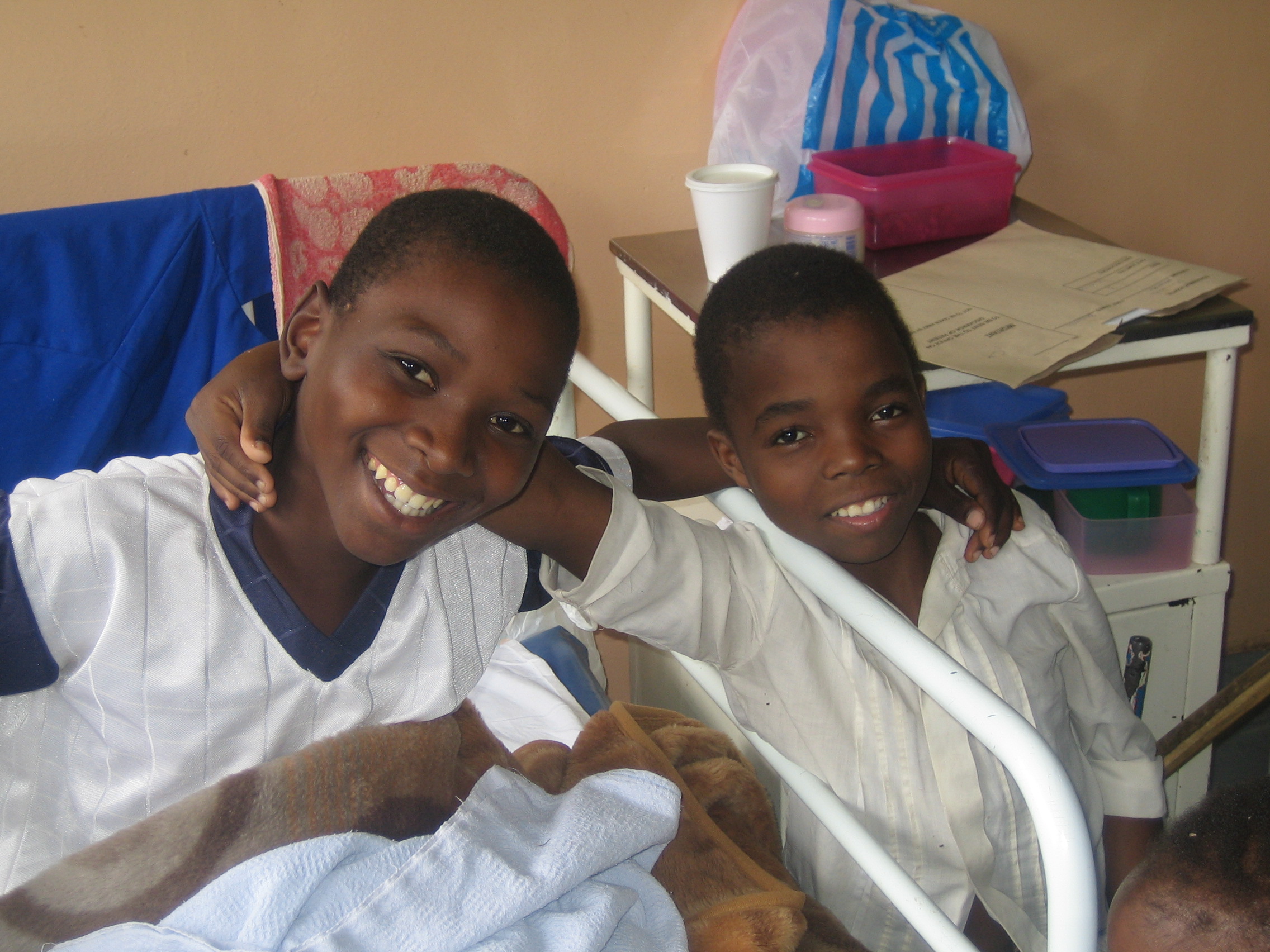
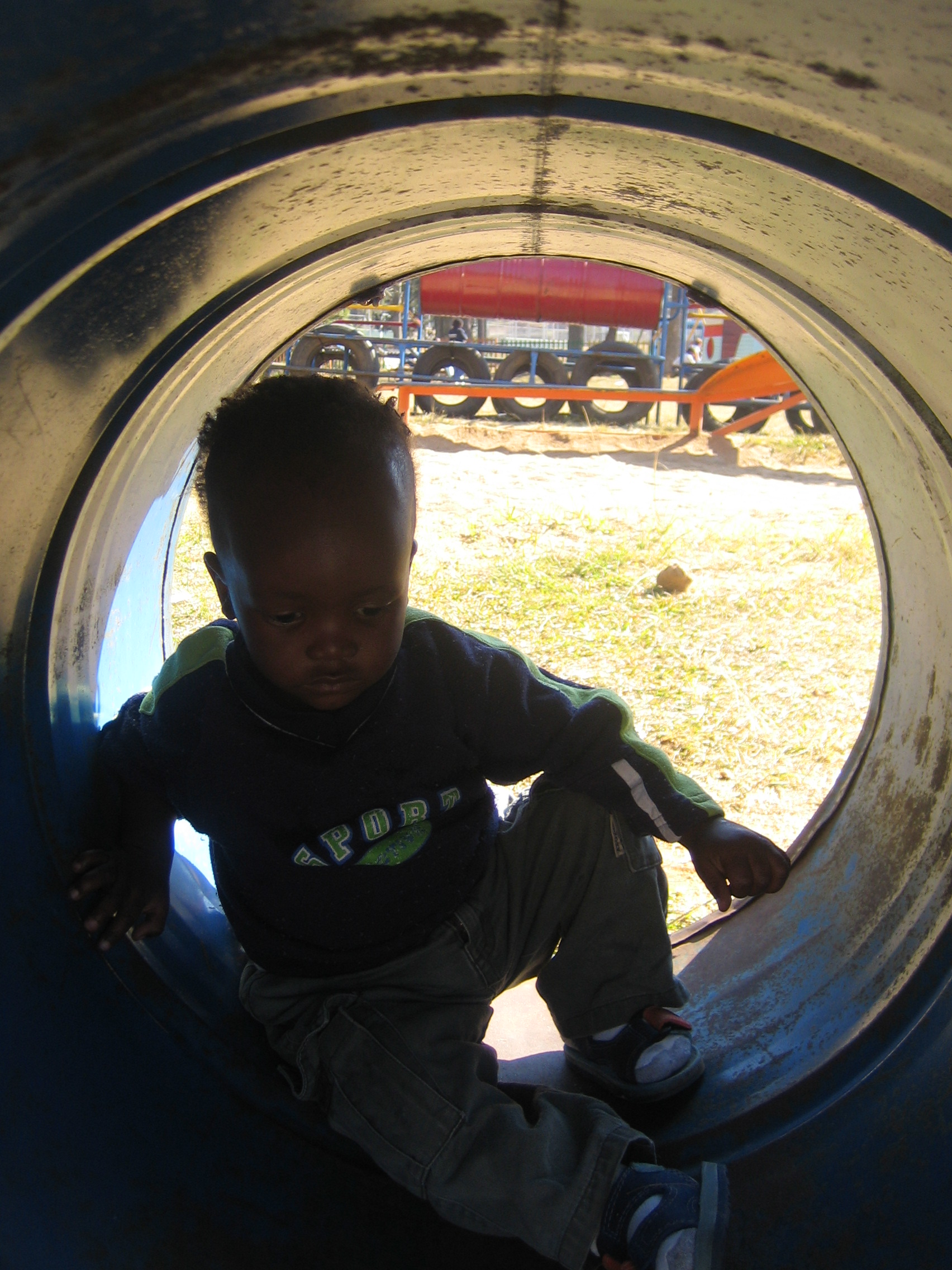
The young boy pictured above in all eight photographs was one such child and had been left at Ward 8 for almost two years with little contact from his family after he was orphaned in 2004. I found out a little about him. He always seemed lively and curious however it was obvious that he suffered from ill-health.
I knew that the future was bleak for him if I did not do something. Another teacher at the school had recently adopted a baby from the same place and so I thought why shouldn’t I do the same. I made arrangements to foster the boy as well as another boy who was in the same situation. So started a long journey.
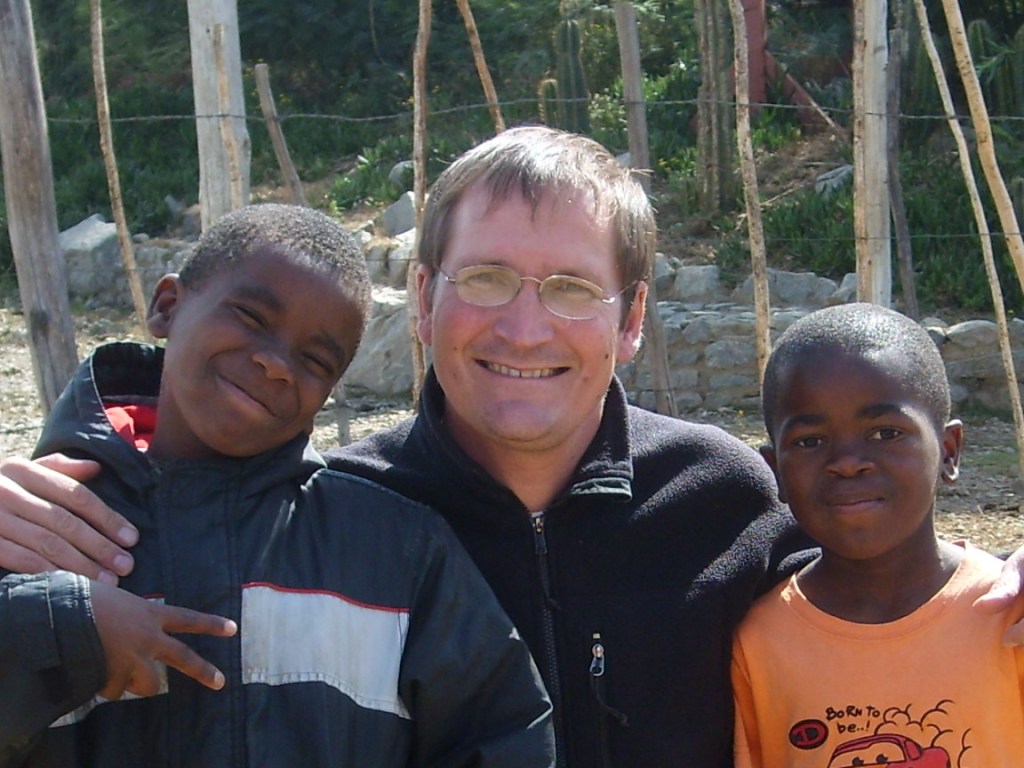
I asked about the possibility of fostering at the hospital and they were happy for me to take the two boys home for the weekend. I did so. I very quickly realised that I would like this to become a permanent arrangement. Arrangements were made for me to visit the offices of Social Welfare. A very kindly lady called Babazile Sigwane was my social worker. After a couple of visits with her, she suggested that I go for adoption. I would not have done this had I not known that I could get British citizenship for my adoptees. I looked into this and as I was resident in Swaziland at the time, the adoption was the responsibility of the local authorities. Swaziland and the UK recognise each other’s adoptions and so after I adopted Sikhumbuzo as he was then known, I applied for British citizenship at the British High Commission in Pretoria in early 2007. The smaller boy in the top set of pictures had a more complicated situation. His father’s location was unknown and he had been physically abused by his step-mother. He had an open wound on his head that was healing when he was with me. He grew very attached to me and it was very sad that I was told that it would not be possible to adopt him. I tried my hardest but it was not allowed. The reason stated to me was that the father could not be located however it had been over six months since he had had any familiar contact so I think this was not a valid reason.
So I adopted my son in December 2006. In June, we left Swaziland for the UK. I had already secured a new job in central Europe due to start that September but in the meantime, we spent the summer in England staying at my mother’s place. In August, we both moved to Bratislava in the Slovak Republic where we remained for four years. My son attended the same school as I worked at. In 2008, I bought a house and things were looking good.
There was a happy ending to what happened to the other boy I could not adopt because he did find a place at the Lighthouse children’s home. It is a very well-run orphanage with a system of house mothers who are responsible for a small number of children. It is a very caring environment and the children grow up in a family atmosphere. I send regular parcels of clothes and books to him there and keep in touch.
What I couldn’t understand about the situation at Ward 8 was the fact that the nurses seemed so apathetic and disinterested. A lot of toys had been supplied and were stuffed into a cupboard and never taken out. The walls were bare. Food was very basic and the older children slept on old mattresses on the floor with no-one to ensure their safety at night. There was a playground at the back of the hospital just behind the room which housed these children and the grass was overgrown. Our plan at the start of the project was to cut the grass and paint the swings and slides so that they could be used. But this was discouraged as the nurses wanted us to take the babies off their hands in the afternoon.
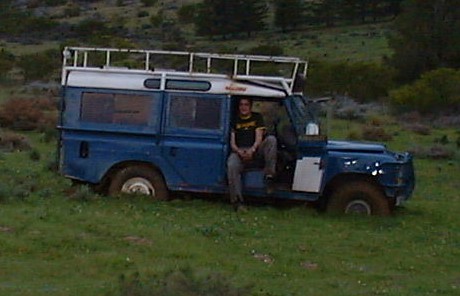
In July and August of 2001, I drove from Bulawayo to Cape Town and back in a friend’s old 1960s Land Rover passing through Botswana on the way. My mate Tim Cherry had bought it from new, but it had seen better days. A worker employed by Mike Barry’s father was unwell with a heart condition and I was asked if I could help take him down to the family’s farm at Tulbagh, about 100 miles north of Cape Town, where he could get better treatment. We left Bulawayo and headed out towards Plumtree on the Botswana border, but not before spending several days trying to get the old Land Rover roadworthy. I had been told by the owner that it was serviceable, but this was far from the truth. It would not start, had a flat spare, almost bald tyres, brake lights that did not work as well as poor brakes. The rear fuel tank leaked, the fuel pump was on the blink, the electrics were decidedly dodgy, and you could see the road through a big hole in the floor. The windscreen wipers did not work either.
Once we got the worst of the problems fixed, it took several days to drive down to Tulbagh and we ran out of diesel a few times. The fuel gauges did not work, and we did not realise at the time, but fuel was draining from the rear tank. We slept in the vehicle on the way down. In figures 25 and 26 we see Maurice and Mike about to pull our Land Rover out of the mud with a tractor on their farm in the hills surrounding Tulbagh. The farm had extensive vineyards and a beautiful old farmhouse in the Cape Dutch style. The little town of Tulbagh had some fine cafes where you could sample the delights of milk tart, an Afrikaans speciality.
The Land Rover gave us a lot of trouble along the way. The battery went flat and wouldn’t charge, fuel leaked, and we often had to bump-start it. An electrical fire started in the dashboard. I spent a lot of money on repairs. Rachel and Mike were trying to make a success of a bed and breakfast business they were running. I heard later that Maurice died of a heart attack some weeks after we left Tulbagh for Cape Town. It was very sad.
Mike and Rachel had a turbulent relationship. Mike was a mechanic by trade and very skilled at fixing cars, trucks and tractors. I visited them both in early 1998 with my current partner Leonard who was from Cape Town. Rachel was very histrionic and went barmy when we stripped off and swam in the dam. She used to scream like a banshee at the farm workers and complained if Mike used one teabag per cup. Her driving was terrifying and she paid little attention to traffic lights. She was very erratic. The business was not exactly a success because they were quite a long way outside Tulbagh itself. Rachel had the daft idea of calling the guesthouse The Duck Pond. Nontando and I were among the first guests to stay. However, after a few days, Rachel turned around and said that she wanted us to contribute to our stay. I had been buying food, cooking and paying for wine. Whenever Mike had more than a couple of glasses, Rachel went into full banshee mode. She was like a fishwife when she got going. I told Nontando that I was leaving and did not say goodbye to Rachel, I was that annoyed.
Rachel and Mike subsequently married and had a daughter despite Mike’s numerous affairs and infidelities. Some years later, I heard from Nontando that Mike had committed suicide in Bulawayo after Rachel had returned to the UK and told him that he would never see his daughter again. He had gassed himself inside his car. It was a tragedy.
After Tulbagh, we drove along the garden route stopping at Cape Town, Stellenbosch, Plettenberg Bay, Tsitsikamma National Park, Port Elizabeth and Coffee Bay finishing up at Durban. After this, we visited Pietermaritzburg where I started a skydiving course which was cut short when I badly twisted my ankle. Travelling with Nontando was not without its difficulties. She tended to wander off with Andy after she woke up in the morning when we were camping and not come back for hours. This was very frustrating. When we stopped by the side of a main road to check the Land Rover, she let Andy, who was three years old, wander unsupervised in the road.
My first job working overseas was in 1996 with Voluntary Service Overseas (VSO). I was recruited to teach mathematics and physics in Zimbabwe’s second city Bulawayo. I had done a little travelling up till then and had spent a month in South Africa two years previously. I had gone out to visit Jack who lived there at the time. I liked the wide-open spaces and the excitement of discovery. Although I was in my late twenties, I was still discovering who I was. I had been interested in working overseas for some time.
I travelled out on a British Airways flight to Harare with overweight bags one day in early January 1996. I had little idea what Africa in general and Zimbabwe, in particular, would mean to me in time. The induction training lasted about three weeks and was located at a development centre called Silveira House[1] about 20 km to the east of Harare. We received some language and cultural training and got to meet the other volunteers. They were a mixed bunch and all in their early twenties. Most had been recruited as teachers. There was a shortage of maths and science teachers in the country at the time. It had been only sixteen years since independence and Zimbabwe had an impressive literacy rate compared to neighbouring countries. The only dark stain was a less than glorious human rights record, notably the retribution against ZAPU in 1983 lead by the North Korean trained Fifth Brigade[2] which lead to massacres and appalling atrocities against civilians in Matabeleland, who were seen as opposing the leadership of Robert Mugabe.
I started teaching at the school to which I was posted in early February 1996. It was called Mzilikazi High School and the headmaster was Mr Cuthbert Chiromo. For the first few weeks, I stayed with an elderly white couple, the Pagets, in a suburb (called Suburbs) about two kilometres to the south of the city centre. I lived in a granny annexe attached to the house and ate my meals with them. I was not allowed to use the kitchen and had to ask if I wanted anything. I used to get a lift to town every morning with Mr Paget and walk the rest of the way to school. Mr Paget had a maid and her family staying at the back of their house. He used to give his maid’s children a lift to school. I never forget how he used to yell for them at the top of his voice when he was ready to go. My school was on the opposite side of town, near Mpilo Hospital. At first, I walked back home but after I developed heat stroke one day, I decided that this wasn’t such a great idea so I would take a taxi. Now, a taxi doesn’t mean the same as what you are probably thinking. It meant sharing the cramped back of a Ford Escort Estate or something similar with perhaps seven others. And cost Z$2.00 or 20p.
My teaching was split between A-level mathematics and physics. The equipment was extremely limited, but we made do. The school laboratories had at one time been well-equipped and the detritus of old and broken lab equipment cluttered the cupboards. I also taught a top set maths class of fourteen-year-olds. I had no prior teaching experience and was comfortably naive in my lack of appreciation of the difficulties in teaching generally. All the volunteer teachers had been sent on a short training course in the UK and mine had been a week or so based at a school in Abingdon as I was living in Oxford at the time that I was recruited.
The classrooms were bare and dusty. I used to buy my own chalk because the chalk provided by the school was of such poor quality. The days were long. I taught one class in the lower school, which operated on an alternating biweekly timetable running from 7.30 to 12.30 on one week and 12.30 to 5.30 the next. This system was called ‘hot-seating’ and ensured that all children of secondary school age had a place. The A-level classes had a weekly timetable.
The headmaster ran the place with an iron rod and corporal punishment was in use. The students were petrified of him as were the staff because he held a lot of power over them. He was hardly ever seen in the staff room. He had his morning tea brought to him in his office, which had an electric heater on during the winter months. His desk was orderly. Anxious parents who could not afford to pay the school fees lined up outside his office for an audience. With me, he faked an air of false conviviality. The deputy head, on the other hand, wore torn shirts, had a ramshackle office with stacks of disordered papers on his desk and had a drink problem.
A fellow teacher called Claire taught Biology. Claire was from Hull and liked everyone to know it. She was very opinionated and got very annoyed if you contradicted her. She told me that she was having problems with a group of fifth form boys and had complained to the headmaster when she felt that she could not deal with it anymore. The headmaster called her in with the boys concerned and beat them in front of her. He then made them crawl on their hands and knees and apologise to her. She wanted to leave the room when he said that he was going to beat them, but he would not let her. She spoke to the boys afterwards and said that she had no idea that they would be beaten and humiliated in that fashion. They said that it was alright, and they did not mind.
There are a lot of misconceptions about living in ‘Africa’. A friend of mine wanted me to give him my best pullover because he thought that I wouldn’t need it, after all, Africa is always hot. What got me first was the climate. Bulawayo, like Johannesburg, is on a plateau. The sun can burn all year round. In winter, the temperature at night-time can drop to a few degrees Celsius but it does not feel that cold because the air is so dry. In the summertime, there are many thunderstorms. By mid-afternoon, there is usually a downpour. This clears the air and is very welcome.
When I moved to Zimbabwe, the economy was doing relatively fine. There were about ten Zimbabwe dollars to the pound. There was plenty of food in the shops. Of course, there were poor people and beggars in the streets, often looking filthy dirty and emaciated. But most people had enough to eat and transport was affordable. As an expatriate, Zimbabwe was very cheap. Soon after starting work at Mzilikazi High School, the government doubled the salary for teachers. I was earning enough to support myself and go on holidays to neighbouring countries so long as I was careful. There was a good health-care scheme. Medication was subsidised and to see a doctor was free. Bulawayo had a range of good cafes and shops that seemed a throw-back to the fifties. Haddon and Sly was a classic example. The shop displays were very old-fashioned.
Skies
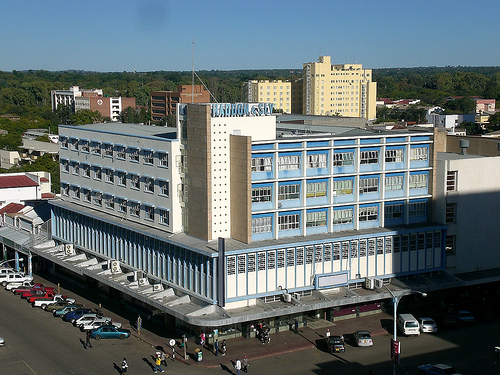
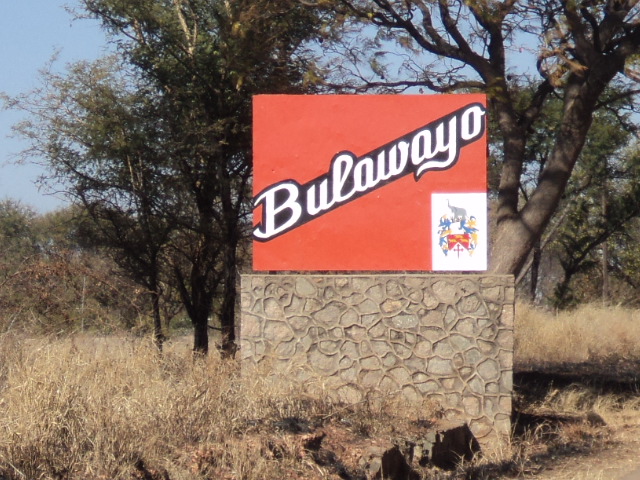
Figure 1 Bulawayo.
Haddon and Sly was an old-fashioned department store, and it was like walking around Woolworths in the 60s. It had a popular café upstairs, but the service could be unbelievably slow. Last time I visited in 2013, it had been divided up into tiny units and was unrecognisable. The window displays were from another era.
You could buy luxury goods such as olives, imported beer and so forth if you looked. There were good locally grown coffees and vegetables could be bought for very little at the market on Fourth Street. To get about town, we would catch a Rixi Taxi. It cost just a few dollars to ride a couple of miles from the big supermarket where we did most of our shopping back to Parkview. Some of the taxis were very dilapidated. Once, when my mother and stepfather were visiting, we caught a taxi that had a problem with the accelerator cable. The driver had connected a piece of string from the carburettor and controlled the engine speed by pulling on it. The string passed through the driver’s window.
After a few months, I began sharing a house in Parkview with three other volunteers, one Australian and two British people. The Australian lady worked as a physiotherapist at Mpilo Hospital. One was the biology teacher Claire at my school whom I mention above. Stephen was a qualified teacher from Bristol. He was a very entertaining and outgoing man with a very wide range of interests including sculpture, and not a VSO volunteer but the boyfriend of one called Nita who taught near Gokwe. He taught at Evelyn Girl’s School and said that the staff were snobby and complained if he did not wear his tie properly. He suffered from low blood pressure and had to wear it loosely. He was rather eccentric and unconventional. There was a big public swimming pool on Samuel Parirenyatwa Street where we went in the summer months. Stephen used to swim up and down in a snorkel and fins. I never really worked out why.
Claire and I weren’t the only white teachers at my school. There was Siân who was Welsh and married to a Zimbabwean man in the military and a Russian lady, also married to a Zimbabwean, who rarely spoke to us. Both were in the science department. Tea was served daily in the staffroom, without milk. If you wanted milk, you had to bring your own. Some samosas could be bought from a nearby shop but sometimes they were so salty that they were almost inedible.
Most of the VSO volunteers in Zimbabwe at that time were employed as unqualified teacher. There was a shortage of teachers at that time partly due to the low salary. Shortly after I arrived, the salary was significantly increased. VSO mostly recruited to the rural areas where teaching staff were hardest to retain. Headmasters had a lot of control over their staff. They could recommend to the Ministry of Education that a teacher be moved to another school. This sometimes happened as a form of punishment. For example, a French teacher who dared to speak out during a meeting where the headmaster and officials from the Ministry of Education were present said that there was a shortage of furniture and what was going to be done about it. He was moved to a rural school as a result of that.
I bought a bicycle and rode to school each day. It was about three kilometres away. I had wicker furniture hand-made for my room. I listened to the World Service, ordered the Guardian Weekly by airmail and enjoyed the peace and quiet at weekends. It was a quiet suburb except when the buses to Harare topped nearby on the Harare Road and I could hear the calls and whistling of the conductors touting for customers.
Our landlord was Tim Cherry. Tim had emigrated to Rhodesia in the 1960s to join the British South African Police when he was still a teenager. He studied law, joined the Air Wing of the Rhodesian Army during the bush war in the seventies and has lived there ever since. Tim had a lady friend called Nontando. She knew many of the VSO volunteers and helped us settle into the country. She joined us for many of our outings to nearby Matopos National Park. In 1998, she had a child with Tim. I have kept in touch with Tim and Nontando ever since.
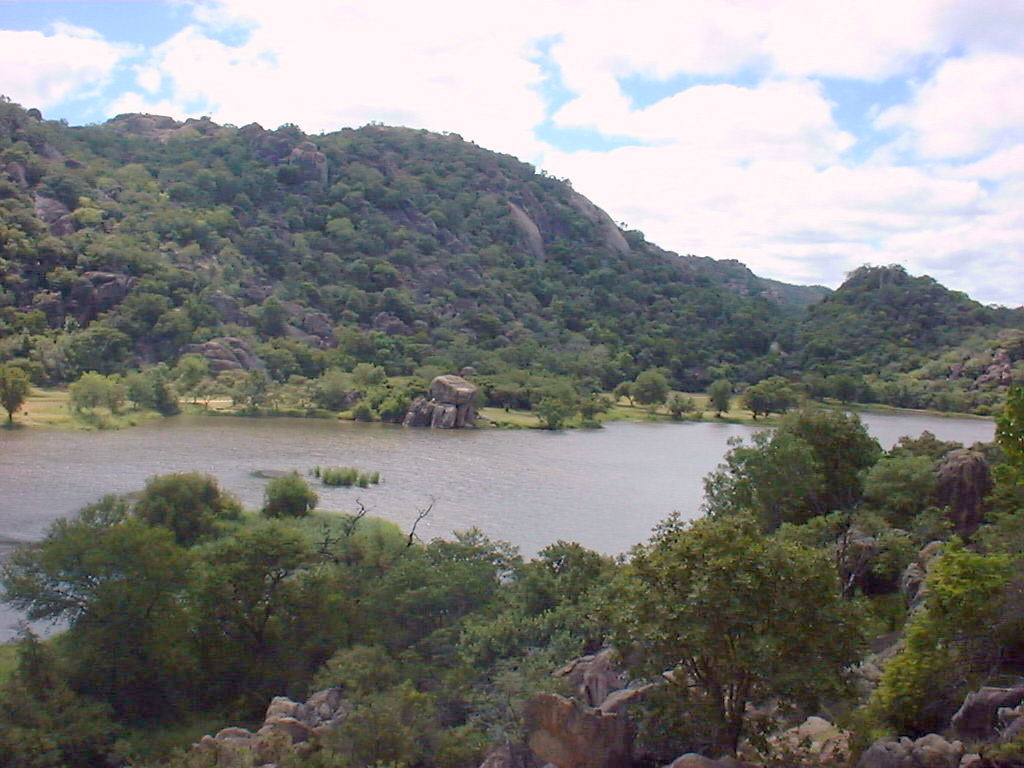
Matopos National Park is a favourite place of mine. It is a national park in the granite hills about 40 km to the south of Bulawayo famous for its balancing rocks. There are lodges near Maleme Dam which we used to go and stay at. As residents, we got a great deal and they were kitted out with a fridge, electric cooker and running water as well as proper beds and furniture. There are cave paintings and beautiful scenic walks, warthogs, hippos and fish eagles. The fish eagle makes a characteristic squawk – one long rising call followed by four shorter descending tones. It’s a very eerie and haunting sound. It is not possible to swim in the lake because of the risk of contracting bilharzia.
Figure 2 Maleme Dam in Matopos National Park.
I once camped with friends Rachel and Mike next to Toghwana Dam, another lake in the Matopos to the east. Mike had an African drum which we were playing. It attracted a hippo which did not take too kindly being disturbed. We had our tents pitched on open ground next to the lake. Before we went to sleep, we decided to put the tents up on the rocks nearby, which was a good decision because in the night the hippo came out of the water and trampled the area where we had been. It was a lucky escape. A young German doctor was visiting a little while later whom we took to Matopos and he refused to believe it.
I met Dr Willy Legg in the first few months of my time in Zimbabwe. Dr Legg worked at the hospital at Gwanda, spoke fluent unaccented Ndebele and was openly gay. I met him through Bugles, the Bulawayo Gay and Lesbian Society. Willy Legg was rather overweight, and in his fifties when I first met him. I stayed at his house in Gwanda on a couple of occasions and we did have a brief fling, but this did not last long. He was into Hinduism and could make chapatis from scratch. He had lived in Zimbabwe all his life and had a typical ‘Rhodie’ accent. He showed me Khame Ruins, Gwanda and beautiful places I would not have found otherwise.
Most teachers taught by rote. Students took examinations in the third year of their secondary education which were set locally. The mathematics examinations were ridiculously hard for such an age-group and I don’t know what they hoped to achieve by this. Students set O-levels in the fifth year which were set by examination boards in the UK however this changed a few years later. We had a visit from an Education Officer from the Ministry of Education during my stay. He observed some lessons. He bragged that all his students passed with A-grades and we could do the same. It was patently not true as no school in the country ever achieved such results, especially when many kids came to school hungry. It was common for girls to faint from hunger. But this made no difference to him and he lectured us. Claire from Hull challenged him on this and got annoyed with me and the other teachers that I would not do the same. But when someone is in a position of authority like that in Africa, you do not challenge them. Certainly, no black teacher could get away with that.
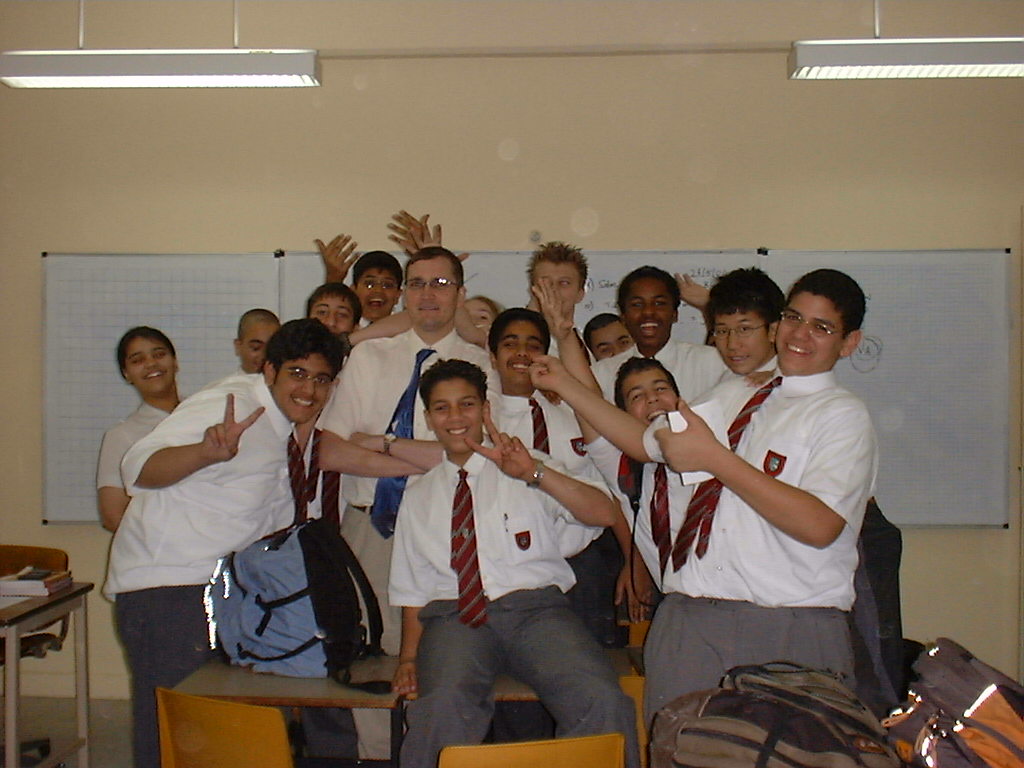
My A-level maths class in 1997
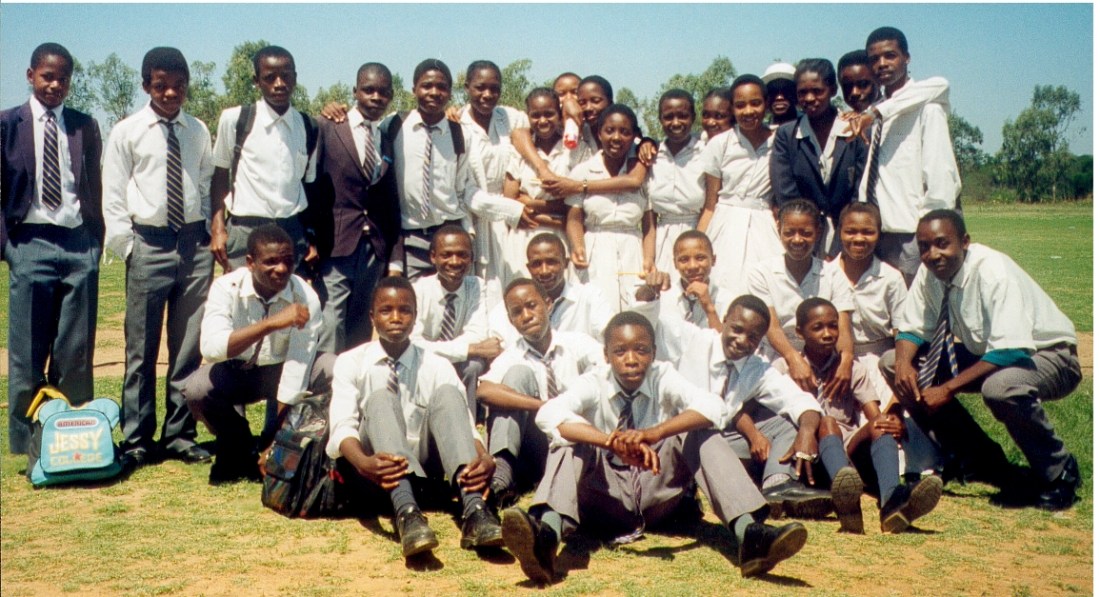
Figure 3 My fourth-year maths class at Mzilikazi.
Discipline was poor but punishment was harsh. Boys could be beaten with a cane by any teacher although it was only supposed to be the headmaster who did this. During assembly once, which was held outside due to the lack of space, some boys at the back of the crowd began throwing stones towards the front. There was little that even the headmaster could do because if he had yelled and shouted, he would have lost face.
Once, a girl of about fourteen in my maths class asked me if I could help her with something. She then began describing how she had certain personal medical issues, and could I help. I realised what the misunderstanding was. I was known as Dr Evans because of my PhD and she thought I was a medical doctor.
Figure 4 Faye Letts on the left before she left for Rhodesia.
Faye Letts, pictured here on the left before she left England for what was then Southern Rhodesia, was the librarian at Mzilikazi High School. When I joined the school, she was already in her sixties but had been living in Zimbabwe for over forty years. She was plump, about five feet five inches tall and looked about ten years older than her years. She played the piano at assemblies, which were held once a week in a draughty hall, and I think she also gave religious instruction. She was a lay preacher for the Methodist church and very devout and eccentric. She was originally from Benfleet in Essex.
She used to threaten the children with a stick, and they enjoyed provoking her. She drove a white Datsun Cherry to school and lived in a small apartment on the northern side of town. She could best be described as idiosyncratic. In searching the internet, I came across this announcement of her passing in February 2003 in the Zimbabwe University Libraries Consortium newsletter.
“She was born in 1937, trained as a teacher in the UK. She taught at Oriel Girls High in the early 1950s and then came to Mzilikazi High School, Bulawayo in 1971 where she was a teacher-librarian. She was one member of the association who always gave us ideas as to how we should run the Branch.”
The majority of VSO volunteers in Zimbabwe were in their twenties and were mostly a heavy-drinking lot who seemed to think they were on an 18-30 holiday to quote the VSO Field Officer of the time, Jane Adisu. I remember hearing about some of the exploits such as sleeping with prostitutes (despite the warnings about HIV). One fellow VSO teacher related how he had got drunk with another teacher at his rural school and found a half-eaten mouse fried mouse in his pocket the following day.
I visited a volunteer called Claire (not the same Claire I shared with) who taught at a small rural settlement 120 km south of Bulawayo. I visited her one weekend and took two buses to reach her. The volunteers in the Bulawayo area and further afield used to frequently come and stay for the weekend. I also visited Stephen’s girlfriend Nita, who taught at a school near Gokwe. It was a long journey to reach her school from Bulawayo, being 430 km from the city. My friend Tim Cherry was flying that weekend and he took me up to Kwekwe then I caught a bus to Gokwe and on to her school at Mateta. The settlement had no electricity and water came from a handpump. At night, the stars were spectacular. We went for a drink at the local bar and got very strange looks from the locals who did not expect to see so many white faces. I was glad to be living in the city as I think I would have been bored living in a rural settlement.
In Bulawayo, on the weekends, I went for coffee and cake at the National Gallery on Main Street or Haddon and Sly department store, and for a while, I hung out with some white Zimbabweans I had met. They all drank far too much. We socialised at a bar opposite the British Council near the Town Hall called The Terrace. The local beers were Bohlingers, Lion or Zambezi. They were very variable in quality. Shops closed at midday on Saturdays. Takeaways were available at Chicken Inn but were a little expensive on a teacher’s salary. Maureen was in charge of the British Council and was a useful contact. She tried to scare us by showing us horrific photographs of what AIDS could do to the body. We could also receive phone calls and use the computers there. I called home fairly regularly. It was possible to buy a phonecard, but the calls were expensive. I mostly wrote letters home.
It was known by the VSO volunteers that I was gay, and I was the target of some homophobic slurs by some of the male volunteers, behind my back of course, including from an Asian British VSO volunteer who was very quick to get angry when he heard racist comments from white Zimbabweans. There was a priest who taught at one of the boys’ schools in Bulawayo who I met through Faye Letts. He had the hots for me and kept on bothering me. This carried on for some time. This was unwanted attention. He invited me and a couple of the other VSO volunteers to his house one day and went on a racist rant about black Zimbabweans saying that they had barely come down from the trees when the white man arrived in Zimbabwe. One day, he was dropping me off at my house and his hand wandered onto my leg. He had been inviting himself over to my school on pretexts and so I write to him telling him that I did not want to see him again. I knew what he wanted, and I was not interested. It was not just that but his racism more than anything that bothered me. He gave me the creeps.
At the end of my second year in Zimbabwe, people in my house had returned to the UK and I was left on my own. I was finding it difficult on my own in the evenings, so I decided to tell the school that I was leaving once lessons were over and exams had started. They were not particularly happy especially since I had taken a bit of an extended holiday in August when, to fit in with the schedule of some friends who were returning to the UK, arranged with them to drive from Cape Town to Windhoek in Namibia and back to Zimbabwe via the Caprivi Strip. I arrived back at school several days late and made excuses that I had been ill. The truth was that I had been very ill with a chronic cough in Namibia, but the lateness was planned.
Bulawayo was quite a polluted city and I suffered from the dust and pollution at certain times of the year. I frequently had a bad cough, and this developed into a racking and debilitating cough if left untreated. I had symptom of asthma ever since I had lived in Oxford. I used to ask the kids not to sweep the classroom, which they liked to do at the beginning of a lesson, because it kicked up so much dust.
When I left Zimbabwe, I decided to spend a few weeks in South Africa. I flew down to Cape Town. Some of us VSO volunteers had met up in Cape Town previously and had a lovely time travelling along the Garden Route.
On a previous trip to Cape Town in 1996, I had hooked up with a coloured man by the name of Franklyn. We had spent some time together. I met his family and stayed over at his house. He behaved as though he was in the closet to his family. His parents hardly spoke to me and I felt that they knew what was going on. We were having sex in his bedroom which adjoined his parents’ room. It was very weird. He found me a place to stay with another gay friend of his in Bo-kaap, an area of Cape Town walking distance from the city centre and famous for its Muslim residents and unique architecture. I forget the name of the man I stayed with, but he was a skilled dressmaker and had clients visit for fittings. I was paying him rent and he did not turn out to be very friendly, expecting me to stay in my room when he had clients. It was when I was staying there, at the end of 1997, that my sister Emma came out to visit me. We hired a car and did a big tour of the Garden Route as far as Plettenberg Bay. It was on that trip I think that I discovered that Franklyn had been or was married and had a four-year-old child. I could not comprehend how someone could lead such a double existence.
I met Leonard at a café on Long Street after Christmas in December 1997. He was friendly and charming, about eight years older than me and from a Jewish family. He owned a house on Faure Street in Gardens. Leonard had a lot of well-connected friends, for example, the former mayor of Cape Town and a lesbian couple who ran the boats to and from Robben Island. We began seeing each other and visited Rachel and Mike on their farm at Tulbagh in January.
I stayed with Leonard from the end of December 1997. I applied for a job at a state school in Cape Town and was offered the position, but all depended on getting a work permit. We began looking into this but there was no guarantee that I would be able to secure a work permit based on my relationship.
Leonard’s family were wealthy, and he owned a lovely house in a desirable suburb of Cape Town called Gardens. Leonard was a complex character and kept a large part of his life secret from me, or so I felt. He was also liable to moods and somewhat irrational and unreasonable behaviour. We argued more and more, and I felt uneasy living with him. He took laudanum, which is a solution of opium in alcohol. When he did this, he could not be roused. This concerned me. I decided to go back to the UK but did not tell him that I would not be returning. This was not very brave of me, but I did not want to argue with him.
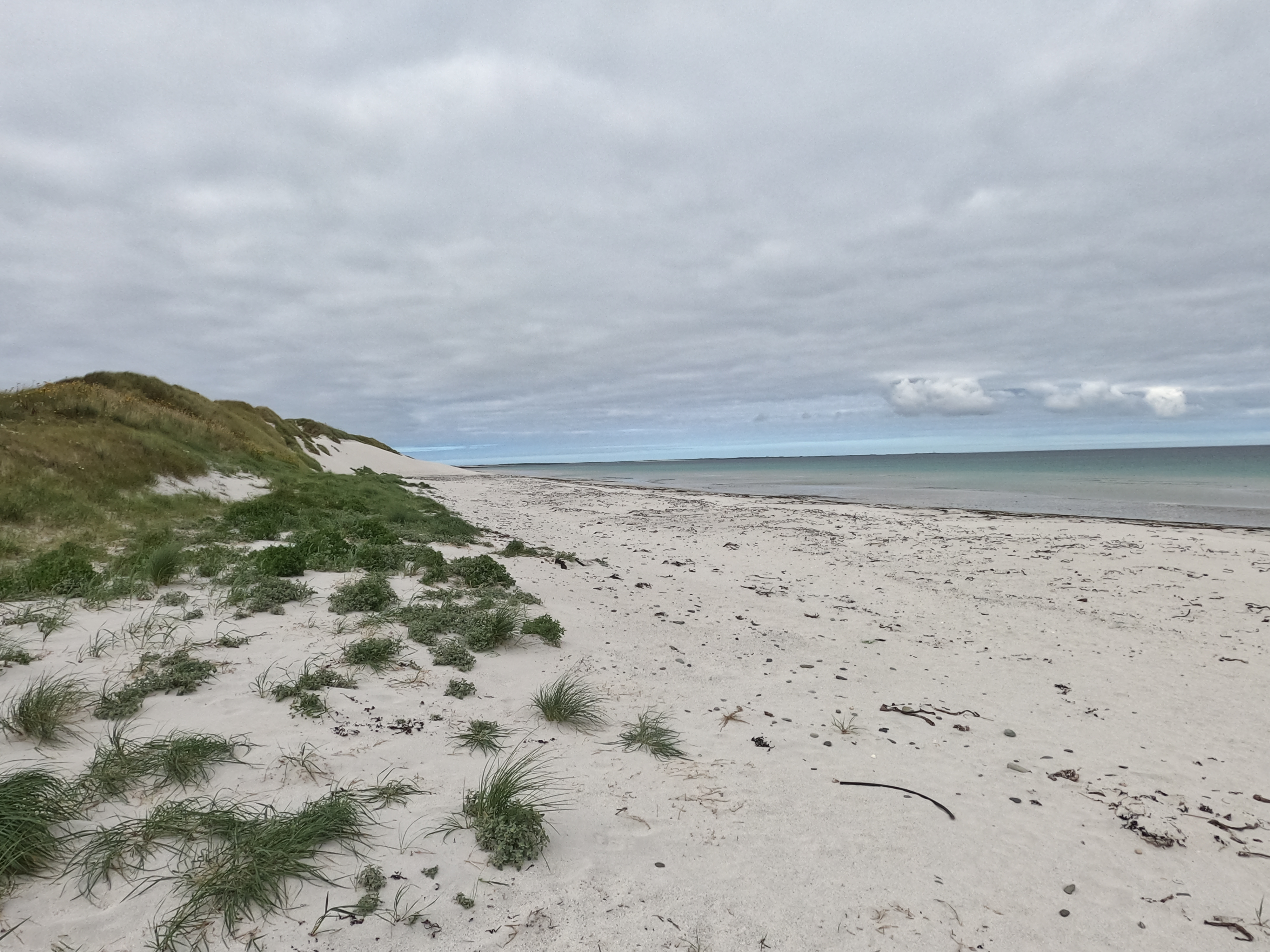
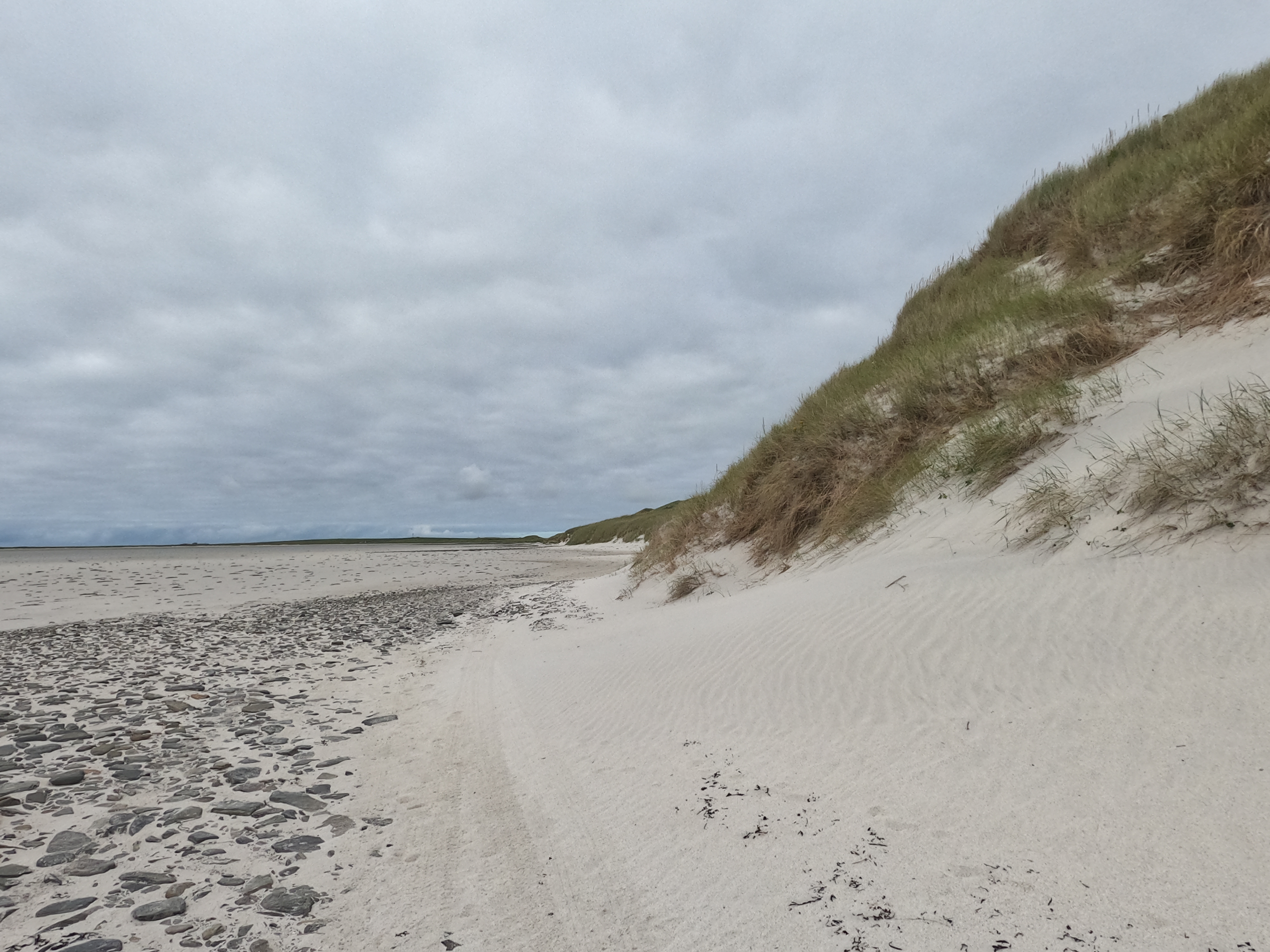
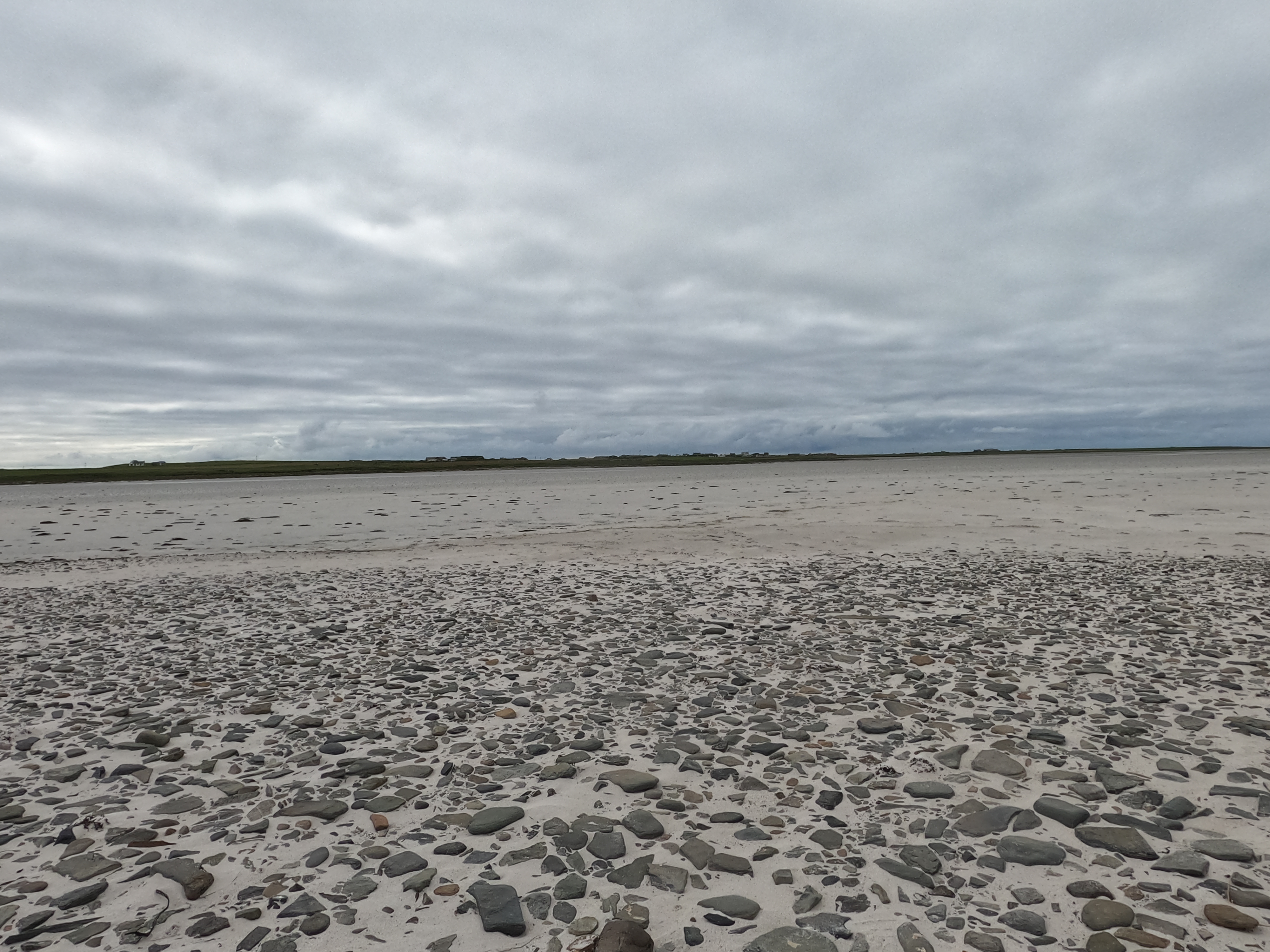
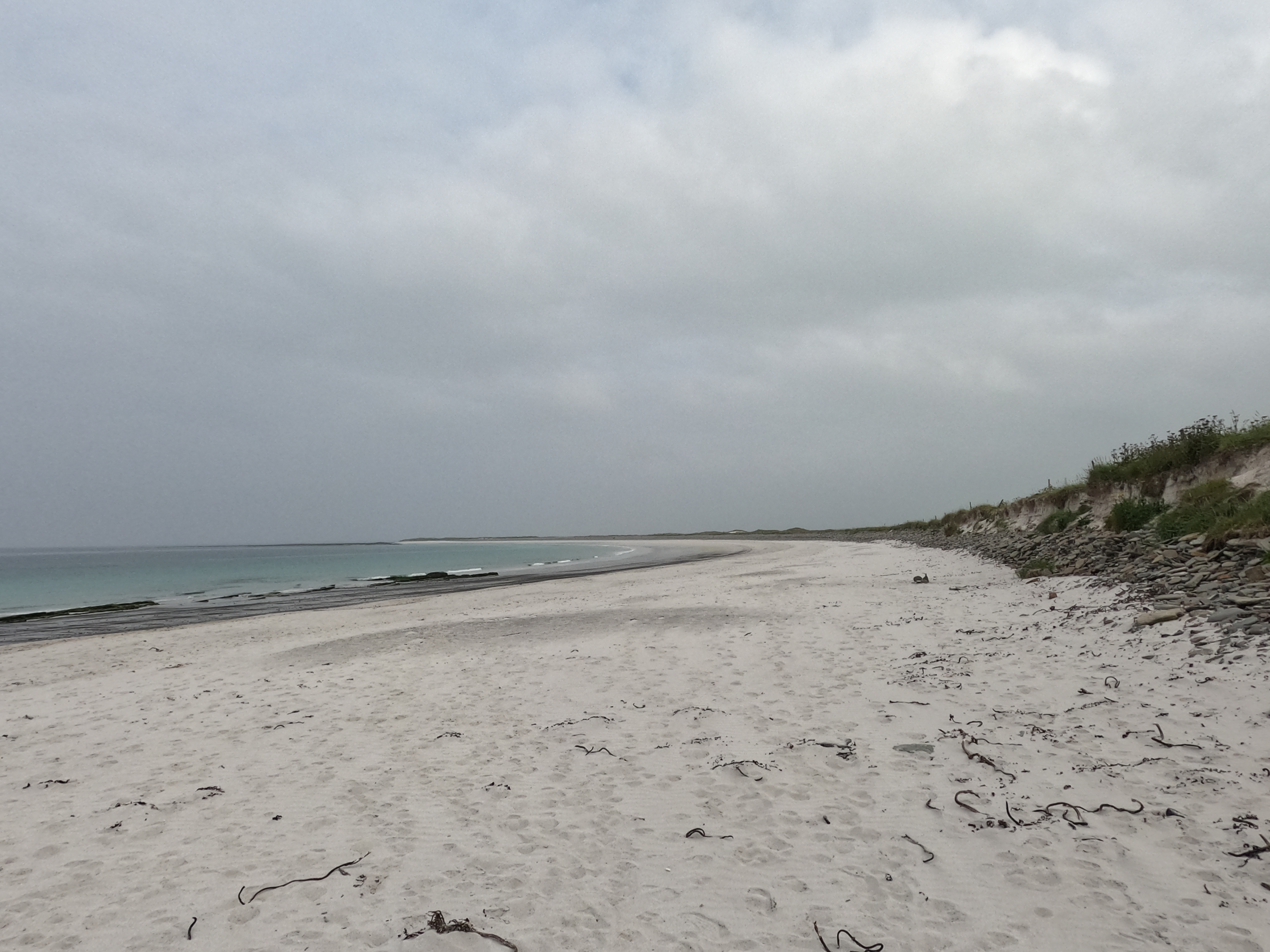
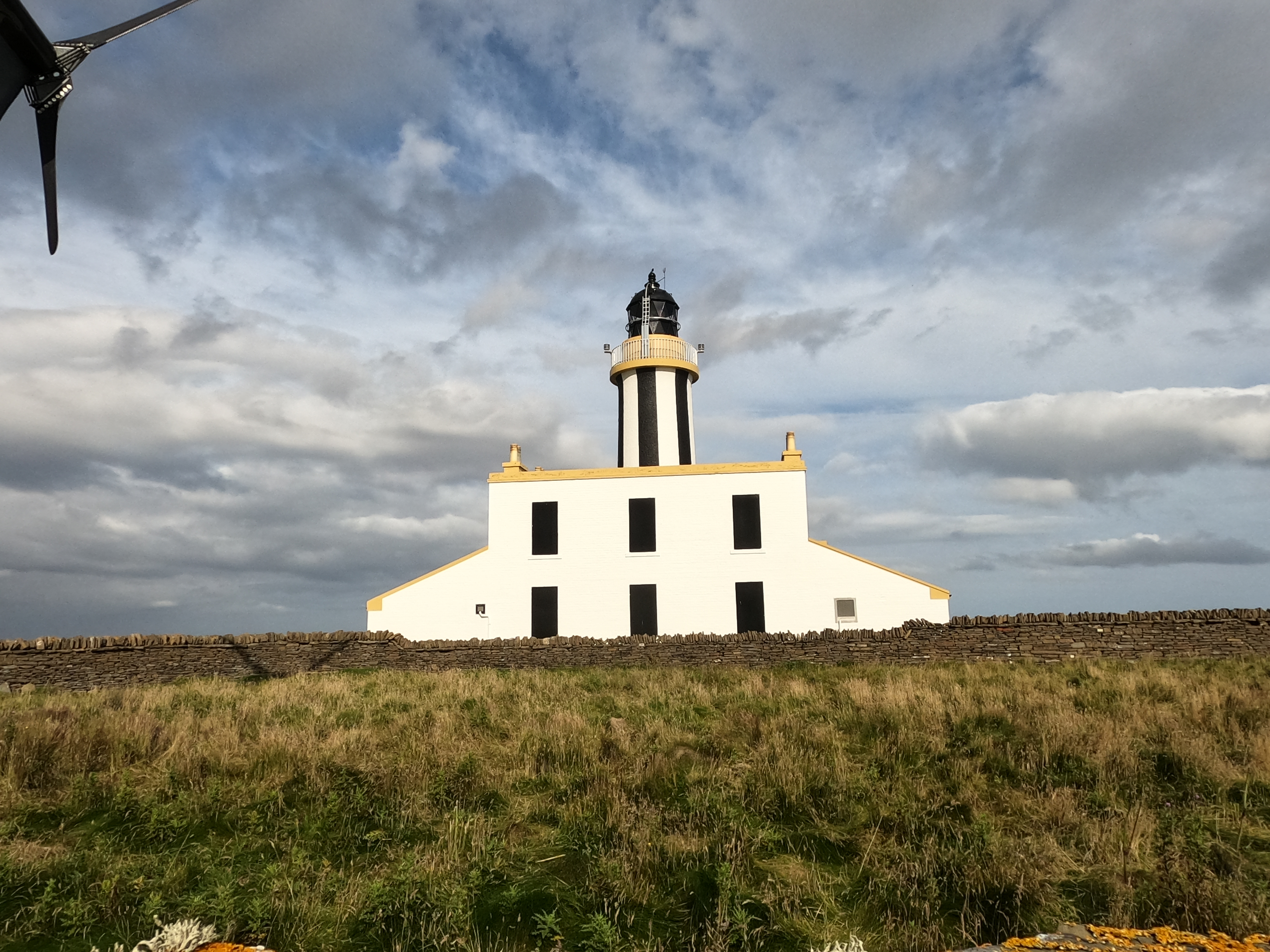
In July this year, my mother (who lives in Sussex) and I flew from Heathrow up to Kirkwall on a Loganair Flight. We visited Orkney , the islands immediately to the north-east of Scotland north coast, last year in June. We had stayed on the main island (known as the mainland) last year in a little village called St Margaret’s Hope on the island of South Ronaldsay. This time I had planned a longer stay with the first 5 nights on the isle of Sanday and the next six nights in St Margaret’s Hope. We landed in Kirkwall on a Monday afternoon amidst the typical summer fog. The runway only appeared out of the mist at the last minute. We were met at the airport by the people at Orkney Car Hire (thoroughly recommended) and picked up our car. After a couple of hours in Kirkwall, we drove onto the roll-on roll-off ferry to Sanday. The trip is about 1.5 hours and the seas were relatively calm. I had booked a cottage near the little village (the only one on the island) known as Lady Village. It has a community centre, petrol station and store as well as a cluster of houses and that is about it. About one mile away is the airstrip. Flights from Kirkwall arrive here. Loganair operate Britten-Norman Islander aircraft for the inter-island services. We watched one landing – it was an interesting sight.
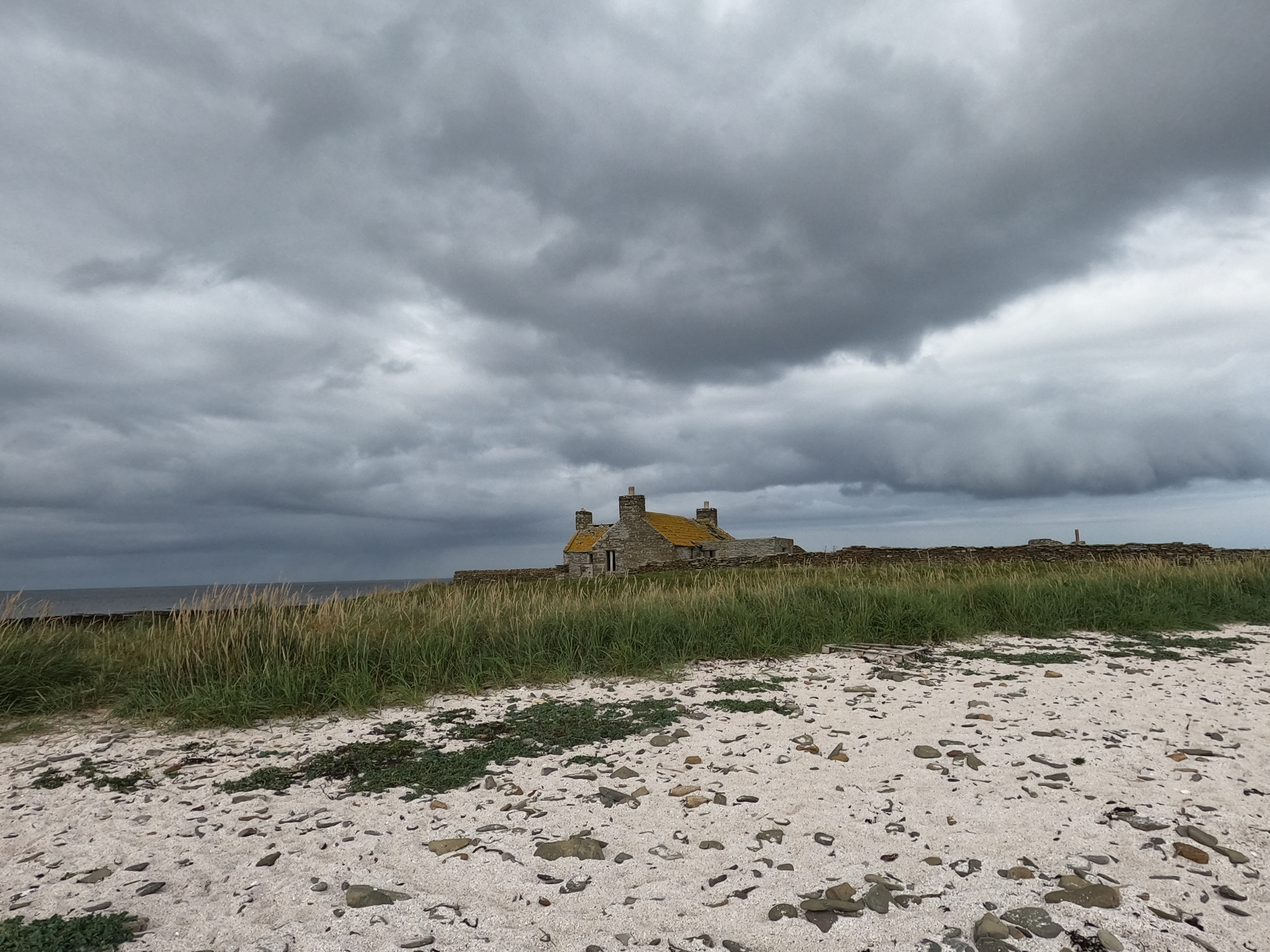
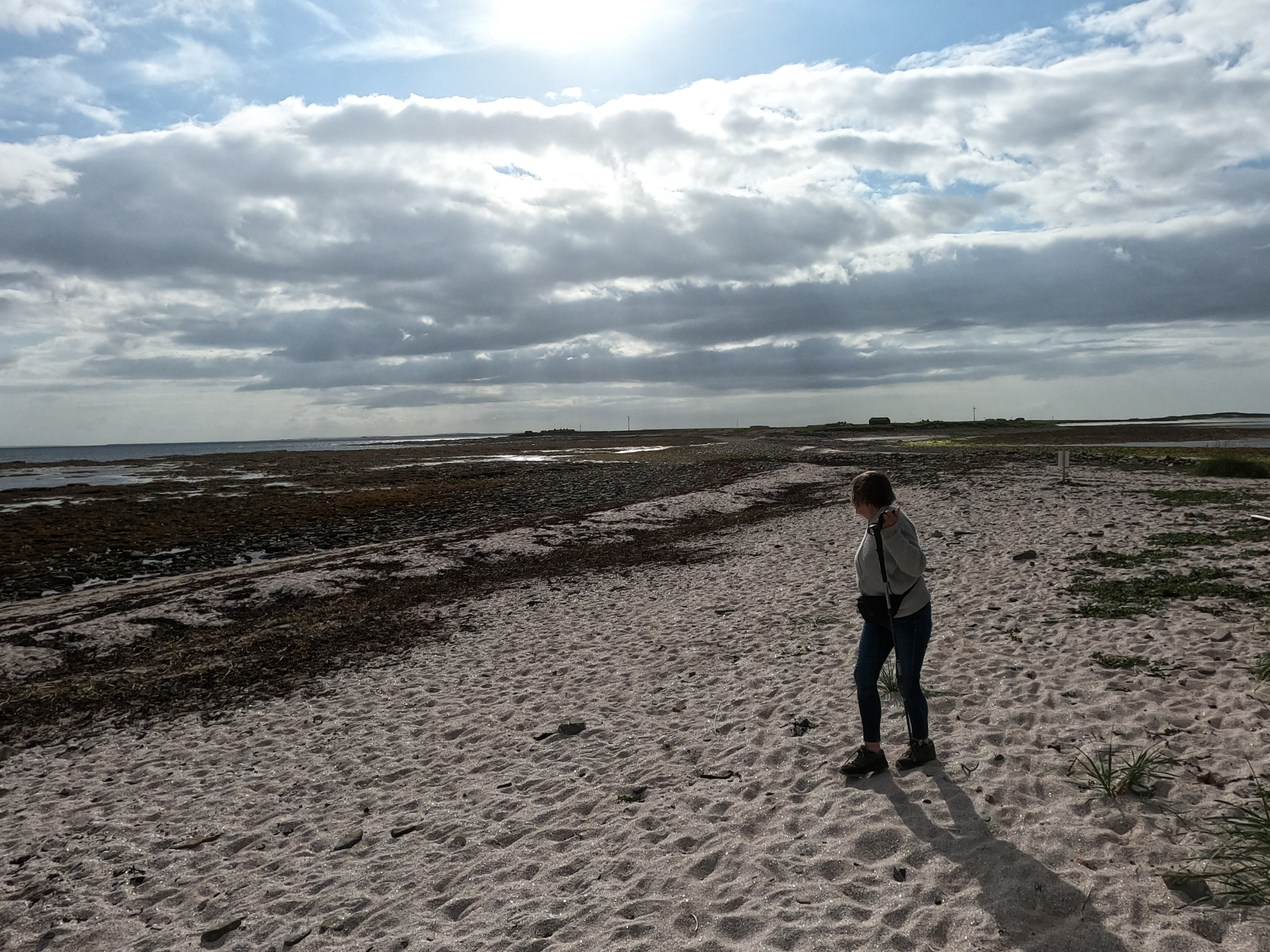
The beaches around Sanday are so numerous and are all absolutely beautiful. Here are some photographs of the island.
2nd Lt. George E Huntley of the RASC taken in 1918 or 1919
Resolving a Mystery
My mother never knew her father’s identity. She was brought up by her Aunt Edith Williams after her mother, Harriet, died in childbirth in early August 1941. Her aunts would not discuss the matter. However, when Edith died in 1967, my mother found a clue amongst her possessions in the form of two scraps of paper shown below.
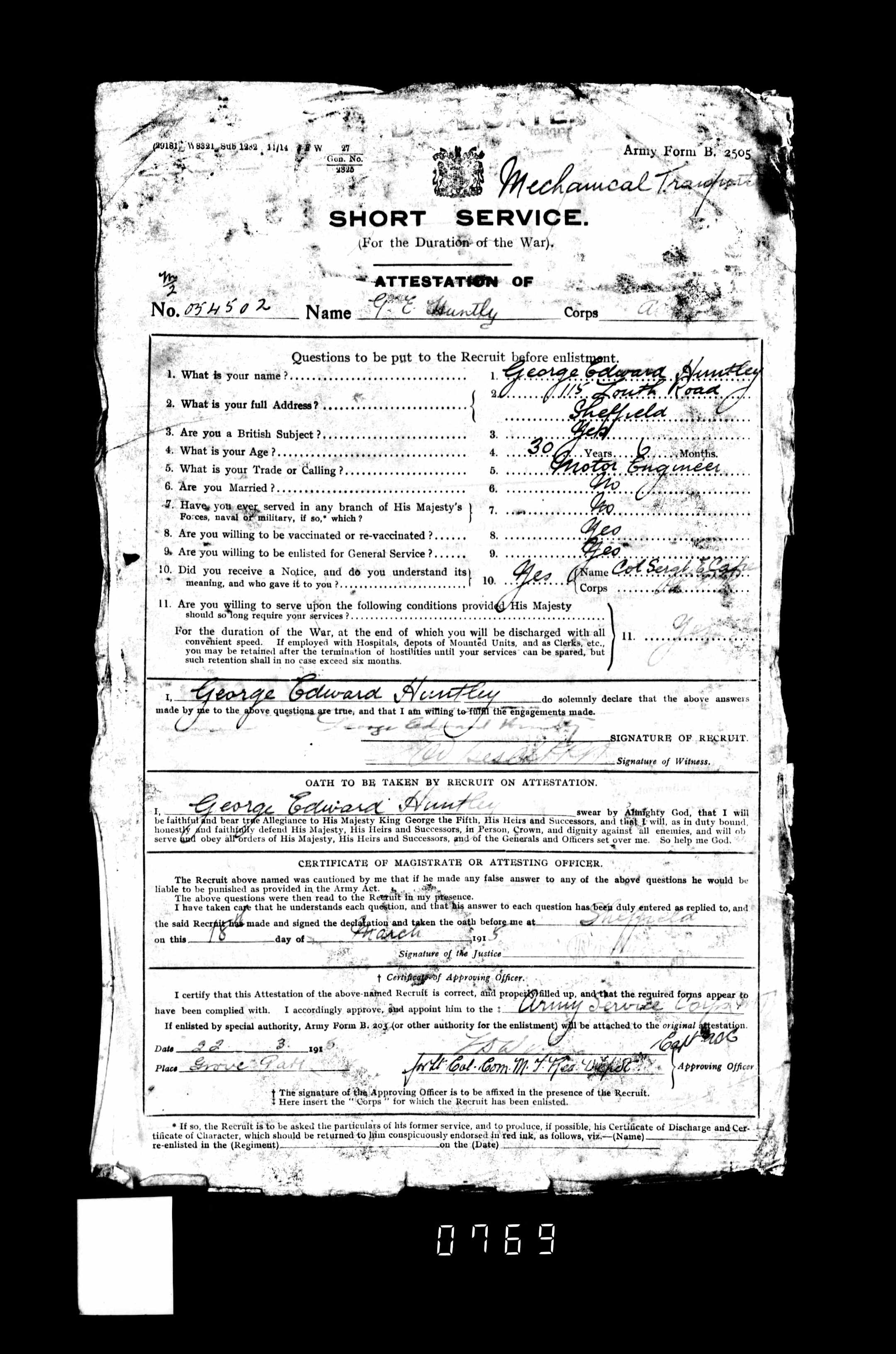
His name was Captain George E. Huntley, and his army number was P/80355. I conducted a search for George E. Huntley and found a Sgt. G. E. Huntley in the Great War. Could this be my grandfather?
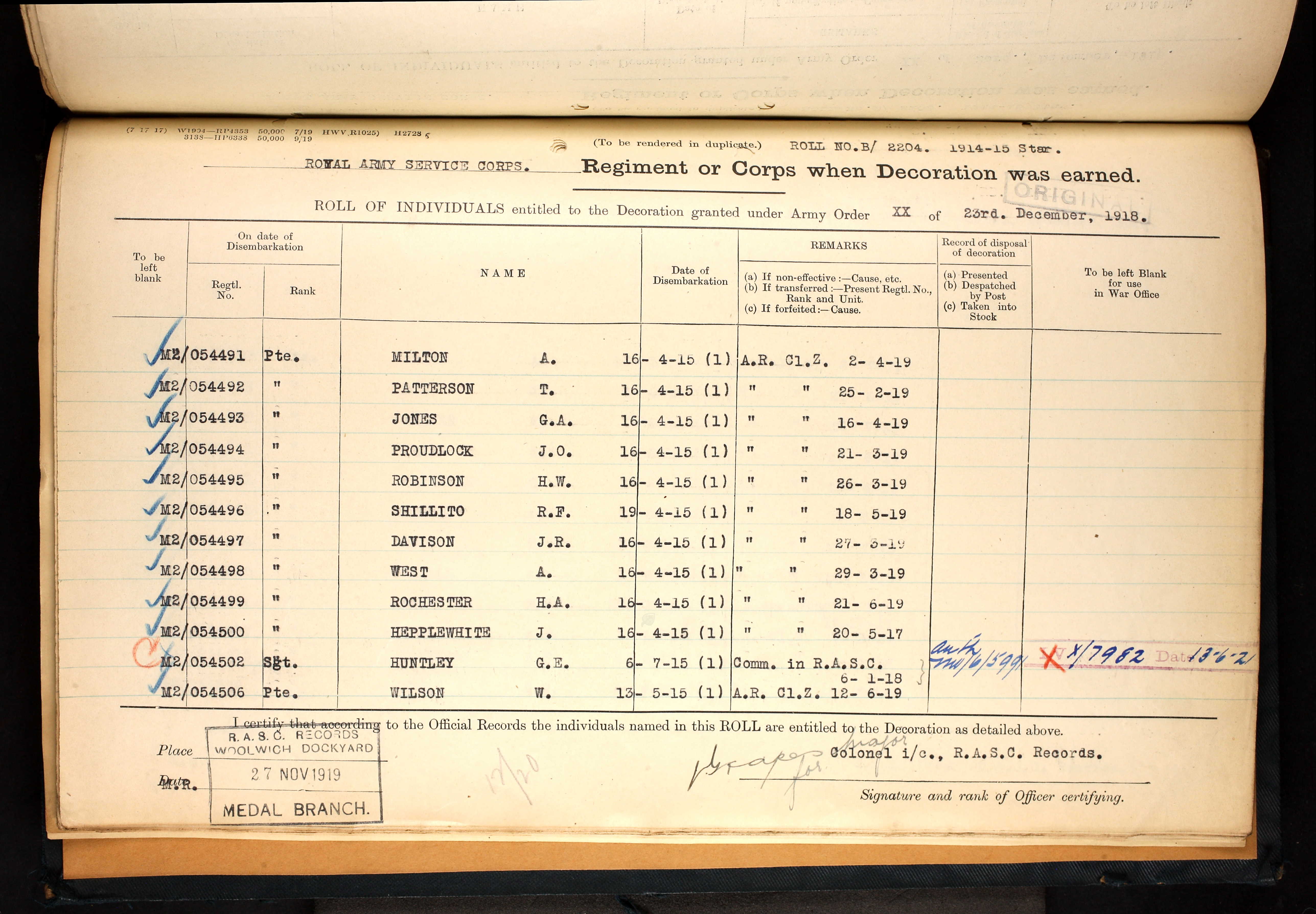
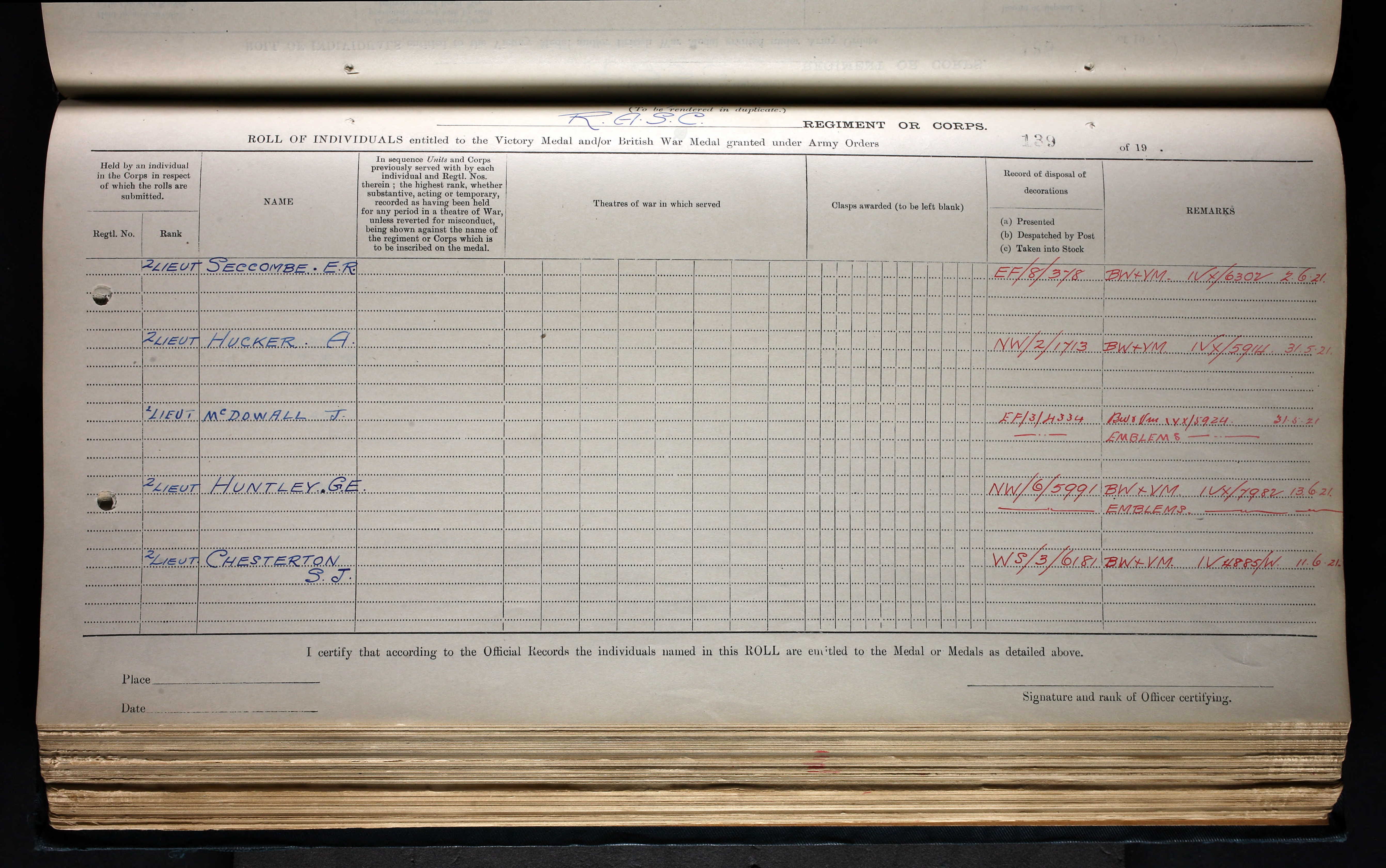
Evidence of a Sgt G. E. Huntley in the First World WarIn this document, he is Second Lieutenant G. E. HuntleyFinally, his full name George Edward Huntley His medal index card and two addresses in SheffieldA match with the WW2 service number stated in my great-aunt’s note
I paid a researcher to look into his service record, who discovered the following information (in italics).
The Western Front 1914 – 16
George enlisted under a short-service (duration of war) engagement in the Army Service Corps (Mechanical Branch) at Sheffield on 18/03/1915. He was issued with the regimental number M2/054502 – the ‘M2’ prefix denoting the Mechanical Transport Branch, and the ‘0’ at the front of his number denoted a short-service/duration of war engagement.
George is posted initially to Grove Park, the Depot of the Mechanical Transport Branch, where he is given military and trade training. He is promoted to Corporal on being posted to 10th Motor Ambulance Convoy (359th Company) Army Service Corps on 07/06/1915 and on the same date (probably to fill a vacancy of formation of the unit) he is promoted to Sergeant. The 10th Motor Ambulance Convoy embarked for France from Southampton on 06/07/1915 and landed in France the next day from the ‘Princess Victoria’ before they proceeded to Rouen. The diary for the unit is in WO 95-496-3.
The history and purpose of Motorised Ambulance Convoys are described in more detail in a very informative website called “the Long, Long Trail“. It describes the formation of these convoys as follows.
The convoy would consist of a total of 50 motor ambulance cars, 3 lorries, 2 motor cars and 1 motor cycle with the following personnel.
“A”, or Headquarters, Section would have 20 motor ambulance cars, 1 lorry for mechanical transport stores, 1 lorry for first aid, 1 lorry for general supplies, 1 motor car for the commanding officer and 1 motor car for the Army Service Corps officer
“B Section would have 15 motor ambulance cars and 1 motor cycle for RAMC officer
“C” Section would have 15 motor ambulance cars
George was appointed as a Mechanical Staff Sergeant on 26/09/1915, which suggests that he was in charge of the maintenance and repair section of the Company. By 29/09/1915, he was appointed as the Acting Company Sergeant Major of the 10th Motor Ambulance Convoy. His promotion to this rank was later confirmed with the same seniority date. He was mentioned in dispatches in the London Gazette of 04/01/1917 for his actions during the Somme operations in 1916. At that time, he had returned to the UK, arriving on 01/01/1917 according to his papers.
George seems to have had some participation in the German Spring Offensive in late March and April of 1918 but there are no specific details about this. He was back in France on about 10/1/18. He is promoted to Lieutenant on 01/12/1918 and Acting Captain on 10/05/1919 before returning to the UK for discharge to the Reserve of Officers on 15/02/1920.
The War Diary for the period of the Somme offensive is very informative. The officer writing the diary was Captain William Wallace Boyce and he describes the duties of the convoy in detail, which was attached to the XIII Corps holding the southern flank of the British line.
The unit consisted of 20 Studebaker, 15 Daimler, and 15 Siddely Deasy ambulances. The ambulances were converted for the purpose. There were four officers’ cars consisting of one Sunbeam and three Vauxhall cars. There was a Daimler lorry and three Peerless lorries. There were also seven B.S.G. motorcycles. Eight officers and 147 men formed the 10th MAC.
The Siddely-Deasy cars were difficult to handle when the roads were at all slippy. By 26th July the convoy had made its way from Rouen approximately 250 km northeast to the front at Aire-sur-la-Lys where they began work. This was the headquarters of the First Army from 26th June that year that was involved in attacks on the Western Front between May and September in the Loos and Festubert areas. They remained in the area until 19th September when they relocated further along the front lines to the south-east near Corbie-sur-Somme.
By the beginning of December 1915 they were at Proven in Flanders and a Major J. F. Crombie had taken over command. On 18th December 1915 command was again transferred to a Captain Jones and then back to Major Crombie on 30th December. Captain Boyce was back in command on 1st January 1916. I wonder if he had taken a month’s sick leave. The new year sees the unit deployed in the Somme.
The Siddely-Deasy cars almost immediately began to overheat. The solution was to alter the vanes on the flywheels to allow a better draft of air. The carburettor jets were also altered to conserve fuel. The Daimler cars “gave great trouble through gear slippage,” and ” … also break ball races constantly” (Captain W. W. Boyce). Spare parts were in short supply such as gear wheels and replacement tyres. It is likely that my grandfather would have been supervising this work.
Entry for 16th July 1915.
An important task on arrival at a new headquarters was the establishing of suitable accommodation. This included digging latrines. They used the petrol tins for this purpose. I presume that they must have been large and more like drums than tins.
Entry for 12th August 1915.
It was dangerous work to drive without lights at night.
Entry for 14th October 1915.
For the first three months of 1916, they were at St. Ouen but by April, they were at Corbie-sur-Somme.
On 1st July 1916 the British attacked at the Somme. The 10th Motorised Ambulance Convoy was in support of the XIII Army extracting dead, sick and wounded from the Main Dressing Stations near the front line.
add explanation on how men were transported back from the front lines.
The front line of the Somme July 1916.
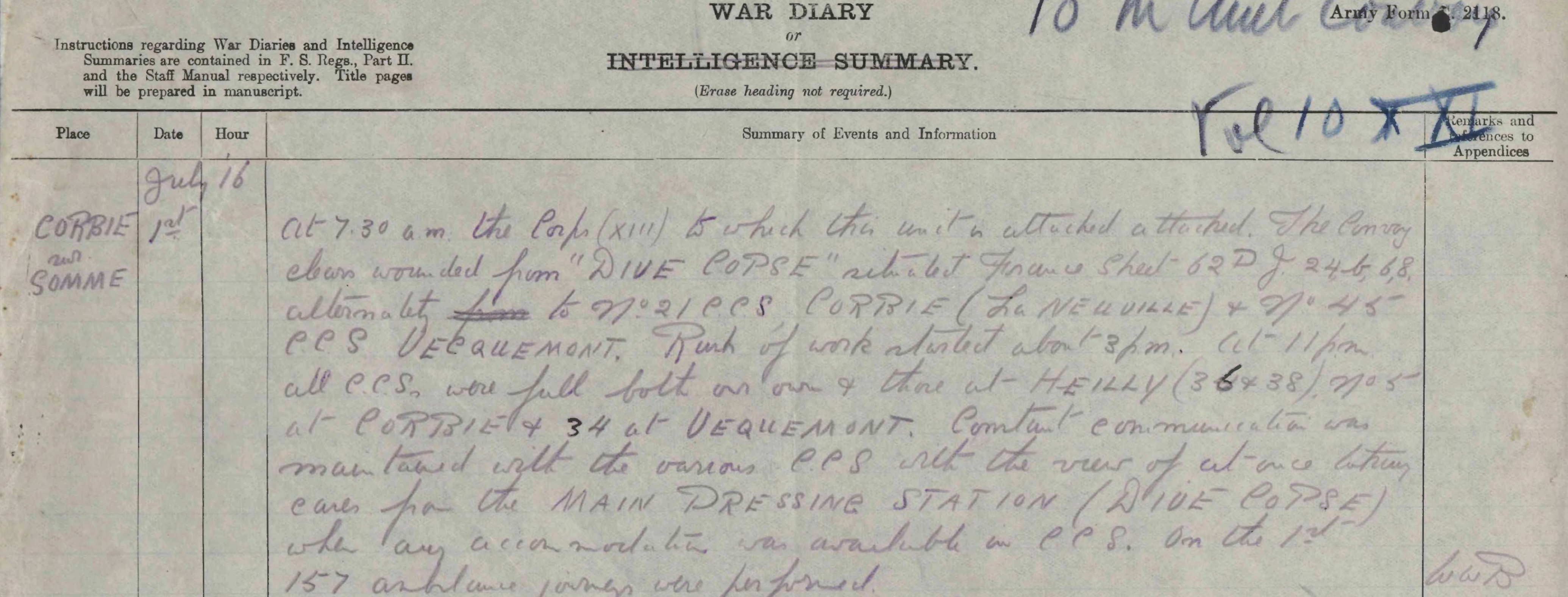
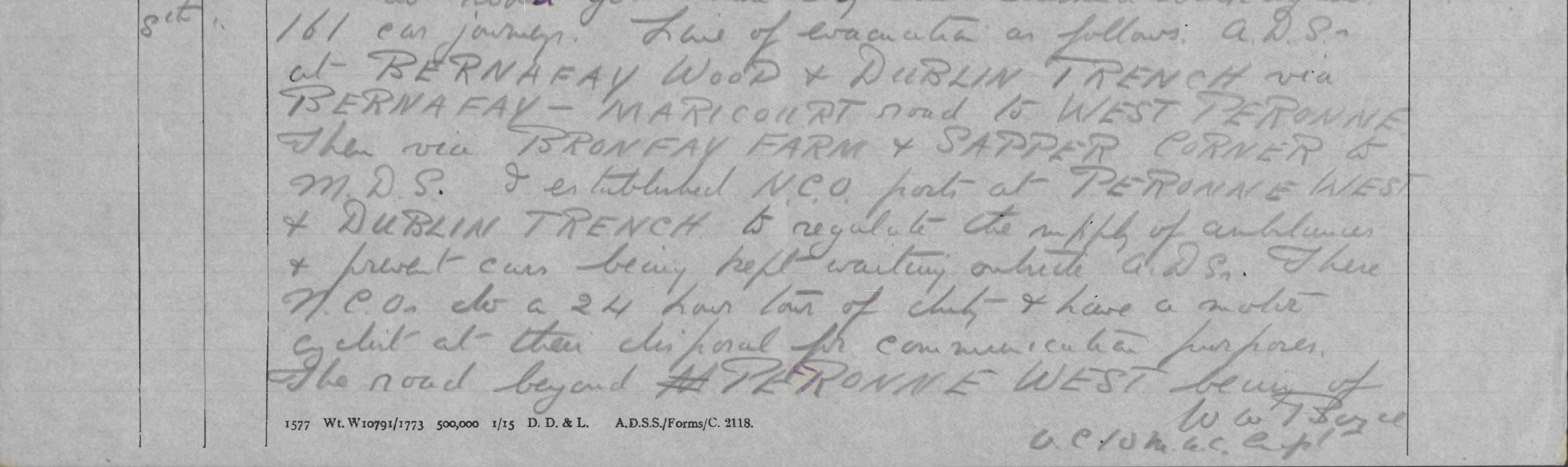
Here is the entry for 1st July 1916, the first day of the offensive. Many of the entries describe the number of journeys made, mileage, patients carried and other statistics. In this entry, it is reported that ambulances were transporting wounded and sick from the Main Dressing Stations (MDS) at Dive Copse, about ten miles behind the lines, to Casualty Clearing Stations (CCS) at Corbie, about 6 miles further back. There are constant complaints about the appalling state of the roads, lack of food for the men, the constant changing of personnel, and shortage of accommodation for the drivers.
Extract from War Diary WO-95-496-3 1st July 1916.
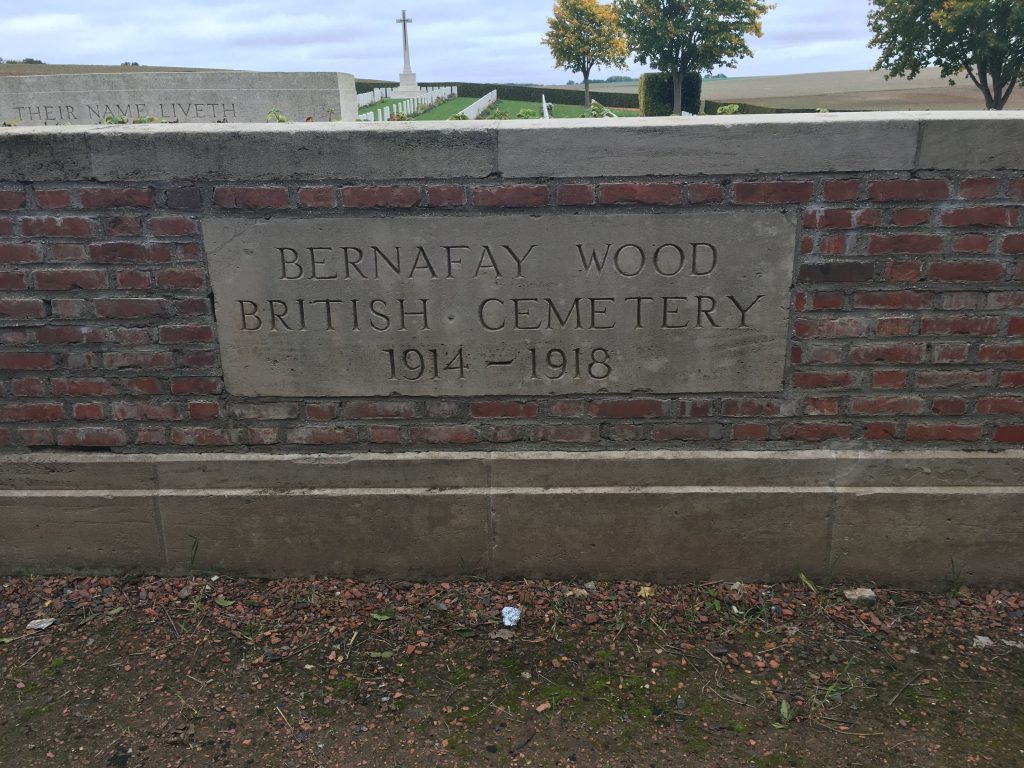
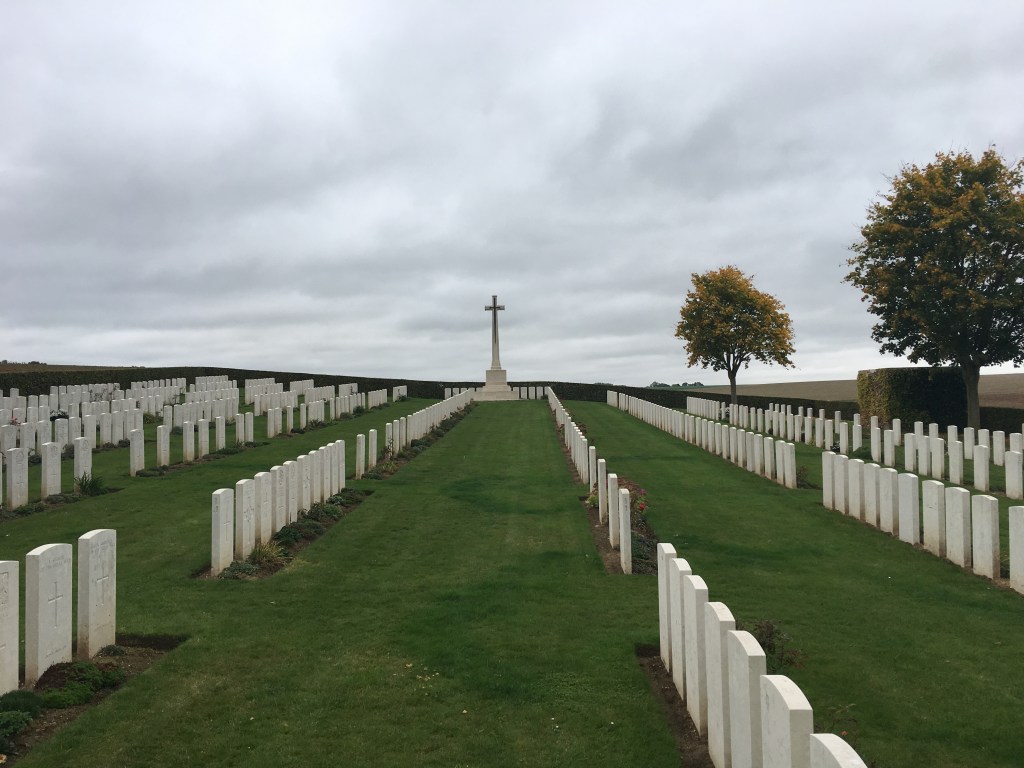
In October 2017, I visited France with my son and a friend on a day trip. We visited the British cemetery at Bernafay Wood which is mentioned in the war diaries for the first time on 8th August 1916. There was an Advanced Dressing Station (ADS) here.
Description of the line of evacuation from the ADS at Bernafay Wood written 8th August 1916 by Captain W. W. Boyce.
According to a memorial sign at the cemetary:
“On I July 1916, British soldiers captured the German defences around Montauban, and over the following days patrols pushed towards Bernafay Wood. On 3rd July, men of the 9th (Scottish Division were able to occupy Bernafay Wood but found the neighbouring Trônes Wood still heavily defended.
A dressing station was established here, and Bernafay Wood became a base for British units fighting for nearby woods and villages. Soldiers and medical staff began to bury their fallen comrades here in August 1916, and by the Armistice over 280 men had been laid to rest in this cemetery. It was later expanded with over 650 graves brought here from the surrounding battlefields and other small cemeteries.
This is now the final resting place of over 940 servicemen, of whom over 415 remain unidentified. The cemetery was designed by Arthur James Scott Hutton, who served with the Royal Engineers during the war, and Sir Herbert Baker.”
The Second World War
The text in italics was written for me by a researcher.
George was remobilised on 31/08/1939 at the onset of WWII, and his career is as follows from that point:-
31/08/1939 – Joined at Regent’s Park Barracks as an Impression Officer (Lieutenant) and was given the acting rank of Captain.
09/11/1939 – Posted to No.2 Motor Transport Depot at Slough in the role of a Draft Conducting Officer. The officers were employed to ‘escort’ drafts of other ranks from the Training Depot to the ports for embarkation on the basis that they could not be trusted to get from A to B by themselves!
01/12/1939 – Appointed Temporary Captain after holding an acting rank for 90 days.
12/12/1940 – Reverts to Lieutenant upon being posted to the 29th Station Transport Company in Shropshire. Note that this is the same address mentioned in my great-aunt’s note and corresponds to the period when my grandmother became pregnant with my mother. It is worth mentioning that my grandmother’s mother came from Hereford, which is located in the neighbouring county of Gloucestershire.
28/12/1940 – Posted to a War Office Post at Benhall Farm, Gloucester Road at Cheltenham for temporary duties as a Transport Officer.
08/02/1941 – Posted to No.3 Training Brigade & posted to No.8 Training Battalion.
18/02/1941 – Posted to Royal Army Service Corps, Cambridge District as a Liaison Officer.
15/07/1941 – Posted to Anti-Aircraft Command as a Workshop Officer, starting at 182nd Company RASC at Eccles.
15/08/1941 – Posted to 904th A-A Company, part of 2nd A-A Division at Eccles.
10/09/1941 – Posted to attached station of 1st Holding Battalion (at Worthing) whilst he is on the ‘Y’ List – this is the code used for men who were sick and not fit for duty. This was a few weeks after the death of my grandmother, so he may have heard the news.
23/09/1941 – Discharged from General Hospital at Llandudno and joins 1st Holding Battalion after sick leave. He had been medically down-graded for Grade ‘B’ Garrison duties only. I discovered that his son was born on 27/1/42 in Conwy, a mere four miles from Llandudno, so is consistent with him being there.
18/11/1941 – Posted to Anti-Aircraft Command at Stanmore to await allocation. He is then posted to 930th A-A Company at Pontefract with effect the same day.
06/12/1941 – Posted to 192nd A-A Company at Edinburgh.
26/03/1942 – Posted to 1st Holding Battalion at Worthing having been classified as medically unfit.
07/05/1942 – Relegated to ‘Unemployed’ and put into the Reserve of Officers.
21/08/1948 – Having reached the age limit for his rank, George relinquishes his rank and is given the honorary rank of Captain (LG 20/08/1948).
Family
My mother was delighted to have discovered the identity of her father. The unfortunate news was that he had passed away in 1981, so my mother never had the chance to meet him.
Details discovered in the public records confirmed what my mother had been told: that he was a married man at the time my mother was born. However, my mother’s aunt had lied and said that he had died in the war. This was not true.
In late 1939, he was posted to Slough, a town to the west of London, as a Draft Conducting Officer, and this is presumably where he met my grandmother. She was born in Slough, and her sister Ada lived there at the time. His war records put him in Worthing in September 1941, about a month after the death of my grandmother.
He married Betty B. Graham on 25th February 1941, six months after the death of my grandmother. They had two sons, George Edward Gordon Huntley and John Peter Julian Huntley. They divorced in late 1947. The divorce proceedings were publicised in a local Sheffield newspaper and were very acrimonious. George Huntley alleged that his wife was having an affair. She wasn’t the only one.
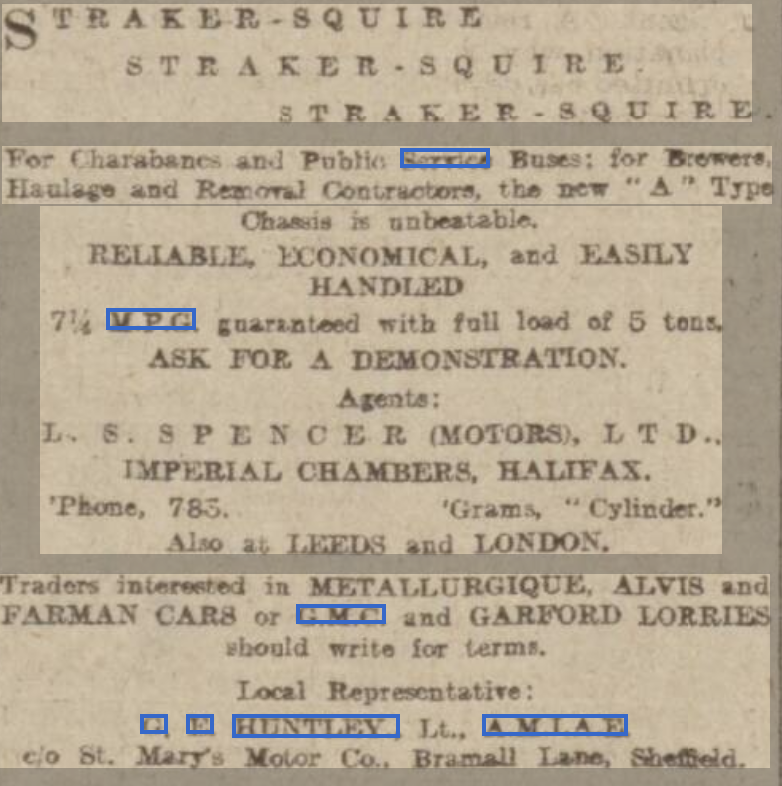
Reporting of the divorce proceedings in a Sheffield newspaper in late 1947This may be where the school was based. It seems the most likely location and is near Barker’s Pool in central Sheffield.A letter from G E Huntley to a local Sheffield newspaper He was the local representative for the sale of various kinds of car and lorry.
In later life, he emigrated to Australia and settled in Blairgowrie, Victoria with his second wife Helen Marion Graves Hay. One of his sons lives in Queensland, and the other is still living in the UK. I wrote to both of them in 2018 but never received a reply. I tried to contact the family of his second wife but again received no reply. I can only imagine that it would be strange to be contacted by the grandchildren of a relative so long after his death. Nevertheless, I would have liked to know more about him and perhaps see some photographs of him in his later years. I searched the local newspapers around Melbourne for any articles including an obituary but came up blank.
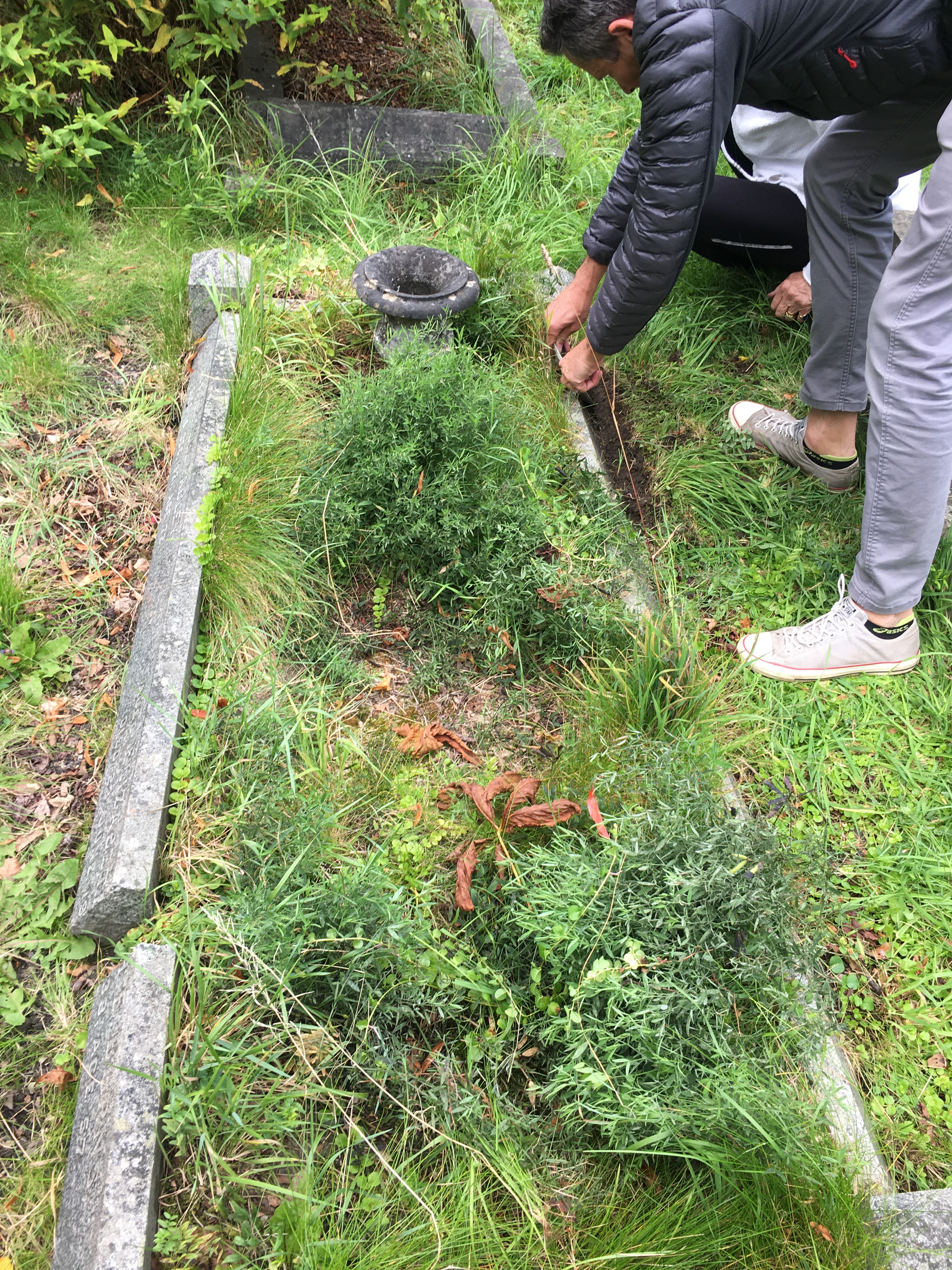
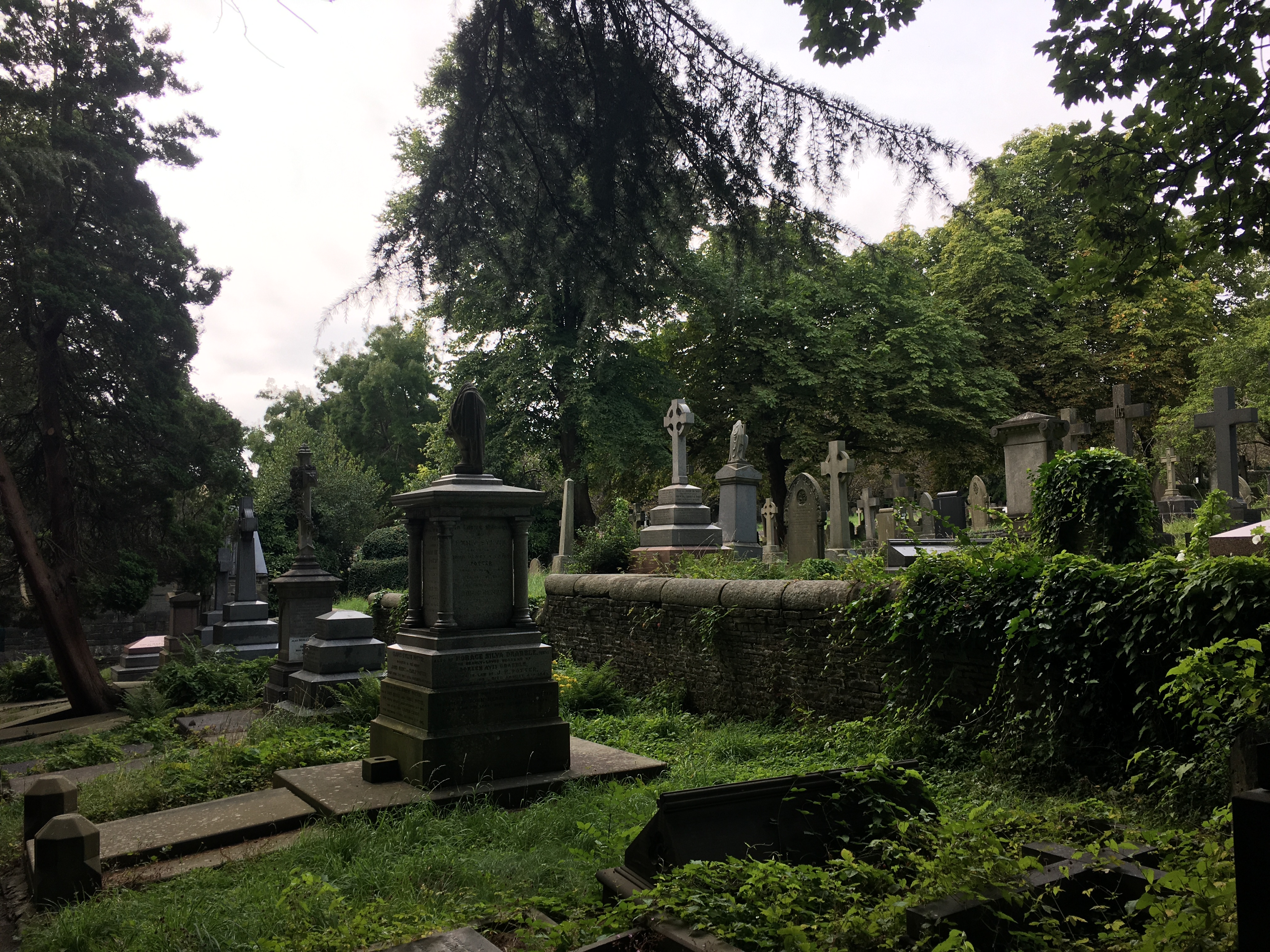
In August this year (2023) I visited Sheffield with my brother and mother. I managed to find the grave of George’s parents Kossuth Huntley and Mary Jane Padley. They are buried at All Saints Church, Ecclesall in the same grave as one of his uncles and his sister. As you can see, it is badly neglected. I wondered when the last time was that George visited the grave.
The grave of George’s parentsThe cemetery of All Saint’s Church, Ecclesall
Questions that may never be answered are: What illness was he suffering from in 1941? Did he know that Harriet was pregnant with my mother? Why did he transfer to the Worthing area after her death? Had he been seeking contact with his newborn child perhaps? I think it is worth checking to see if his wife Betty was also in the area or had relatives in that area at that time.
What did he do at the Somme in 1916 to be mentioned in despatches?
Did he meet Helen Marion Graves Hay through his duties in the 2nd World War? When did he move to Australia, and did he have Australian citizenship on his death in 1981? He lived to be 97 years old. Perhaps I could write to a local Melbourne paper and see if they would be interested in writing a brief article.
I’ve researched a few of his cousins and their descendants, in particular, a first cousin who emigrated to San Francisco and became a journalist, and four brothers who moved to Alberta, amongst others. It has been a fascinating journey.
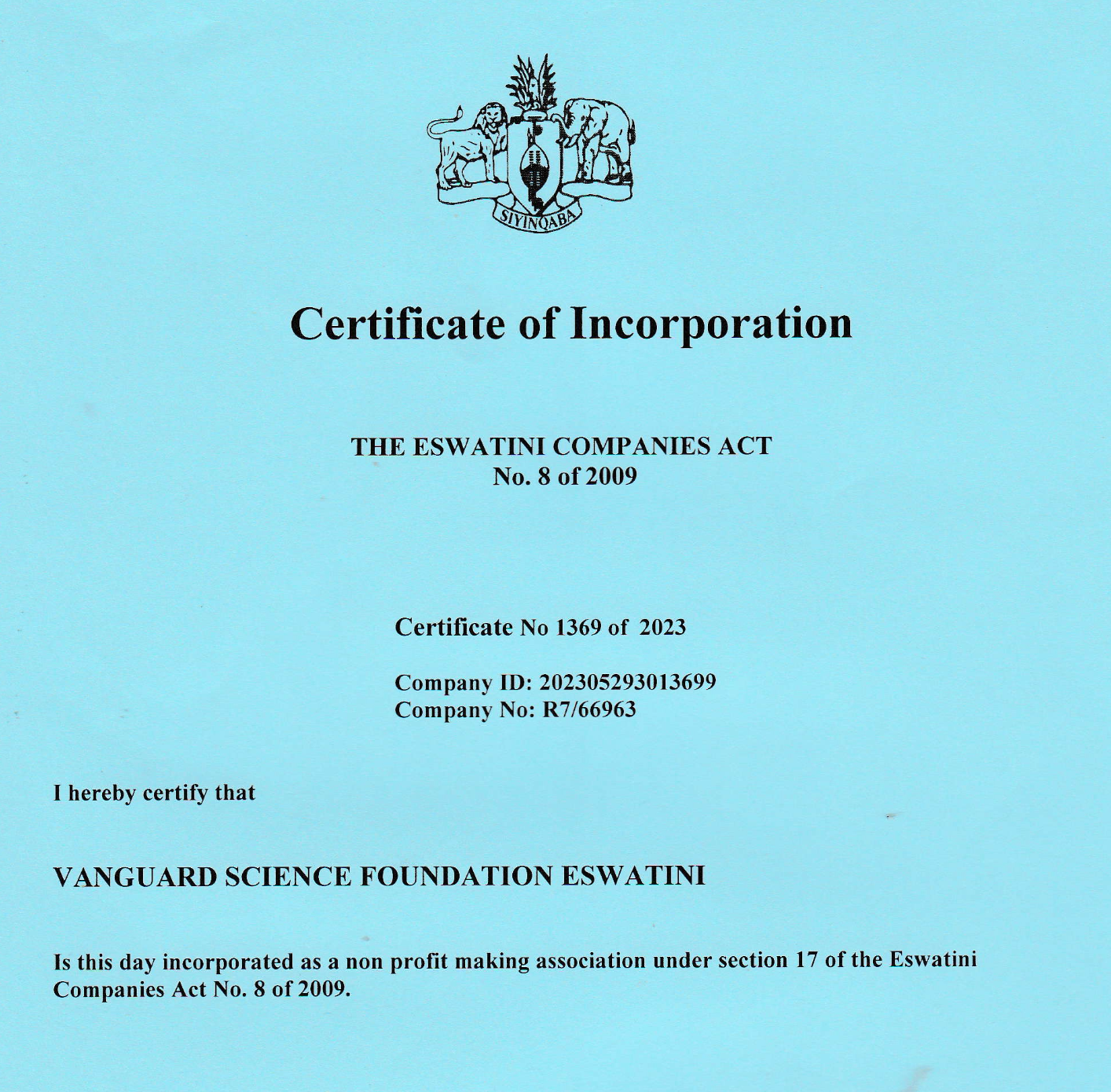
In June, I registered an NGO called Vanguard Science Foundation in Eswatini, a small land-locked country in Southern Africa. The intention is to help train and encourage science teachers in the country to teach the curriculum in the most effective way possible. Most schools lack basic science equipment yet form 5 students are examined on laboratory technique. It is well-known that laboratory work can reinforce learning of the theory side of the curriculum.
Our aim is to show simple ways that teachers can make their lessons more inclusive and relevant in a limited resource setting.
It’s early days yet. I am not yet in country but will move there in late September. My ‘day job’ is online private tuition which means that I have quite a bit of spare time. Two of the directors are Swazi citizens who have a lot of useful connections. It is officially a section 17 company which is the name for non-profits in the country. I will be looking into getting funding. But as I will be donating my time for free, the overheads will be very low.
I used to live in Eswatini (2004 – 2007) so I am delighted to be going back. Many years ago, I volunteered for VSO (Voluntary Service Overseas) in Zimbabwe. That is where my love for Africa began. But currently I live in Georgia (the country, not the state) and have some logistical hurdles to cross, not least getting my two cats from here to Eswatini.
Education in Eswatini is underfunded and as I mentioned, under resourced. The Form 5 (EGCSE) exams are broadly based on the UK GCSEs (they used to set the UK exams but then they made their exams in-country). The science exams are roughly equivalent to foundation level GCSEs in the UK but the pass rates are very low. There is the language barrier for one thing. English is spoken in Eswatini but technical language is a different matter and there are cultural and social issues such as students’ lack of familiarity with the context of exam questions.
A simple approach would be to meet with science teachers and discuss ways in which they can use available resources to present the course in an interesting fashion. When I taught in Zimbabwe in the 1990s, we were issued with a science teachers’ handbook that had a compendium of great ideas for teaching chemistry, biology and physics from home-made chromatographs to simple projectile labs.
It may be possible once I get funding to provide some basic lab equipment There are companies based in Africa that construct affordable science equipment so we may be able to use them. There are initiatives with the University of the Western Cape (Science Learning Initiative for Africa) that operate 1-3 day workshops in the Western Cape. We could learn from them.
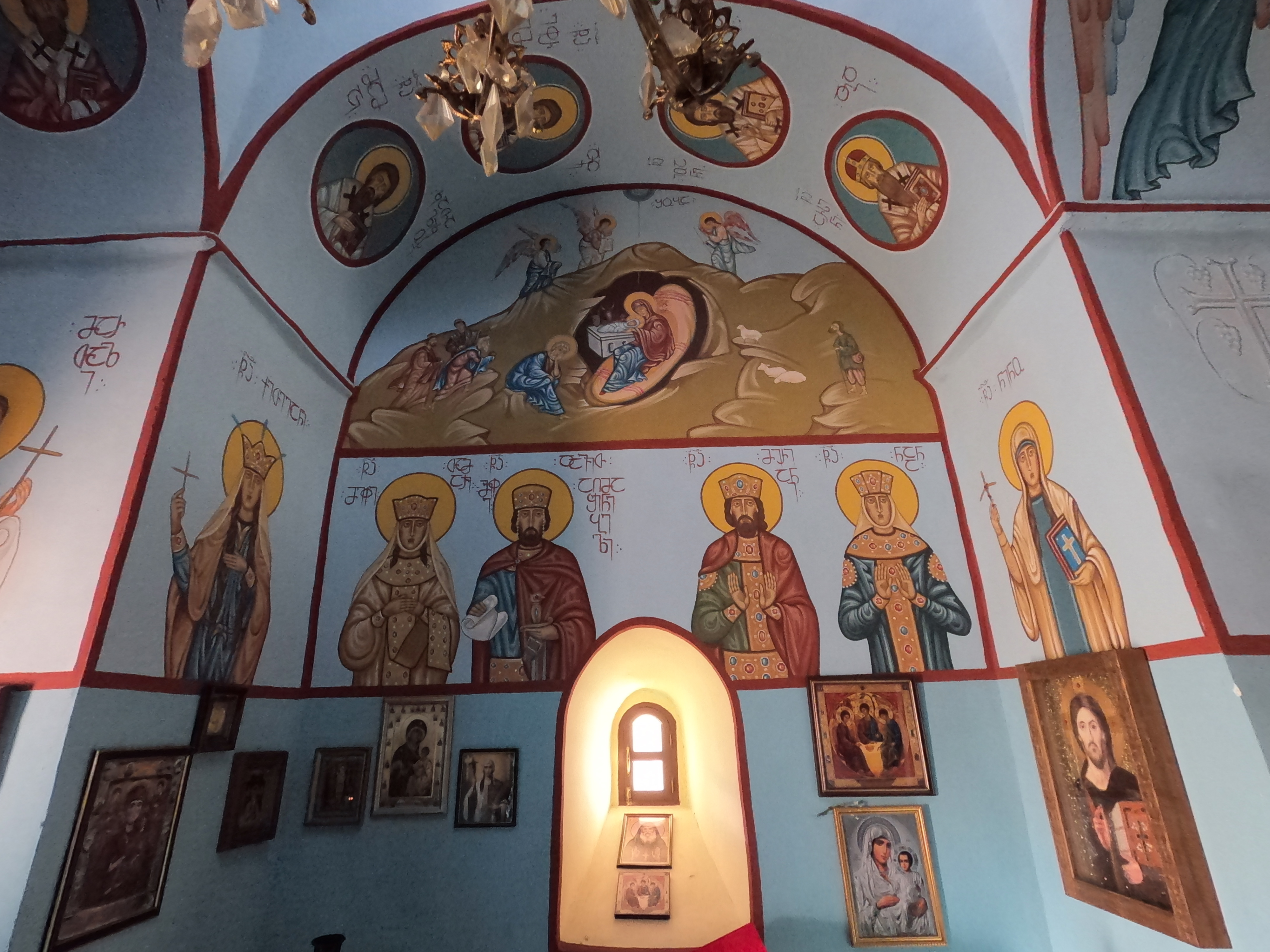
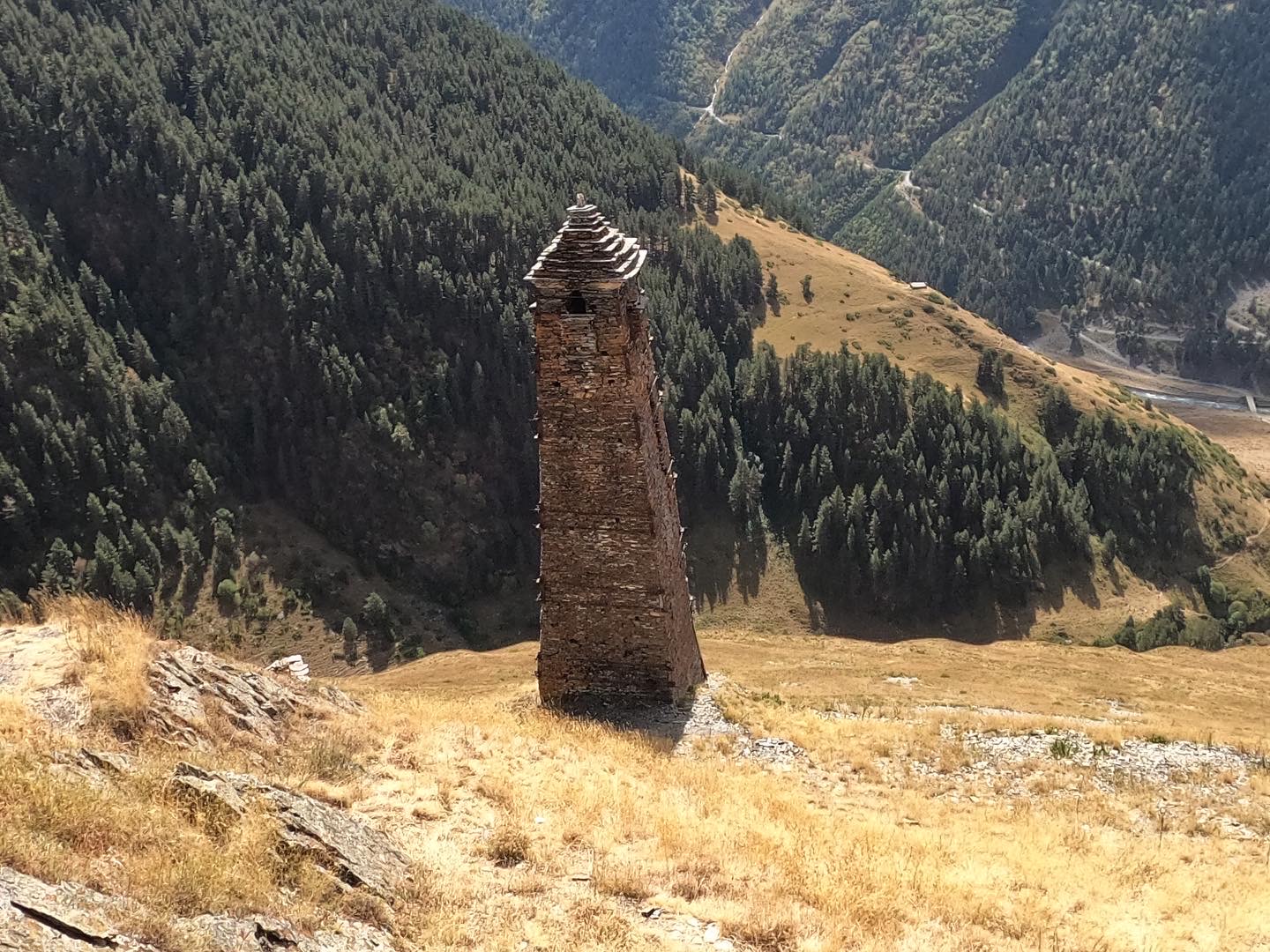
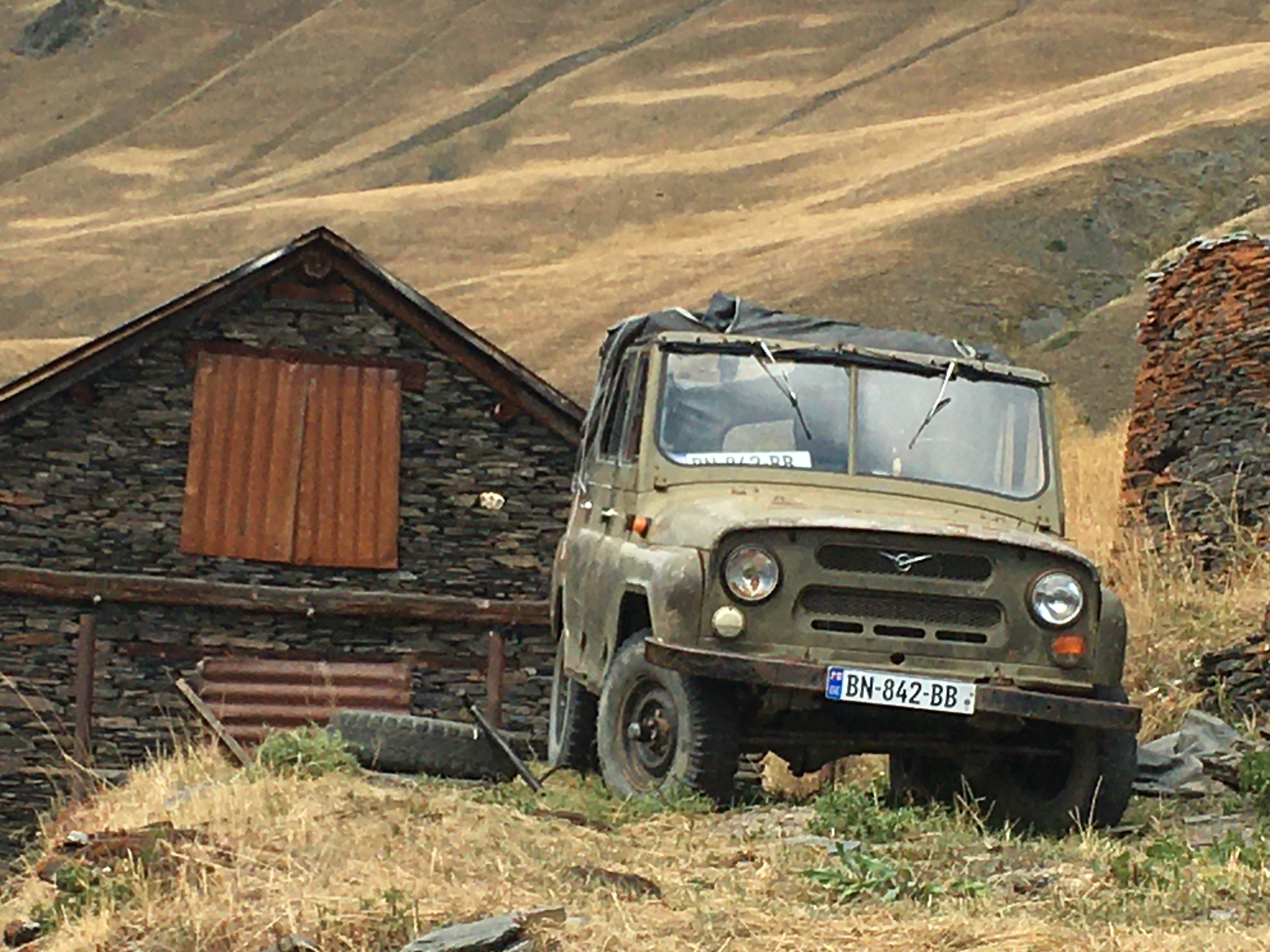
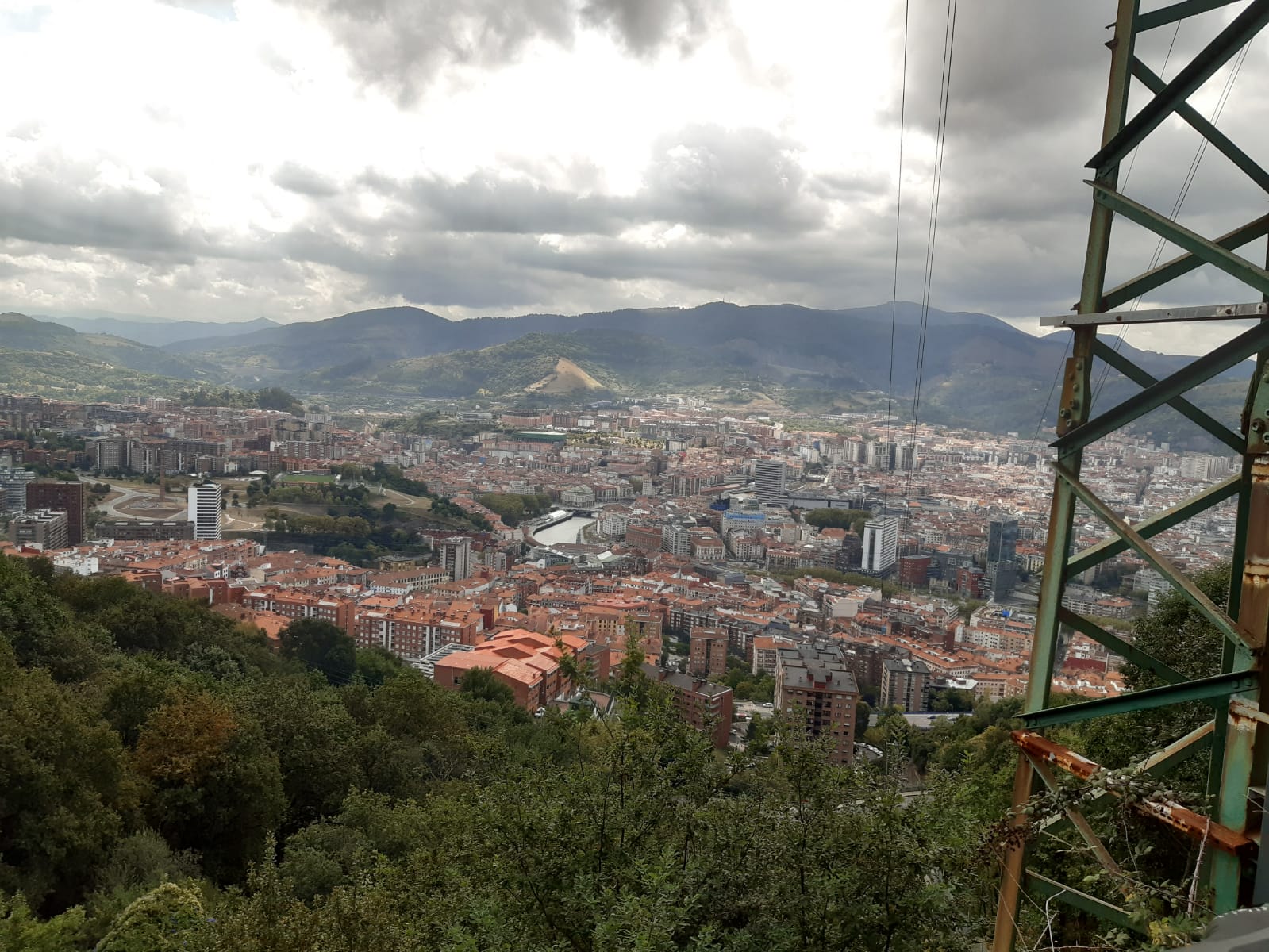
A Georgian orthodox churchTraditional Georgian towerA Russian jeepThe western city of Chiatura
In January 2021 I moved to the country of Georgia. Georgia is a small country bordering Russia to the north and Turkey, Armenia and Azerbaijan to the south and east. I had visited for a brief holiday in February 2020 and liked what I saw. I was looking for a place where the cost of living was much lower than in my home country of the United Kingdom. I am self-employed and my income is variable. In recent years, I have not done so well financially because of the high cost of living and as everyone knows, that is only going to get worse. My only son left home in 2018 leaving me free to choose my place of abode. He currently lives in Australia as it happens.
I tutor mathematics and physics for a living online so I can work remotely. Since the pandemic, online tuition has risen in popularity. I now have temporary residency in this country. I live in the centre of Tbilisi, the capital city.
Living here suits me. Though rental prices have risen since the influx of Russians escaping the draft, it is still cheaper than the UK and I don’t need to pay any council tax. I do currently pay tax in the UK still (the rules on that are quite complicated) but from next year, I should be able to pay only voluntary pension contributions. In Georgia I pay 1% tax on my gross turnover as I registered as an Individual Entrepreneur.
My work is mostly late in the evening due to the three or four hour time difference between the UK and Georgia. It is relatively easy to get flights back to the UK although there are no direct flights.
Tbilisi is a city with no clearly-defined centre. It is surrounded by hills, is oppressively hot in the summer and never gets very cold in the winter. It is easy to manage without a car because from where I live, the old city is walking distance and taxis are very cheap. They cost about $1 per km. I rent a large apartment in the area popular with embassies. The Slovakian embassy is just down the road. There are many cafes to choose from.
There are some negative sides to moving here too. The traffic is quite bad and cars do not respect pedestrians’ use of road crossings. The pavements are very uneven and frequently obstructed by obstacles such as low walls, raised pathways, cars parked on the pavement and so on. It must be hell to live here as a disabled person. In fact I have never seen a wheelchair user. It would be impossible to get about. The frequent piles of dog waste is another problem.
It is also difficult to find certain items in the shops unless you are in the know. Customer service is often very poor. I bought a “new” printer from an national electronics outlet and discovered that it was actually 8 years old.
The price of utilities is much lower than the UK. Food prices are roughly equivalent to the UK with cheese, bread and milk being rather expensive. Taking a taxi is very cheap and will cost you about US$ 3-4 for 20 minutes or so.
I have visited many out of the way places such as Tusheti, Mestia, Batumi, Zugdidi, Kakheti, Chiatura, Poti and Paravani Lake. Transport to Batumi is via a rail link that uses a modern German train. Otherwise you need to take a marshrutka (minibus) to get out of the city. Hiring.a car is an option b
Mestia is my favourite place. It is in the north-west of the country bordering Russia. There are trails rising to over 3000 m and plenty of opportunity to explore the surrounding countryside. To get there, you take the train to Zugdidi from Tbilisi and then hop on a marshrutka for four hours over rather rough roads rising up to 1500 m. There is the famous Mestia to Ushguli trail which is popular amongst hikers. There are more adventurous. Another great site to use is alltrails.com.
One day, I would like to hike the Omaha to Shatili route from Tusheti but this advisable to use a paid guide.
The town of Mestia is in the Svaneti region and has about 9000 residents. It is a great base for hiking.
A view of Mestia and the airport from 3000m.
Svaneti has its own protected language, distantly related to Georgian and from the same family tree. It even has a few extra letters compared to standard Georgian. It is still spoken widely but you will probably not hear it except amongst the locals.
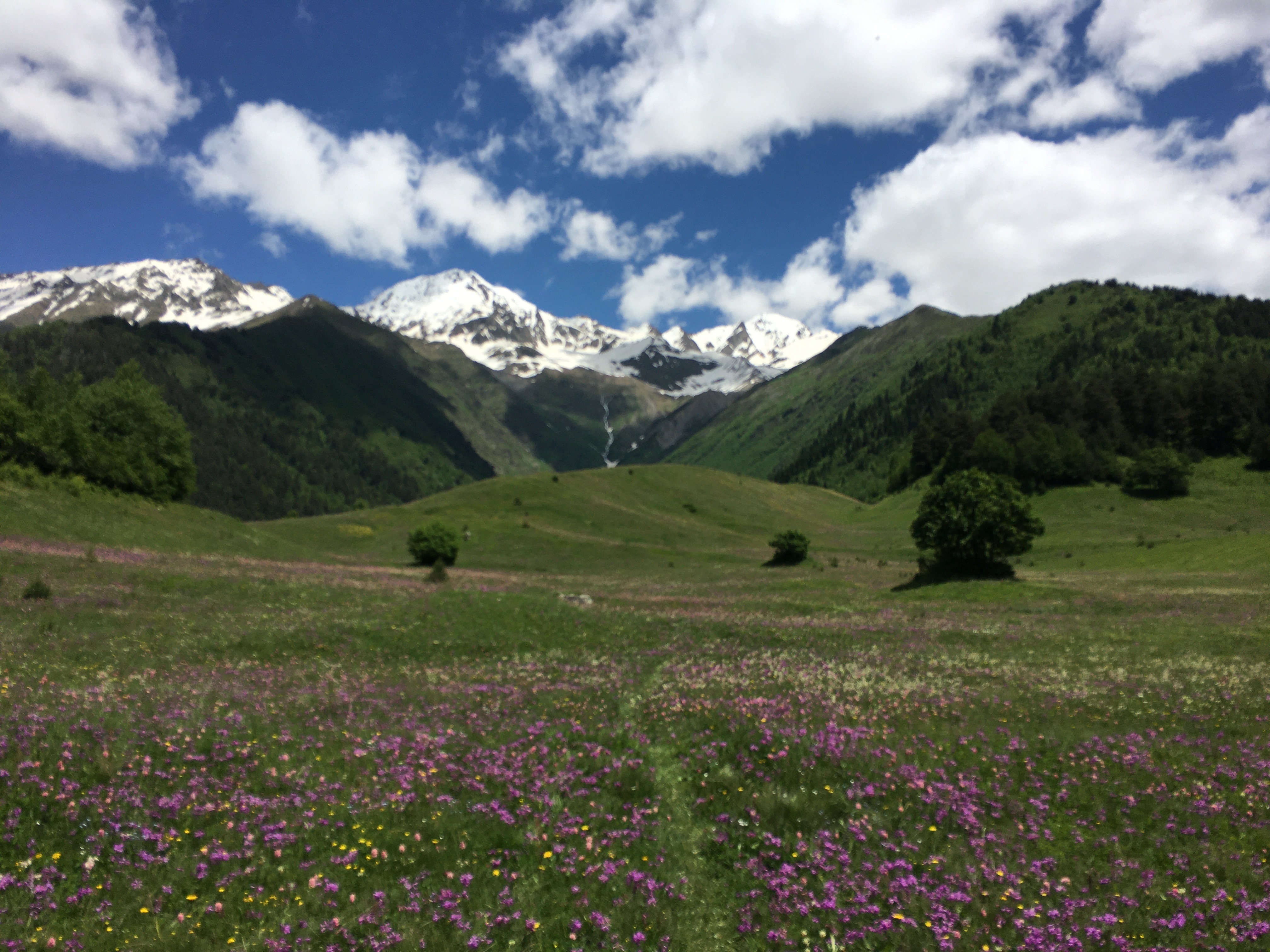
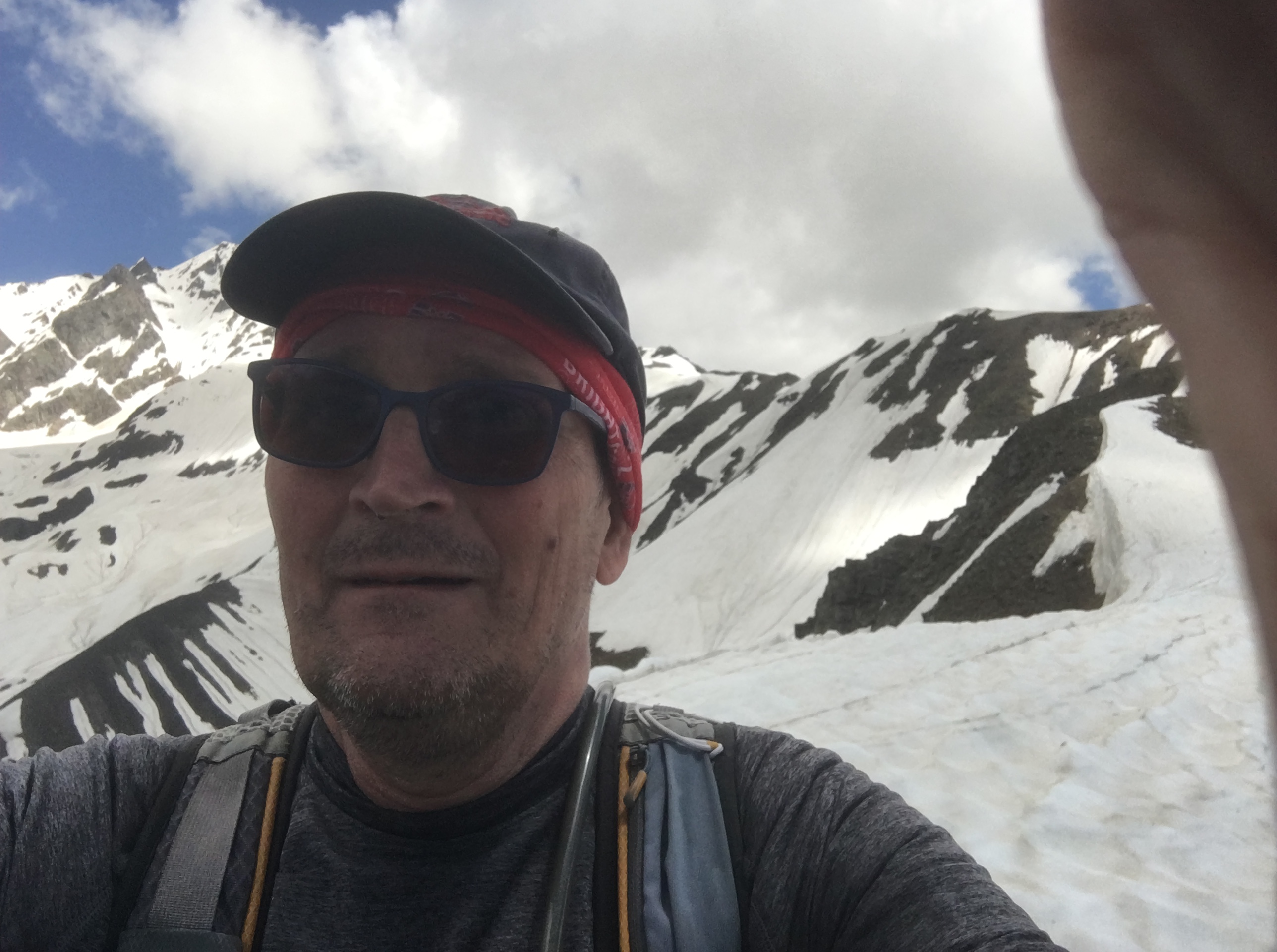
Snow-capped peaks with a wildflower meadow in the foreground.Yours truly at 3100 m negotiating a snow field in June.
In 2018, I bought a domain through Bluehost and began trying to make my own website to promote my tuition business. This is where I began to run into the many problems seemingly built into the experience and aimed at making you pay more for every single element or design feature.
WordPress is a very well-known platform for designing a website. Looking back, I can’t exactly say how I managed to circumvent each problem I encountered (actually sometimes I hit a brick wall) because it was a process of trial and error. I signed up to a WordPress account and then assigned the site to my Bluehost domain name. That was quite easy. There were some issues that I had to resolve, for example using Cloudfare to mitigate DDOS attacks and protect my site. But that was fairly easy.
What is very complicated is using the WordPress control panel to select plugins to use on my site and to get them to work the way I expected. I had no idea about what AMP was (Accelerated Mobile Pages) but I have a vague idea now. I signed up to get access to the paid Basic All In One SEO plugin version and this was useful. However you very quickly discover that most of the features are only available on the most expensive Pro or Elite plugin and when you register the plugin with the provided license key, it defaults to the free version after a day or so and you have to do it all over again.
As for AMP, I think I know what it is but try as I may, I just can’t get it to function correctly. It is very unclear. Does the device you use determine whether the site viewed is the AMP version or the non-AMP version? All I can seem to see in the non-AMP version unless I select Appearance -> AMP in the WordPress control panel. It makes no difference whether I delete cookies on my device. I always see the non-AMP version of my site. In that case, what is going on? I have a PhD in physics and I still can’t seem to figure it out. Everything is menu-driven in the plugins and it is very confusing.
I read that AMP increases the speed of your site and prioritises it in Google search. So it is worth doing. But the whole experience is so off-putting.
Am I stupid or something? Or is it just that people who programme these plugins and interfaces don’t have a clue how to communicate?
It would be wrong to say that I never enjoyed teaching in schools but it’s true that in general I did not enjoy it. It all depended on the class and the school. But for the most part, I did not have an easy ride. Most often, it was not the kids but the management that was the problem.
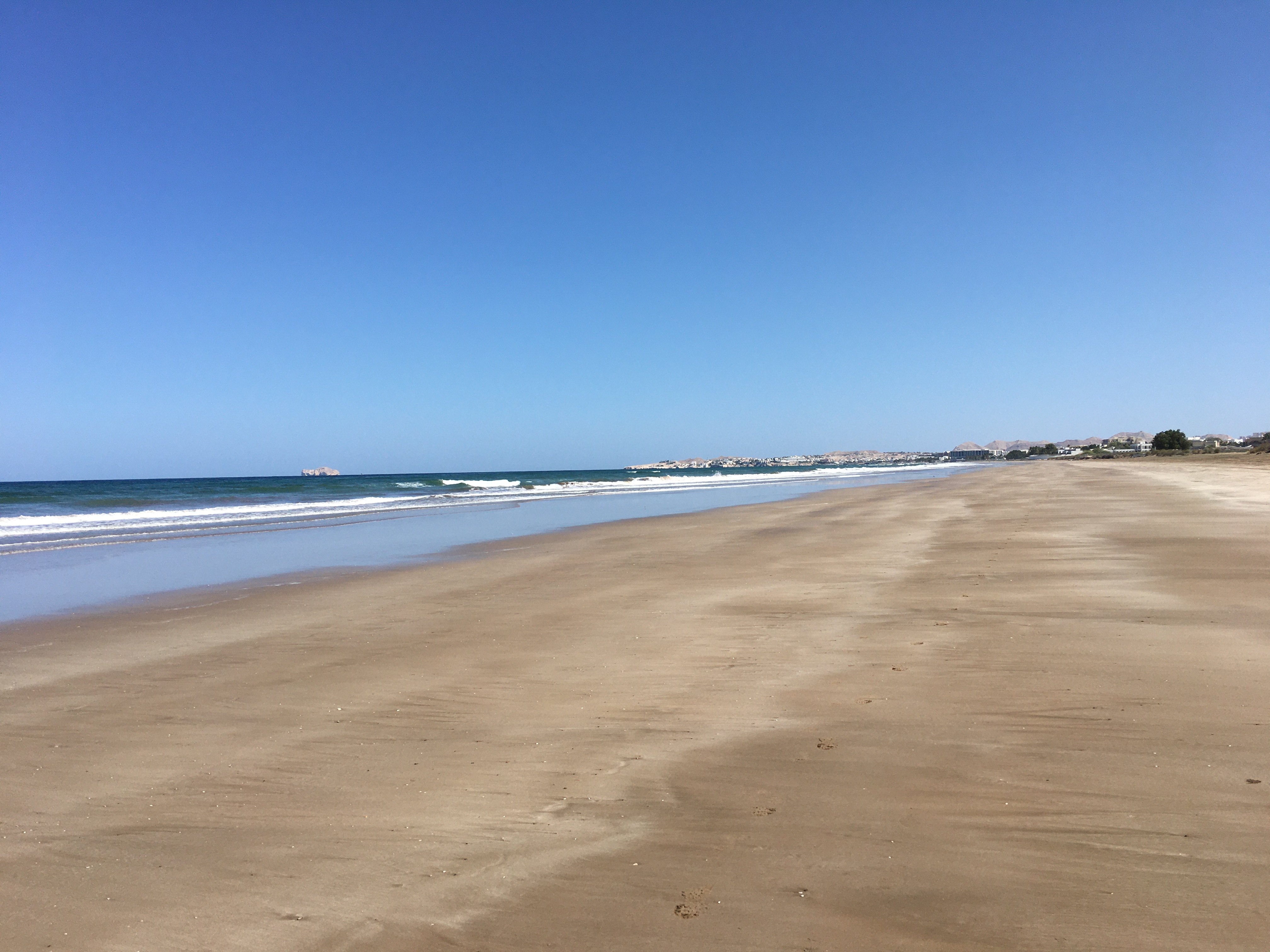
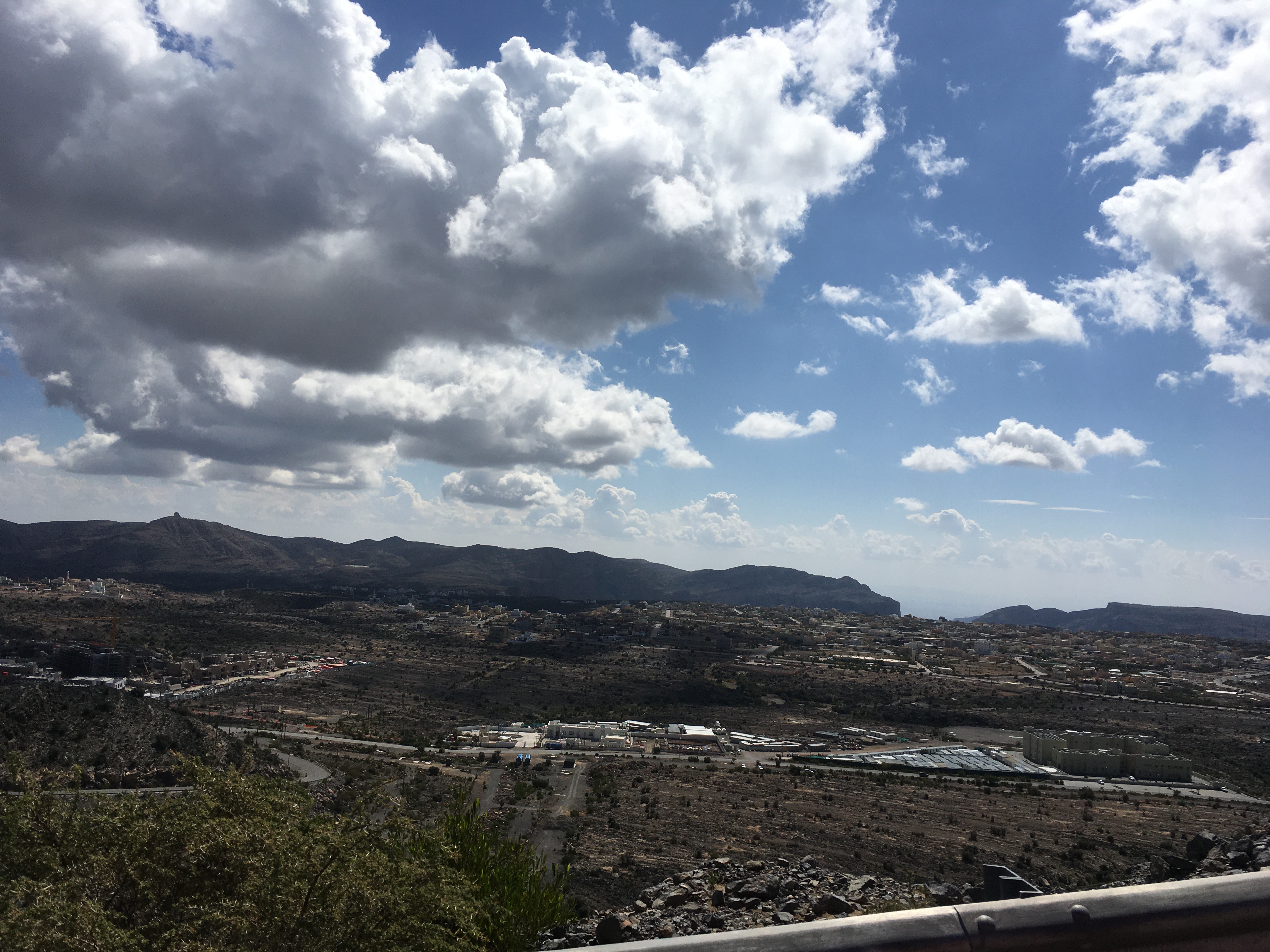
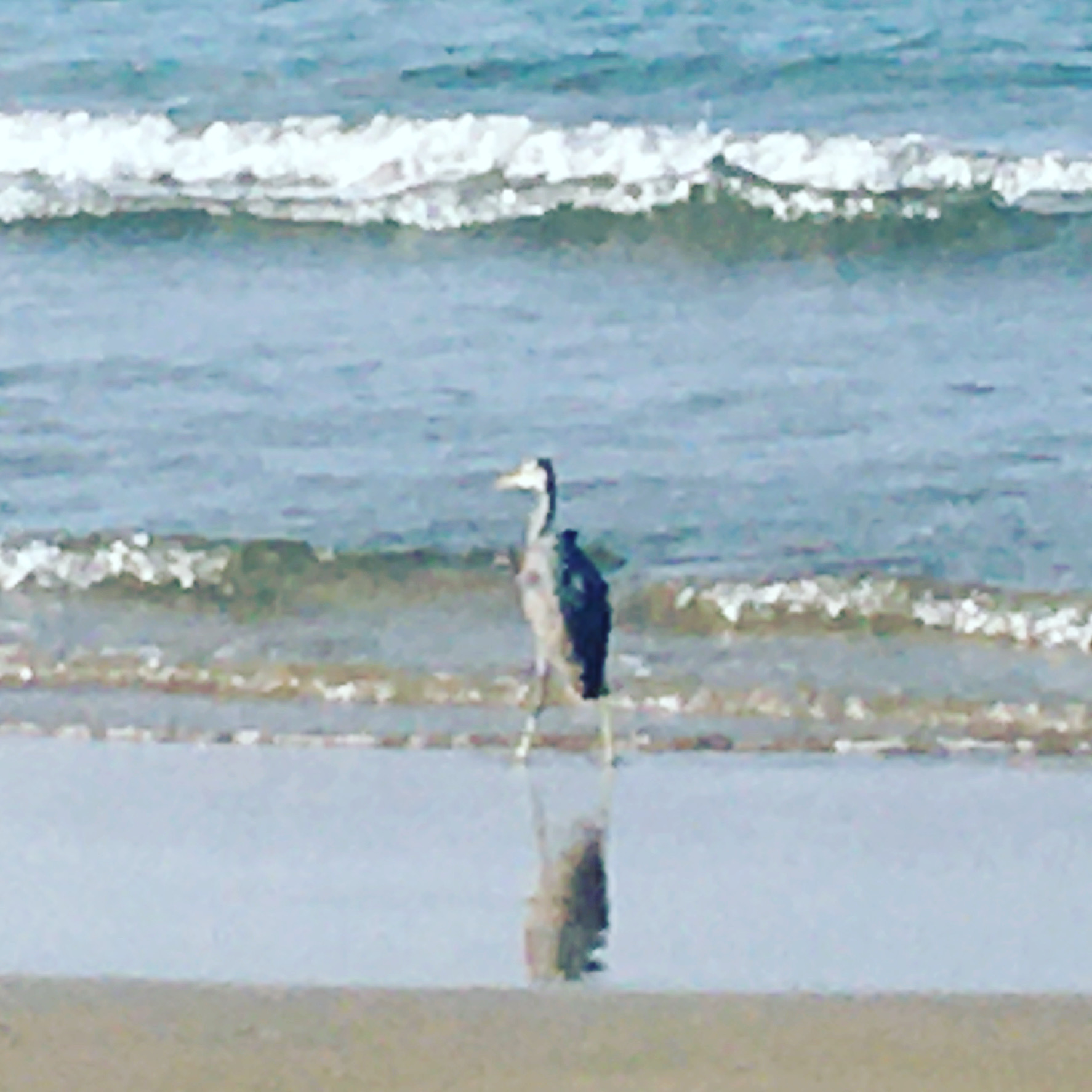
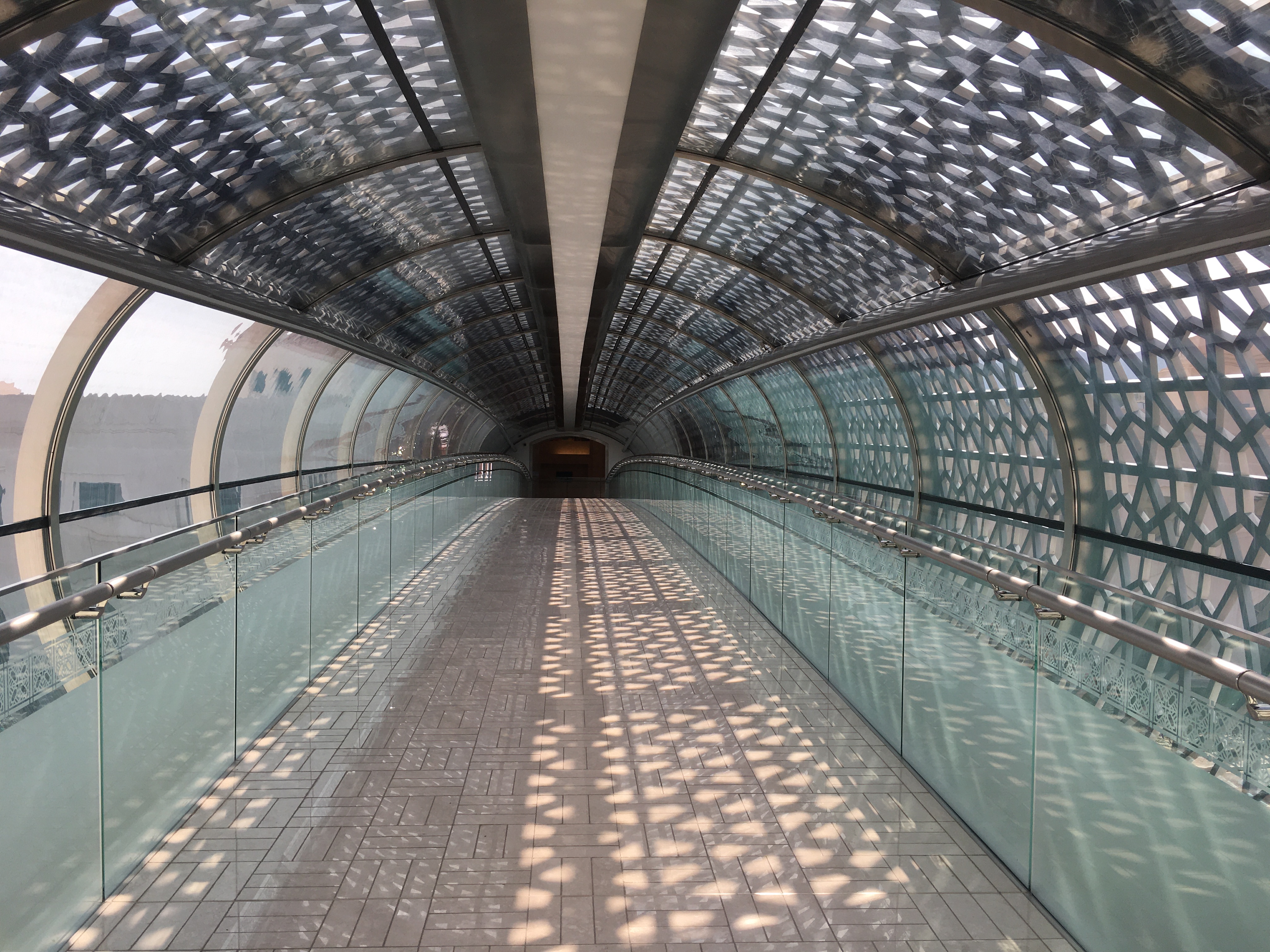
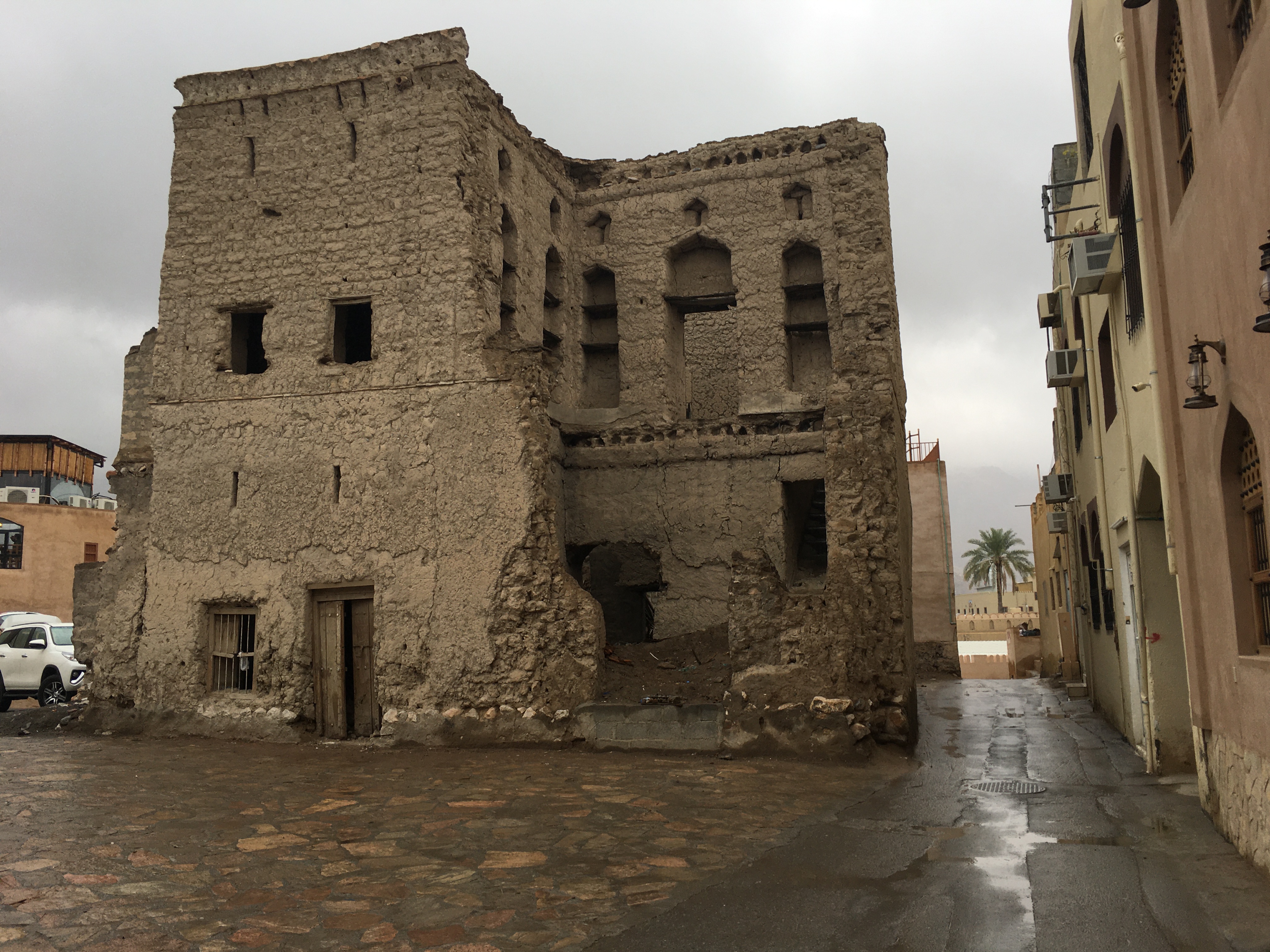
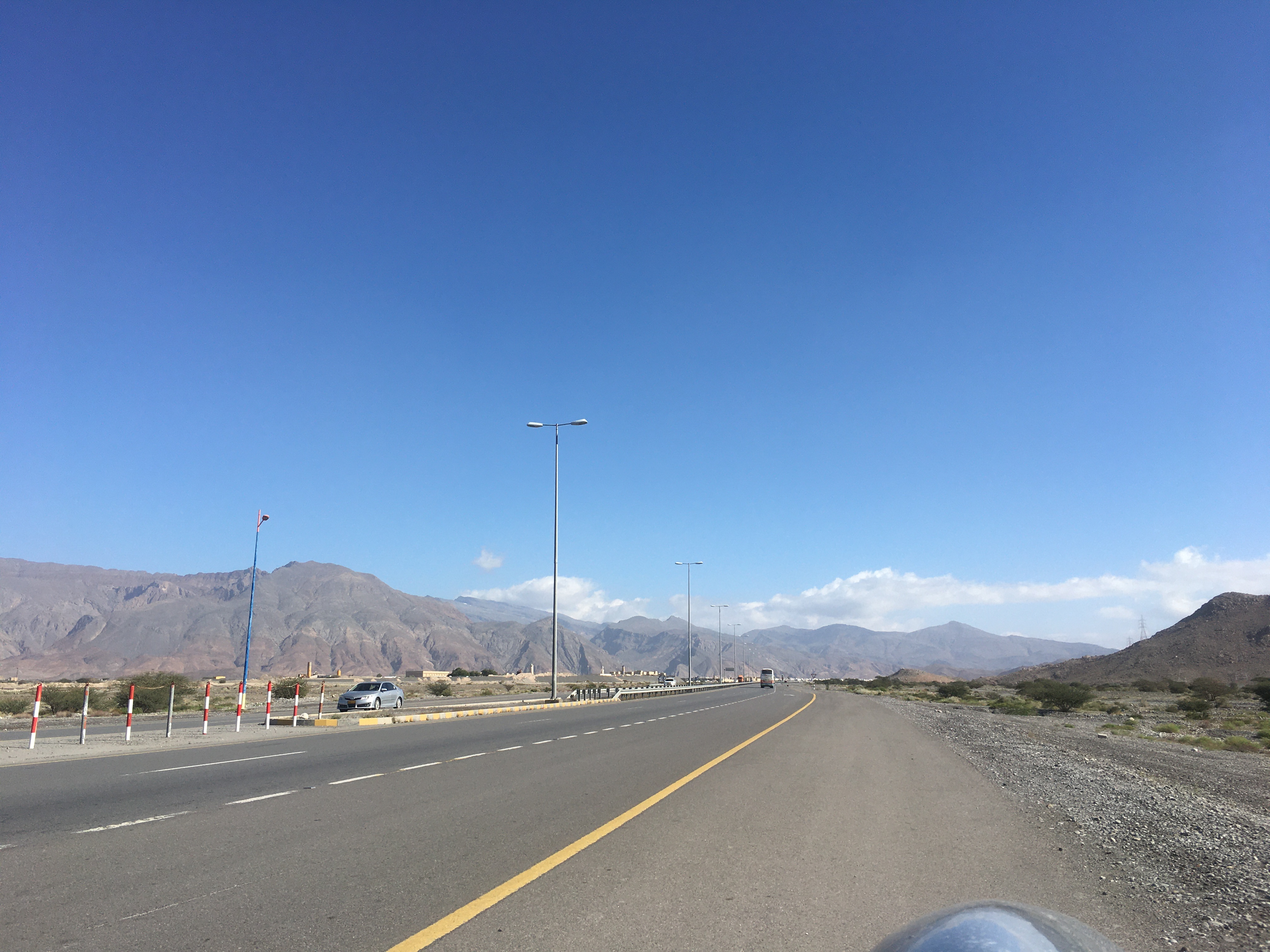
The beachIn the mountainsHigh in the mountainsA heronThe Opera HouseTurquoise windowNizwaThe fort at NizwaThe road inland
In October 2019, I visited Muscat, the capital city of Oman to tutor a student privately in the family home. Muscat is a coastal city on the Persian Gulf and is the capital city of Oman. It is rather expensive and is not as popular a destination for tourists as Dubai. It is most noted for its ruler Sultan Qaboos who has a reputation as a benevolent and moderate figure but in recent years, there has been well-publicised persecution and imprisonment of Omani bloggers since the Arab spring for expressing opinions that would not attract a second glance in the UK. I was short of money and needed the work as a self-employed private tutor. I was recruited for the job by a tuition agency in the UK. I stayed there until March 2020, with a short trip back to the UK in February.
Oman was oppressively hot, even in the middle of October when I arrived. Daytime temperatures were typically in the mid to high thirties, and it was very humid. I used to go running on the beach in the evening. The beach was flat and sandy and extended for miles. It was about a 2 km run to get to the beach where there were plenty of cafes to try. One of my favorite cafes made great hummus. I had access to a car and used to head to a mall about 10 km away where there was a North Indian restaurant that made traditional dishes. But generally, I found life boring there. To start with, I used to socialize with my student’s father in the evenings. We chatted about a lot of different subjects. But after a while, I found him controlling and stopped going. In the five months I was there, I had two days off in the old capital Nizwa and he had me teach his son online on those days.
He employed a Ugandan maid who never had a day off when I was living there. She started sweeping the floor at 6 am and was at his beck and call until 10 pm. For context, slavery in Oman was only abolished in 1970.
The lad I was teaching was seventeen years old and in the final year of high school. He was not doing well and struggling in all subjects. These problems had not arisen overnight. I suspected that he had had an extremely sheltered upbringing. I visited his school on parents’ evenings and to discuss his progress with his teachers. It was clear to me that his teachers in most subjects had been allowing him to completely zone out of participation in lessons. I had severe doubts about the methodology used by the teaching staff. The complete lack of originality and critical thinking present was the source of the problem. The assessment material in mathematics was littered with errors as were the exam papers. I supported him in Mathematics, English, Biology, and Physics. The examinations are in two parts in the final year. They are held in January and July. However, due to COVID, the dates of the first examination session were postponed less than 24 hours before the exams were due to be taken. There was a lot of assessed work too. He told me that he got help with this and was allowed to repeat it until he got it right.
The father was influential and managed to find out in advance from the Ministry of Education what the topics of the Biology exam were to be based on. I found this out from the student, not the father. I was shocked.
He passed all his examinations in January, and the examination session in June was canceled due to the pandemic. The only way I could get him through the exams was through rote learning. He had enough short-term memory for this strategy to work but had absolutely no understanding. I had disagreements with the father because he seemed unwilling to accept that his son had learning difficulties. He suggested career paths for his son such as becoming a pilot for Oman Air, studying cybersecurity, and other highly technical jobs. I tried to make him have more realistic expectations, but it was a struggle. When I wrote to the father to diplomatically explain these problems, he didn’t speak to me for about three days. This happened on two occasions.
The father agreed to pay me a 20% bonus based on his son getting satisfactory results. When these results were achieved, he conveniently forgot about his promises.
The boy had no interests apart from watching YouTube and had no understanding of the world, so it was a challenge. Once, I showed him a picture of Paris taken from the Eiffel Tower in 2001. He was amazed that cars existed in 2001. I also asked him where petrol came from. His father works for the state oil and gas company. He had absolutely no idea. When I pressed him, the best he could come up with was, “from water?” In conclusion, the work filled a gap in my finances, but I would never want to visit or work in Oman again.
I recently came across this website which is a huge repository of films, television programmes, audio books, images and so forth. I listened to “Heart of Darkness” by Joseph Conrad read very well indeed by a gentleman with a hint of an Australian accent. I also watched a François Truffaut film. I recommend it whether you want to watch an old movie, read or listen to a novel or simply have a browse.
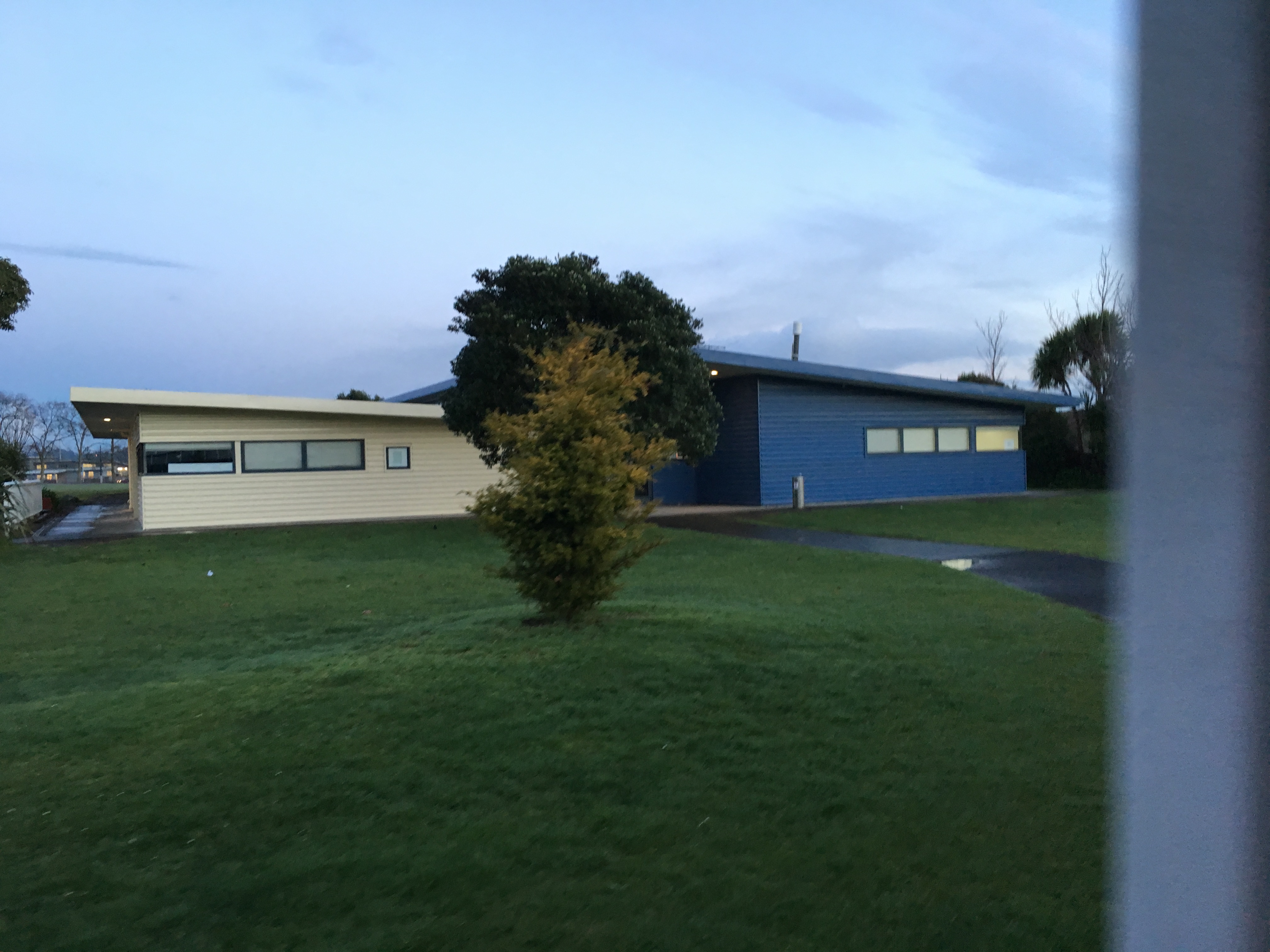
A few years ago, after a holiday in New Zealand, I fell in love with the country and really wanted to move there. I researched the options for emigrating as a qualified teacher and decided to go for it. It was a slow and expensive process. I had to get all my home qualifications certified in New Zealand, get letters from every school I had ever worked in to confirm my employment and get an expensive medical examination. I went through an agency. They offered some different schools and I decided on one in Auckland. It seemed like a decent school. I had a Skype interview for the job.
Time passed and I must have spent in the region of £2000 on visa fees and other fees. Finally my visa came through. I was quite anxious about starting in a new country even though I have worked overseas a lot in the past. There was also the added worry that my stepfather was elderly and had dementia. I had really wanted my son (who was 20 at the time) to join me but he did not seem interested. He was on a working holiday visa in New Zealand at the time and had decided to do the same in Australia. So I was on my own.
My new school in Auckland. I started in July 2018.On the way south in 2017
Furthermore I had not taught in schools for some years. I had instead been private tutoring and I was not prepared for the behaviour I would encounter.
I decided to have a bit of a holiday in NZ before starting work. I arrived in country about 5 weeks before the start of the new term. I met the staff as it was the end of term and they were still in school. I met one of the teachers whose year 9 class I would be taking over as she was going on maternity leave. She proceeded to tell me how I would not be able to cope with the kids in her class and went through a list of all their problems. It was all very off-putting.
I had a lovely holiday and drove all the way down to Wanaka on the South Island, stopping at Fox Glacier to see friends..
I was renting an Airbnb in Auckland while I began to seek out a place to live. I was depressed by the cost of some of the accommodation and what I could afford was very pokey indeed. The school was in Henderson, a deprived area of Auckland. In fact all I read in the local newspaper was about the high levels of crime and gang violence.
I had been taking antidepressants for many years. But I had decided to make a clean break and stop taking them. I had not realised how difficult this would be. I had also not declared this to the school (that I was on antidepressants). So sue me.
The new term was approaching and I was about to start my new job. I felt strangely detached and yet at the same time quite anxious. The staff in my department (science) were lovely and very supportive. But as I took on each of my new classes, I was concerned at the low standards and very poor behaviour. Sone kids in my year 9 class constantly tapped on the metal legs of their desks and that was when they weren’t shouting unprintable obscenities at each other. I felt that I was losing control and by the second week this was happening in two of my classes. I had to ask for help from the year 9 pastoral head. By the end of Tuesday of the second week I ended the day so depressed that I just wanted the ground to open up and swallow me. I was mostly concerned at the reaction of other teachers as I could only see things getting worse with these classes. I was on my own in the country so I had no-one outside of the school to talk to.
I went home that day feeling empty and just knew that I couldn’t cope at this school. That evening I stayed up late thinking about the predicament I was in. I booked myself onto a flight at 8am the following morning and went half way round the world to get home again. At the airport, I had to dump a lot of my possessions as I was over my weight allowance. In the bin went my tent, sleeping bag and a load of my clothes.
I had even shipped all my worldly possessions out to New Zealand at great expense.
Once I was about to board my flight I emailed the school to tell them the truth. I was so ashamed.
The whole experience cost me the best part of £10 000. I decided to leave so abruptly because I thought that they would try to persuade me to stay otherwise.
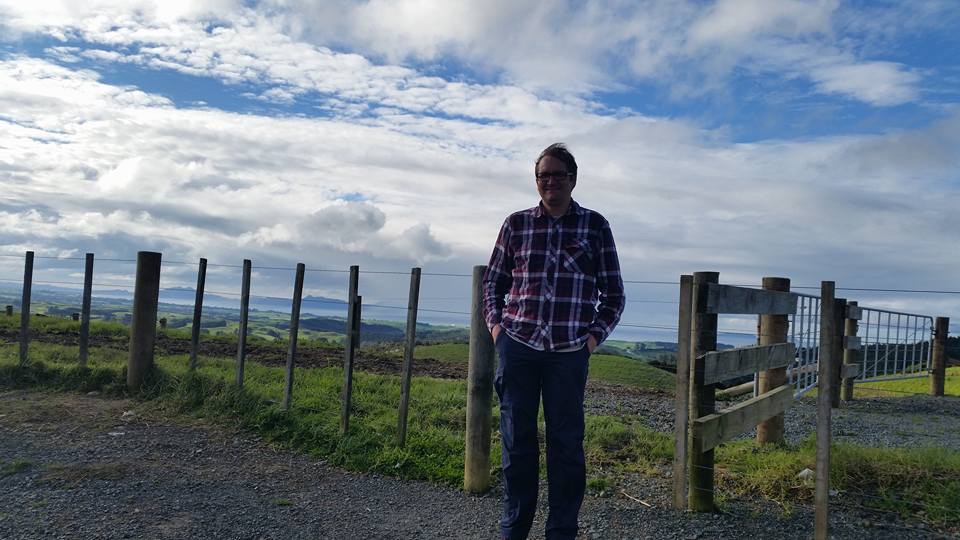
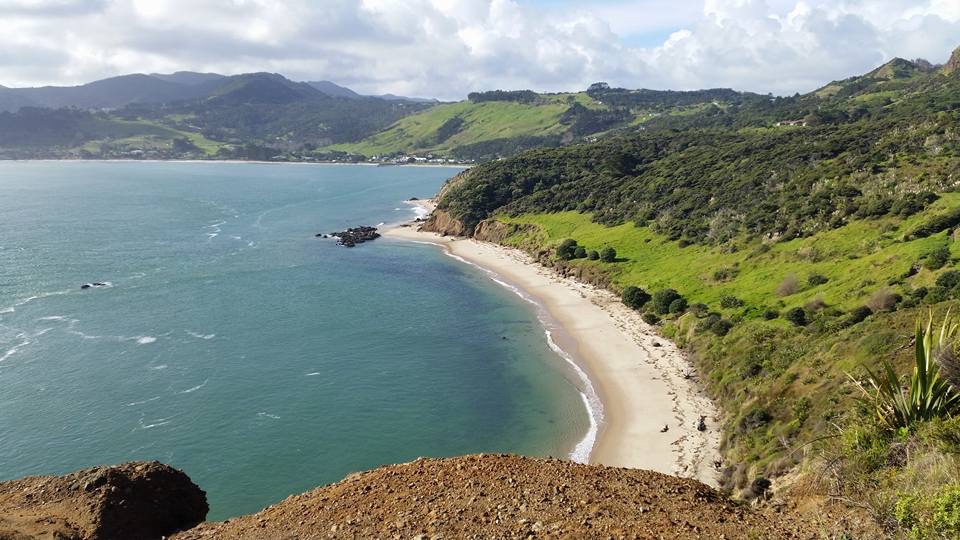
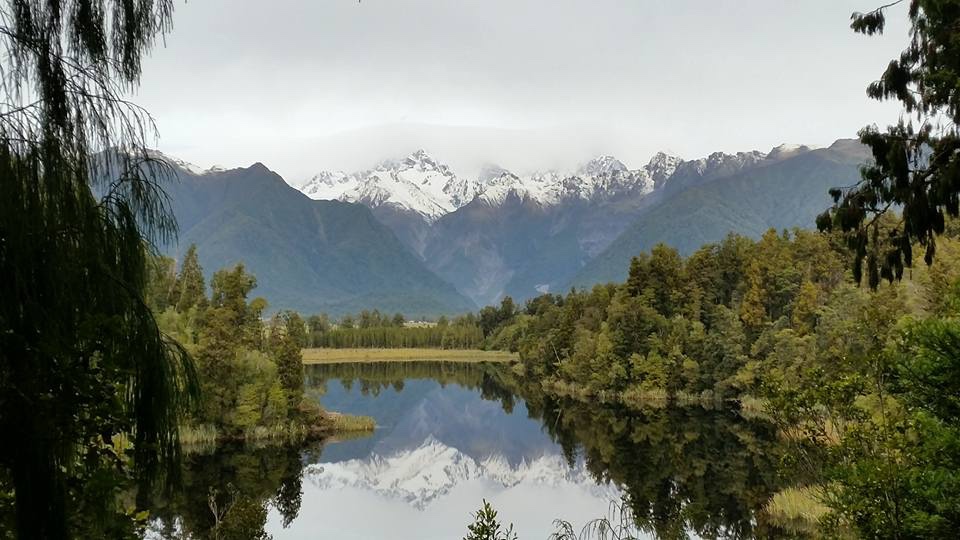
A beach viewView from a still lake towards Mount Cook.My son Paddy in 2017
I had to return later that year to collect my possessions which had followed me to New Zealand. I could not afford to ship everything back so when I returned, I sold most of my possessions (bookcases, books, a bed, mattresses, a whole load of kitchen appliances, furniture, lamps, my TV, a full-sized desk, you name it.) I gave away my entire CD collection and more to charity shops. I even threw away my entire collection of exercise books from my school days. I shipped a fraction of what I had sent back home. Then much of what I shipped home got pilfered by the shipping company.
It took me two years to get up the courage to write to my former head of department to apologise. She said that they had been worried about me.
It was a learning experience for me and a very tough one. Not only was it a big financial hit for me, but I had failed. I was very embarrassed about the whole thing. No more teaching in schools for me.
On my return, I stayed in a friend’s static caravan in Folkestone while I got my private tuition business up and running again.
























 Meanderings of a peripatetic maths teacher