Manor Field Primary School

In 1973, I started at Manor Field Primary School, which is in Burgess Hill, a rapidly expanding town in mid-Sussex. My family had moved there from neighbouring Lindfield and my mother and step-father had just bought their first house. My mother had married her second husband Colin the same year. I joined the infants department aged 6 years old. I have few memories of this year but I do recall being lead by my mother on my first day to the school office. I was six years old. A year later, I joined the junior school where my first form teacher was a Mrs Randal. She was probably in her sixties at the time. She told us once that we should always look at the world around us because even on the most mundane day, there should be interesting things to see. She was talking about being observant and studying the world around us. Someone had taught me some basic yoga and I remember sitting in a cross-legged position with both feet up on my thighs. I was showing off but I was always finding ways to get the teacher’s attention. I suppose I was bored.

I had a friend called Nigel who was always getting into trouble. I don’t know why I did this but one day, I scratched his name on a desk and went and told the teacher that he had done it. The readiness for her to believe me was surprising.

I remember that one thing we used to get up to was climb up into the roof space of one of the old buildings during playtime. That was near the main playground. Ice would form on the playground in the winter but we were not allowed to skate on it. I remember athletics on the sports field and a pair of big trees that grew close to the entrance to them. Other memories are of playing stool-ball on the recreation ground and fire practice with a hand wound fire alarm. 

In the second year, our form teacher was a Mrs Maize and Mr Simpson. We were a large class hence the two teachers. I remember cookery lessons in the second year (we had to wait for our turn as there was only a small room and a big class of us). When it was my turn, I was disappointed that it did not involve any cooking. We made a sweet out of condensed milk and coconut. It was coloured with food colouring and cut into little squares.

In the second year, I remember one afternoon asking to use the toilet. I needed to do a number two. The teacher told me to wait and I was too shy to ask again. I soiled myself and after school, my mother and step-father picked me up and we went on a drive to collect meat from a butcher they always went to. My mother noticed the smell and I recall her then saying that perhaps it was the smell of the meat. After we got home, I then owned up to it, much to my embarrassment and had to clean myself up in the bathroom.

Then in the third year, we had a very kind teacher called Alan Barker and a Mr Lee as well as a Mr Souter from Scotland. Mr Barker was a kindly teacher, who must have been in his late fifties at the time. I saw a mention of him on the Friends Reunited website maybe ten years ago so he was still alive then. He played the piano and took us for music lessons. I remember him commenting that I did not stammer when I was singing. Mr Souter devised a punishment for us involving sitting against the wall in a seated position without a chair. We must have been a noisy class. We also had a retired teacher for a bit – a Mr Gumble, who told us his wartime stories. He talked about the food they used to get in the army. Apparently, they used to get steak so often that he got fed up with it.

In the final year, we had Mrs Watson who told us that she had taught in Botswana. Mrs Watson, quite a young teacher, took an interest in my welfare when, in 1978, I was about to move to live with my dad. She asked if I was sure that was what I wanted. As it turns out, I wish that I had listened to her.

We had a field trip to a farm out Hassocks way in the third or fourth year.  At that time, there was a row of prefab classroom running along the side next to the park. School dinners cost 12 1/2 p. The headmaster at that time was a Mr Coward. I can’t recall seeing him much around the school though. Other names I remember are a Mrs Cole, a very strict playground monitor, Mrs Davies , and Mrs Poland who taught French. I remember studying French in the third year.

My memories are mostly happy though I do remember being bullied by one teacher, Mr Lee, who would pick on me with a comment about a TV advert of the time to make the class laugh at my expense, since I was shy and withdrawn. I also recall being shoved violently by him when asking him a question. A comment he made to my mother at a parents evening was “At first, I thought Alan was backward but then I realised that he is very intelligent.”

Assemblies then still involved singing hymns – such as “Morning has Broken” and others. We used to have sports days out in the big field at the back of the school. There was a pair of tall trees – growing side by side close to the entrance to the field. The fire alarm was a hand-wound bell. Assemblies were held in the large hall near Junction Road by the Infants School. I think we probably only had them once or twice a week. I don’t remember there being assemblies taken by classes – they were generally assigned to a particular teacher to give.

Physics and me

I was always interested in science growing up in the 70s. This was the era of space flight. I was too young to remember the moon landings but I must have watched them with my mother and two older brothers. I used to drive my mother crazy by doing experiments on mouldy bread. The colours of the different species of mould fascinated me. I also grew bacterial cultures in water and looked at them under my microscope. My interests also pointed heavenwards as I was given a pair of binoculars by my step-father. I was always looking at the stars and knew the names of the planets from an early age,

I used to ask my older brothers about what they were learning at school. It always seemed that we never did anything interesting at my primary school in Burgess Hill, a rapidly growing town in mid-Sussex. I really think that the teachers were very mediocre. For example, I never remember doing any experiments or learning much science. I was ahead on the maths programme so I was given a more advanced book to work through to keep me occupied. But I was bored at school where we seemed to always work at the pace of the slowest learner.

I remember receiving a big book from my father and step-mother on science for Christmas in 1978. It had one page which described the scale of the atom by describing the nucleus as a doorbell. The town was the atom. Things like that grabbed my attention.

When I was twelve and began at Lewes Grammar School, we had a pretty useless physics teacher so I was quite disappointed that he did not make the effort to explain anything to us. He just sat behind his desk and expected us to do worksheets. He hardly wrote anything on the board and was pretty lazy really. But these uninspiring lessons did not dampen my interest in science or physics. I did well in tests and exams despite the hopeless physics teaching. However, at the end of the third year, I only achieved 59% in the end of year test so I was not allowed to go into the top set physics class for my O-level.

I had a very intuitive understanding of how things worked so even though the teaching in most subjects was inadequate, I managed to do well and get an A-grade in my physics O-level. I was the only one in my class to do so. This was in 1983. I chose mathematics, physics and chemistry as my A-levels.

I breezed through my maths and physics A-levels. Chemistry was a different matter. We had a young ex-Rhodesian teacher who taught us this subject and she was not very good and was unable to get ideas across. I remember long tedious triple lessons on a Wednesday afternoon where she talked for two hours non-stop. They were very painful. My friend and I found ways to amuse ourselves by imitating her accent. We were so rude. We used to mimic her voice saying “2-4-dinitrophenyl hydrazine” and squirt ethanol through the Bunsen burners when she left the classroom to alleviate the chronic boredom. She mentioned it to my mother at parents’ evening and my mother was mortified.

There were two of us in my A-level year who were very good at physics. In 1984, I attended a three day summer school at the University of Sussex and it interested me in taking the subject at university. In the end though, I was offered BCD grades at A-level as entrance requirements for Warwick University I think because I must have been so nervous in the interview. I was deeply concerned that I would not achieve the D in Chemistry. I was struggling and failing to do much of the homework because I did not understand it. For the first time at this school in my experience, there were no consequences when I did not do it. I don’t know how, but I pulled a B out of the bag in chemistry. Mathematics and physics were no problem – I achieved A’s in both of these. These were in the days before grade inflation and the ridiculous A* and A^ grades offered at A-level now.

In 1984, I had applied to go to Oxford University. I had been called to interview at Magdalen College but I was so out of my element that it was clear to anyone with any sense that I would not be offered a place. I was chronically shy and handicapped by a severe stutter. I had been attending weekly free physics tutorials given by the husband of my physics teacher. He was a researcher at the University of Sussex. Those lessons were attended by me and my good friend Richard. I recall understanding very little indeed as Peter Dawber went through question after question from the sets of past papers published by Oxford for their entrance exams. They were beyond anything that I could cope with.

When I failed to get a place, I was so disappointed that I threw all the revision material that I had purchased in the bin. I was in a depression for a long time after that. It made me realise how little I knew.

I was offered a place at Warwick University to study physics and started in 1985. Warwick is one of the new ‘red brick’ universities built in the 60s to accommodate the growing number of students resulting from the population boom. It was built just outside Coventry, an unattractive city in the West Midlands that was heavily bombed during the war. I used to comment that perhaps the Germans should come back and finish the job. In the first year, I was staying on campus. I had been looking forward to starting university, but it had not turned out as I had hoped and I was not feeling happy.

I found that I was struggling to understand much of what was going on, especially in mathematics. A long lecture course was presented in the first term of the first year on electronics of which I understood almost nothing. I also performed poorly in the weekly laboratory sessions which were marked by physics PhD students. They were exceptionally unhelpful and I began to see my dream drift away from me. I was like a fish out of water and anyway, I was depressed and socially inept. I did not know how to make friends and was very lonely and missed home. I did make one friend soon after I started and we used to keep ourself amused and cheer ourselves up in the face of dire teaching by memorising and reciting catch-phrases that lecturers used to come up with such as “but does a real device behave like that” and “pi-be-two”.

Somehow, I got a high 2-1 in the first year exams. But my weakness in mathematics at university level was making coping with the work very difficult. There were weekly questions posted which we were supposed to tackle. I never did these and neither did most of my colleagues. However nothing was done about this. We had a weekly tutorial with a PhD student in the first year and also a weekly tutorial with our personal tutor whom I and a friend mockingly called our impersonal tutor since he was so distant. It was sink or swim.

I left Warwick University with a 2-1 Honours in Physics but felt that I had not deserved it. In our year, there was only one first and one upper second (me). All the others received lower second class or third class degrees. I had seen my dream of a career in physics drift away. I did not want to become a teacher or go into a technical or applied physics field. I did not have the interpersonal skills anyway.

I ended up getting a job as a “systems analyst programmer” at IMI Computing in Maidenhead, programming in COBOL, and hated it. I disliked programming and was not good at it. However, after about a year, I had an idea to call up my former personal tutor, a Professor Malcolm Cooper. My luck was in because a student from my physics class at Warwick had started a PhD a year previously but for personal reasons had had to drop out. I was offered a PhD studentship. It was that easy.

Professor Cooper worked in the field of Compton Scattering and was an expert in the field. His team used intense x-rays from an electron synchrotron to probe the electrons around atoms and find out about bonding. In this way, his team offered confirmation to theoretical models.

My first task was to build a device that could concentrate and intensify the available x-ray source to provide quicker data collection rates. It was called a focussing x-ray monochromator. I was seconded to the engineering department to cut slices from a large single crystal of silicon and attempt to machine it into a shape like protruding teeth attached to a base that can be bent into an arc. This would focus a broader beam of x-rays into a much more intense one.

I had no experience of machining silicon, which is naturally brittle anyway, and as soon as it was bent, it broke into several pieces. So that idea was going nowhere.

At the beginning of my second year, an opportunity arose to work with a researcher at the Rutherford Appleton Laboratory’s Neutron Spallation Source called ISIS. RAL is based about 18 miles south of Oxford. The research being done was to develop a similar experimental technique that would work with neutrons instead of electrons. As neutrons interact strongly with the nucleus and not the electron shell, this would provide a way to measure the distributions of velocities of nuclei in a sample and hence be able to test models of bonding.

I began my secondment to the Rutherford Appleton Laboratory in 1990 and worked under Dr Jerry Mayers. The facility uses a proton synchrotron to fire protons at a metal target. This strips neutrons from the target in a process called spallation.

The instrument was called eVS, standing for electron-volt spectrometer. The neutron beam came in at one end, scattered from the sample in a large evacuated chamber, and the scattered beam was picked up by detectors arranged around the outside. The machine operated in what is called time-of-flight. Neutrons, having mass, have an energy which depends on their speed therefore by measuring the total time of flight of a neutron from arrival, scattering and to detection allows the energy transfer to be determined. The clever bit was how individual neutrons could be picked out. Metal foils were placed around the outside of the sample chamber just before the detectors. These were either gold or uranium foils which absorb neutrons strongly at so-called resonances. By taking the difference between a ‘foil in’ and a ‘foil out’ run, the difference gave those neutrons arriving with a specific energy. As the neutrons arrive in a pulse, the arrival time is known precisely so energy transfer can be calculated.

The computing side was complex for me and I relied on Jerry Mayers to do most of this though he was disappointed that I could not take this on. By 1993, I had sufficient data to write up my thesis on the development of eVS as a valuable experimental technique in condensed matter physics. However, I battled with the computing and data analysis side and it showed. I feel that I was lucky to be awarded my PhD. During my viva, I was questioned at length about who did most of the data analysis. I found these questions very stressful.

I remained seconded to RAL as a postdoc until the end of 1996. I lacked motivation and had personal problems which got in the way of my work. Because I found it so hard, I felt that I was not highly regarded by colleagues. So it was in 1995 that I was recruited by Voluntary Service Overseas to teach mathematics and physics in Zimbabwe.

Beketele

In 2004, I began working at Waterford Kamhlaba United World College in Swaziland. This is a school about five hours drive from Johannesburg set amongst the mountains of a small landlocked country the size of Wales. WK, as it is known, was the place that Nelson Mandela chose to have his children educated. As a United World College, it recruits its students worldwide and they come to Swaziland to take the IB Diploma, the international alternative to A-level. These students get academic scholarships and come from far and wide. It also recruits younger students for the lower school from nearer home. Most of the students aged 12 to 16 are from South Africa and neighbouring countries with a sizeable number coming from Ethiopia and some from Europe.

A large proportion of the students boarded. In fact, most of the IB students did as most of them came from outside Africa. I lived on campus which was outside the capital city Mbabane on a hillside. The weather was hot in summer and cold and misty in winter.

In 2006, I began fostering two boys aged 5 and 9 who had been living in the paediatric ward of Mbabane General Hospital. The younger child was there because he had been beaten round the head with a frying pan by his step-mother. The older child had been resident there for about two years and had serious health problems. There are over 100 000 orphans in Swaziland, and if you know anything about the health crisis in sub-Saharan Africa, you will know why. I’m not going to elaborate. The only place for these orphans is the street or some underfunded government institution. There are multiple Church run orphanages in the country, mainly funded by American evangelical churches. However, there are far too many orphans. There is no culture of adoption in Swaziland. People rely on an extended family network and orphans tend to be looked after by distant relations but usually in an exploitative relationship.

beketele
Beketele, Sakhile and Paddy on my veranda at WK

There was another teacher at the school who had adopted a baby so I knew that adoption was a possibility. I had been working with the school on a community service project at the hospital. I discuss the adoption in more detail in another post.

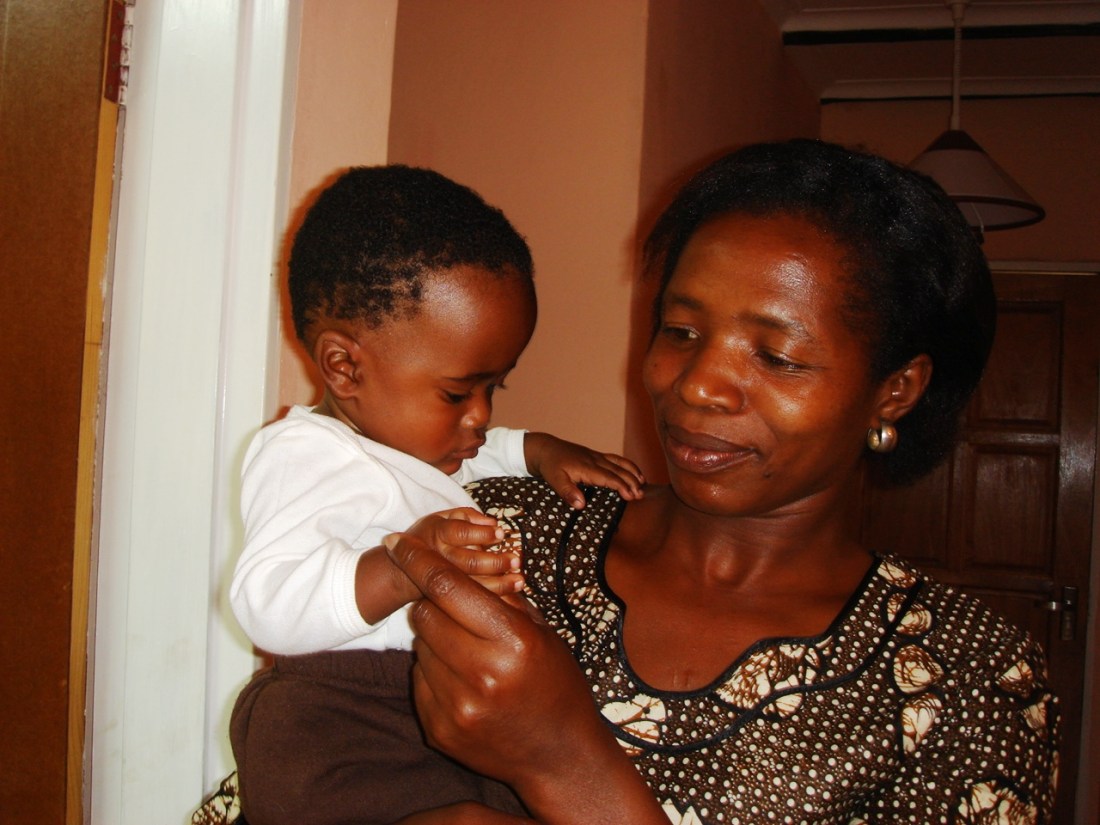
Beketele was a woman whom I employed to look after my two boys when I was teaching. She also cleaned the flat and did the washing. I paid her well compared to other teachers and I treated her well as she did a great job. There were some staff who underpaid their workers and that did not impress me.

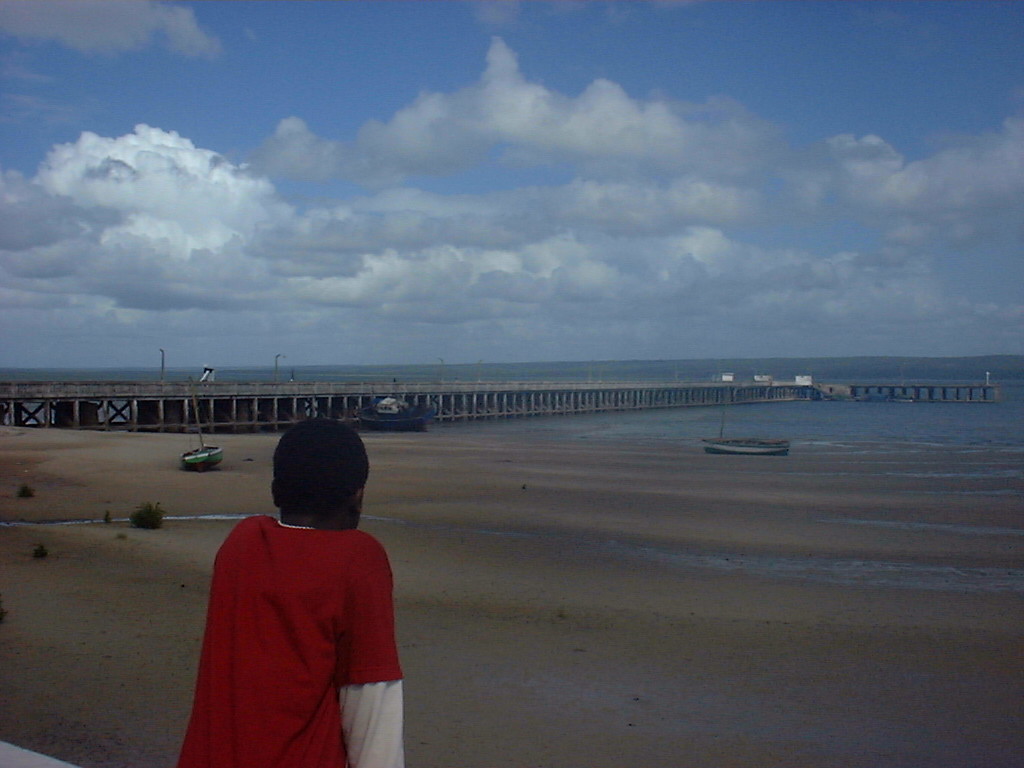
After I left Swaziland, I lost touch with Beketele. I enjoyed the chats I had with her. I would ask her how to pronounce certain words and she would tell me about Swazi culture. I was sorry to lose touch with her when I left Swaziland in 2007. I returned on holiday in 2013 and tried to locate her, placing an advert in the Swazi Times. I then heard from the housekeeper at WK that she was living in South Africa. I never did find her but I hope life has treated her well.

Some photos from across the years

I thought that I’d post some photos that I have taken with a few comments made on each picture. I will use each photo as a discussion point as people often say to me that I have done so much travelling and worked in so many different places that I should write about it. Only, I find it hard sometimes to know where to start. So using my photos as a talking point seems to be a good solution.

Check my website www.alsphotosite.wordpress.com for more.

36976632_2363988896961281_8773720576217841664_n_2363988893627948

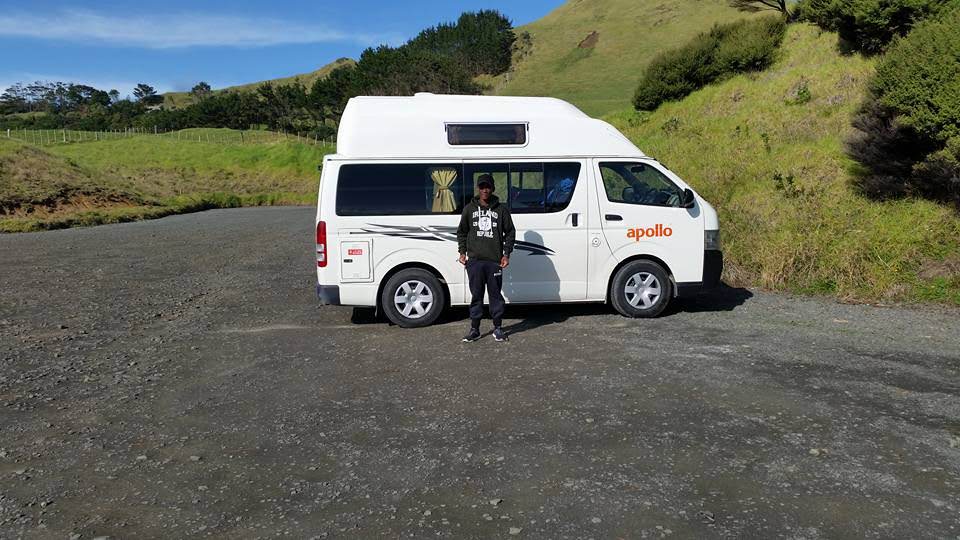
This is my son Paddy and was taken in 2017 on the west coast of North Island in New Zealand. I adopted my son in Swaziland in 2006 so he has now been part of my life for twelve years. We hired this van from a rather unscrupulous outfit as it turned out. It had clocked almost 200 000 km by the time I had the pleasure of driving it. It actually had cobwebs under the bonnet. I love New Zealand. I first visited the country in 2003 on a round the world trip. I wanted to show Paddy what it had to offer.

36950999_2363988733627964_4151073126941196288_o_2363988730294631
20170726_111255.jpg

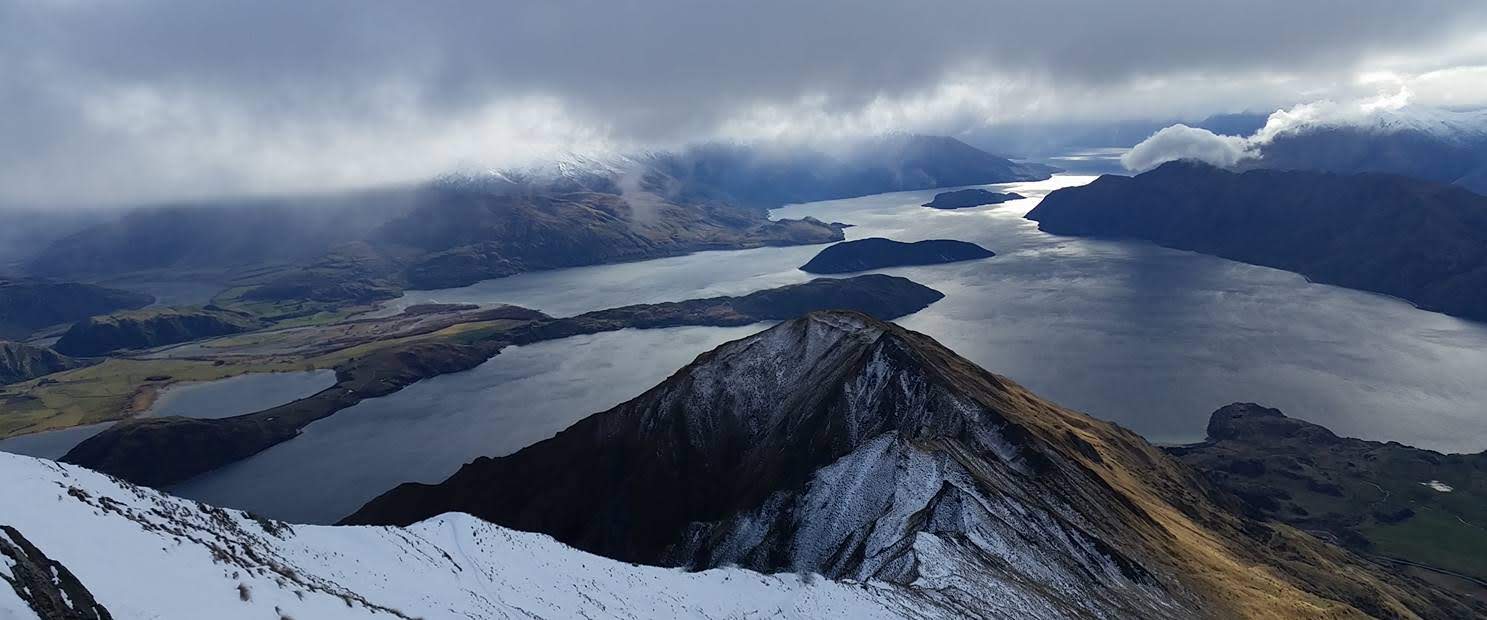
This was taken from the top of Roy’s Peak near Wanaka. This is in the middle of winter and there were not many people climbing this 1 km high mountain that day. The snow was pretty deep near the top. This view in my opinion is stunning.

17240561_1700672916626219_2544149676520361805_o_1700672916626219

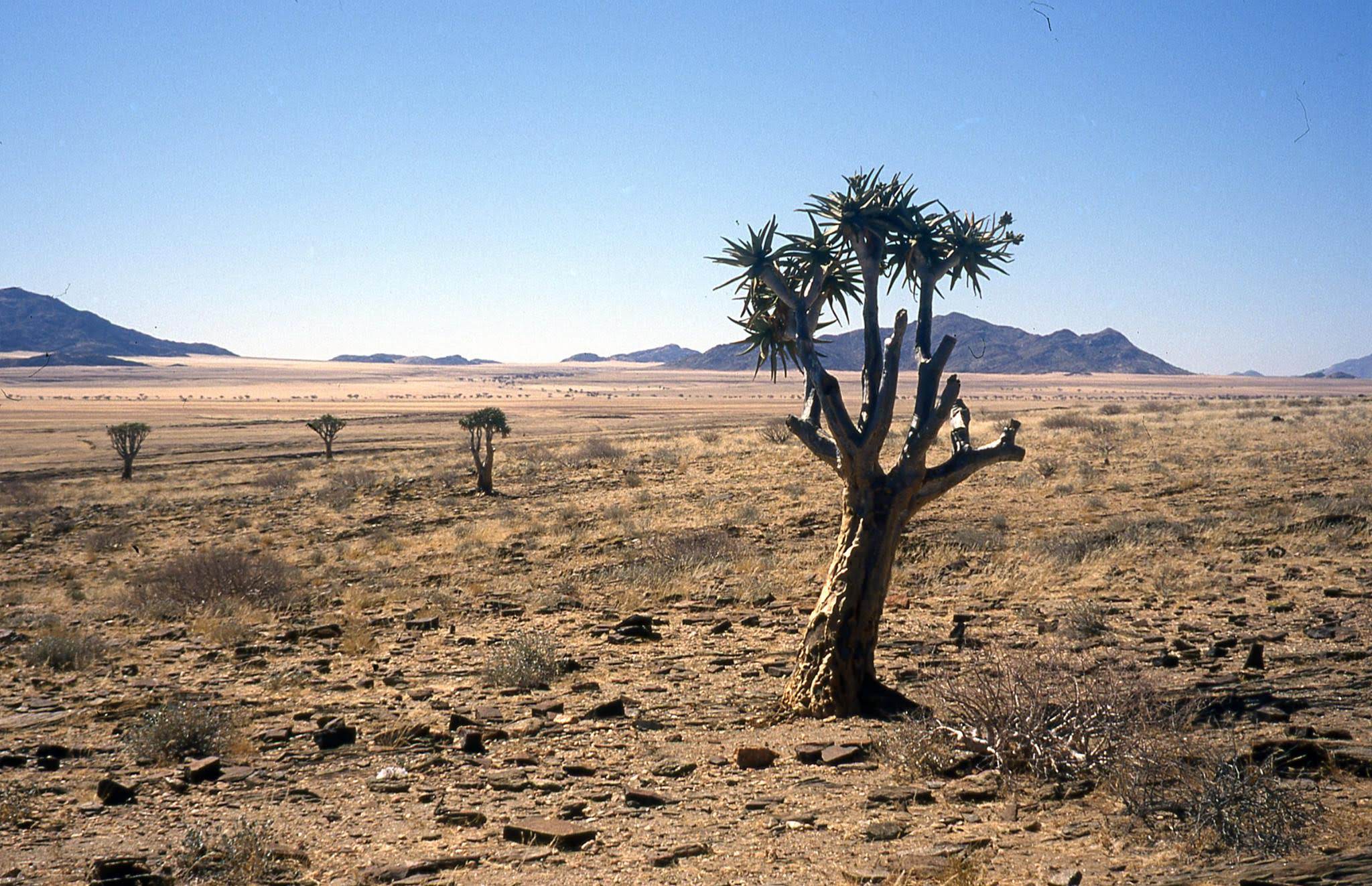
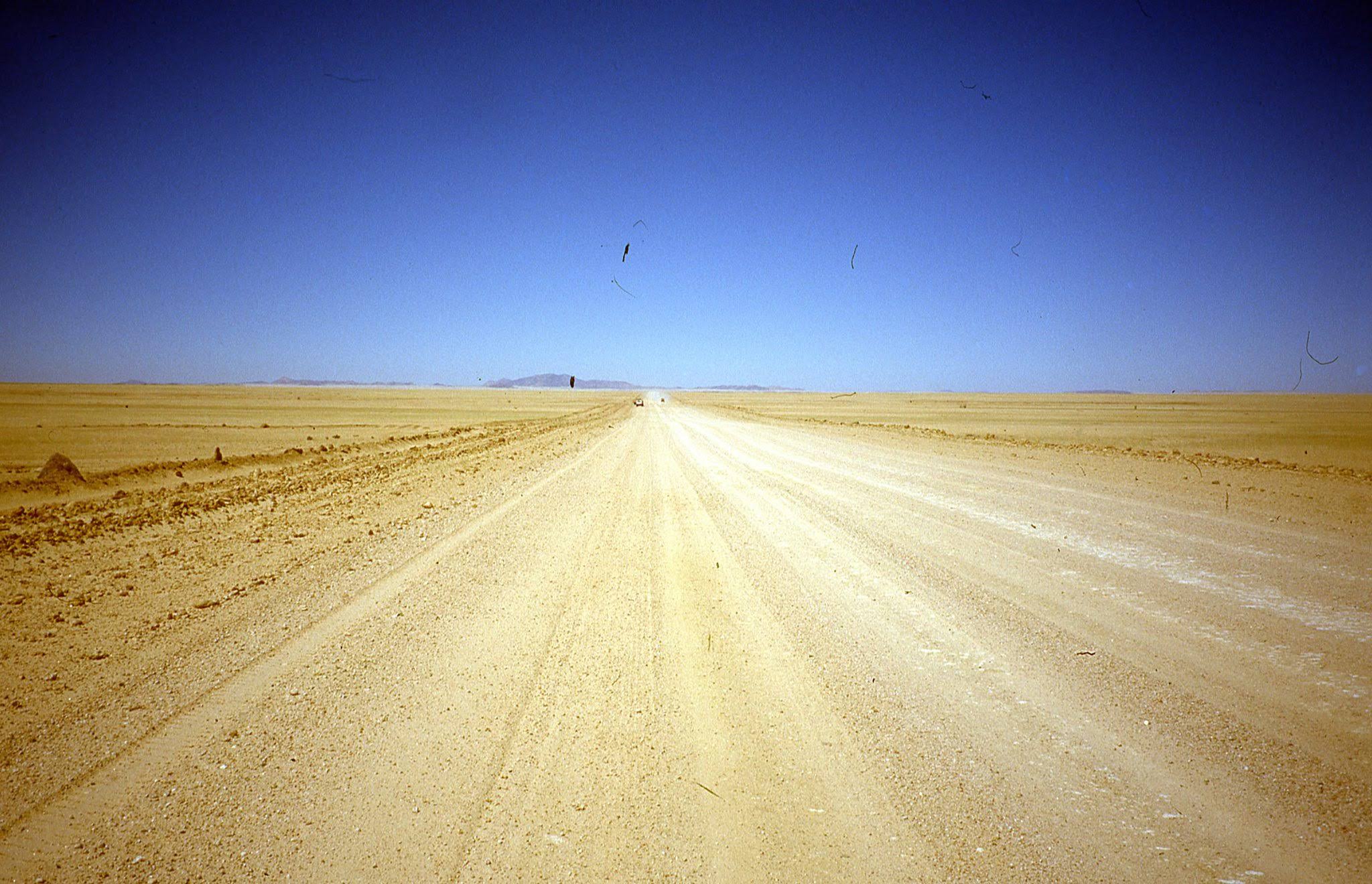
In 1997, I was living in Zimbabwe and took a road trip that year through Namibia with a house mate and some people we met in Cape Town. It was my first time seeing Namibia and what struck me was how flat and arid much of the country was. In many cases, the roads continued in a straight unbroken line as far as the eye could see. At night, distances were deceptive. A light on the horizon would take a fifteen or twenty minutes to come into view even driving at 100 kph because it would be 30 km away.

17211853_1700672433292934_7512376499158042114_o_1700672433292934

You had to be particularly careful driving on the dirt roads. We had hired a VW Golf from Cape Town and had been warned about speeding on the dirt roads as cars frequently overturned killing those inside. One of those amongst us was a twenty-something English woman who, whenever she was taking turns driving, would drive at breakneck speed. This made me very nervous and no matter how many times I asked her to slow down, she would not do so.

dscf0068

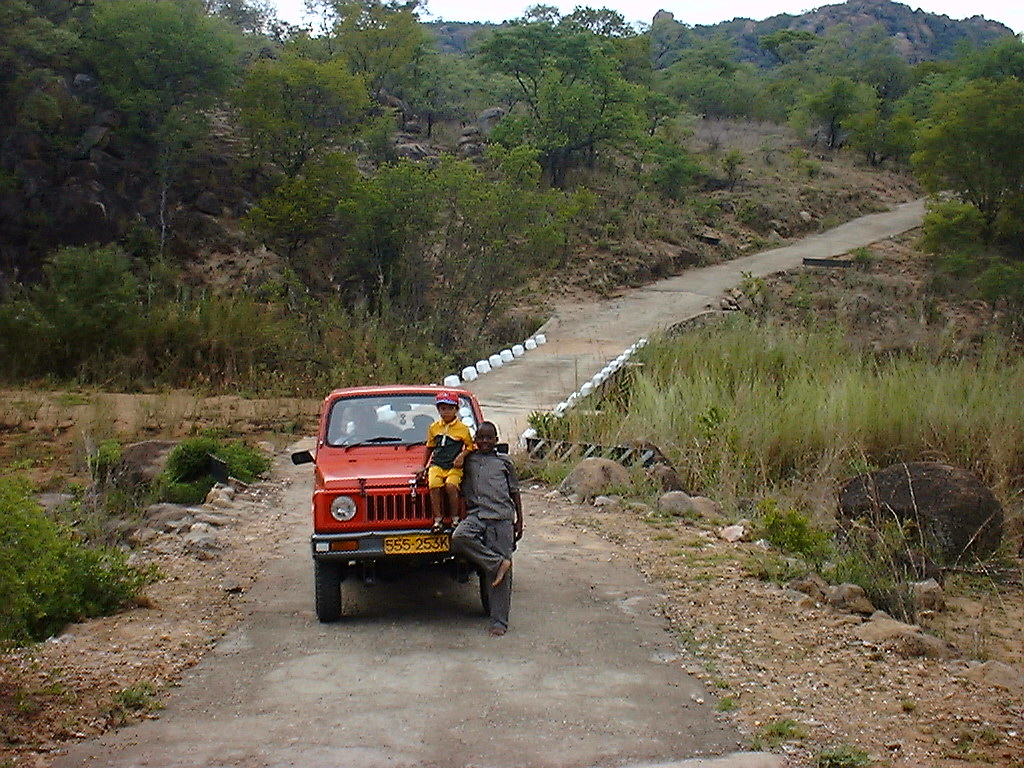
This photo was taken in about 2001 in Matopos National Park, near Bulawayo, Zimbabwe. It shows my friend Tim Cherry (behind the wheel), his son Andy (with the red cap) and my friend Nontando’s son Kelvin. I met Tim and Nontando whilst teaching in Zimbabwe in 1996 and 1997. When I began teaching there, 1 GBP was worth about 10 Zimbabwe Dollars. By 2002, the exchange rate was something like 60 000 000 000 dollars to a pound.

dscf0179

This photo was taken from aboard a ship that I took from Puerto Montt to Puerto Natales in southern Chile. It took three days and wove its way through these fjords. I was in Chile as part of my round the world trip in 2003. I had got the idea of taking this voyage from reading the book by John McCarthy and Brian Keenan who, when held in captivity by an Islamic terror group, had discussed what they would do on their release. They talked about setting up a yak farm in Patagonia. So it was that five years after their release, they did in fact travel to Chile and covered this vast and diverse country by almost every mode of transport possible. They took this same ship that I did and it was this that gave me the idea to take the same journey through the Chilean fjords.

untitled1

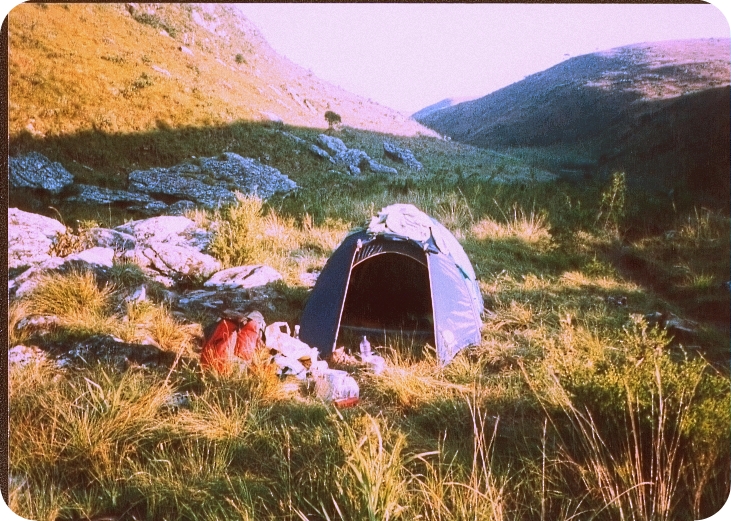
This rather retro-looking shot is of my campsite in the Chimanimani Mountains of the Eastern Highlands in Zimbabwe. I think this was in 1996, my first year in the country. I was hiking on my own and had rather a heavy rucksack. At one point, I stumbled and badly sprained my ankle. The pain was so bad that by the time I had descended, I decided to camp for the night as I could no longer walk. A couple of young German women hiked past where I was camping, in a place where you would definitely not choose to set up a tent, and I remember trying to impress on them that I was in trouble and needed help. They could not speak English nor I German so they just stared at me and walked off without attempting to understand me.

About six years later, I had reason to have my ankle x-rayed after another bad sprain and the doctor asked when I had broken my ankle. It turned out that I had fractured my fibula in my lower leg in 1996. No wonder it was so bloody painful.

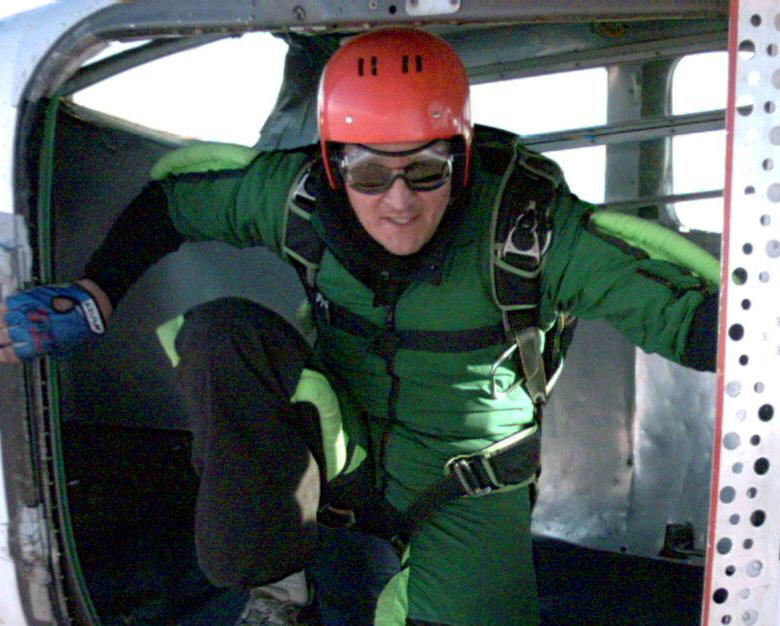
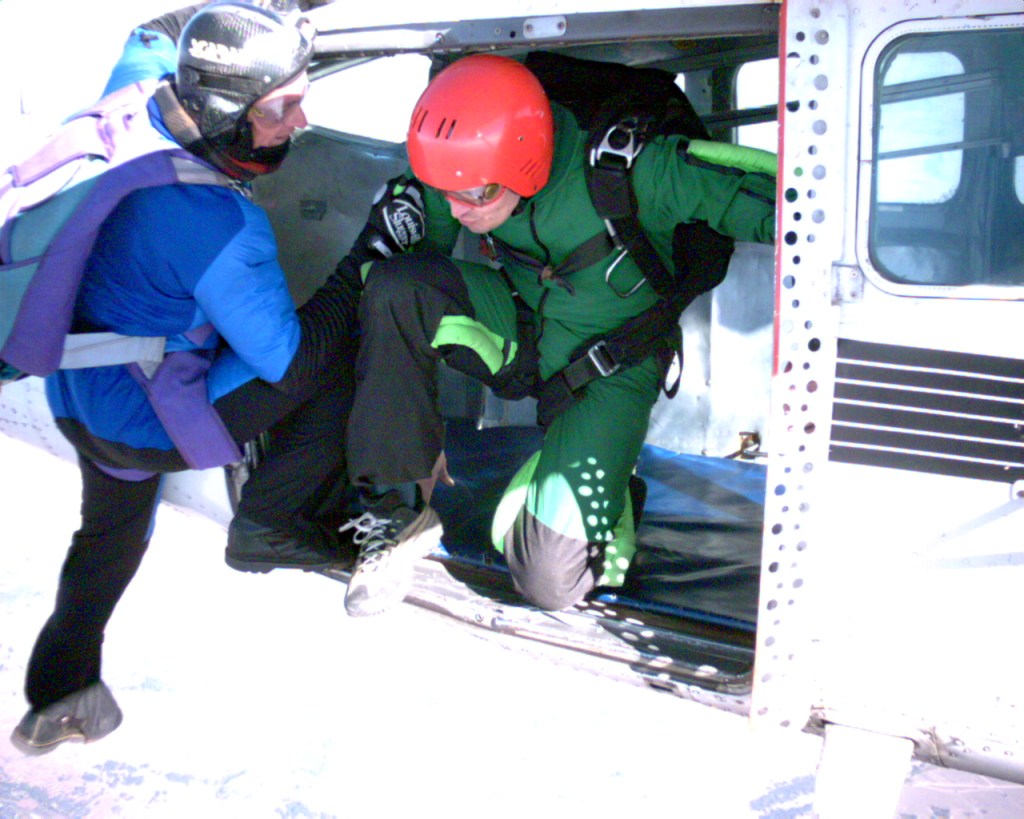
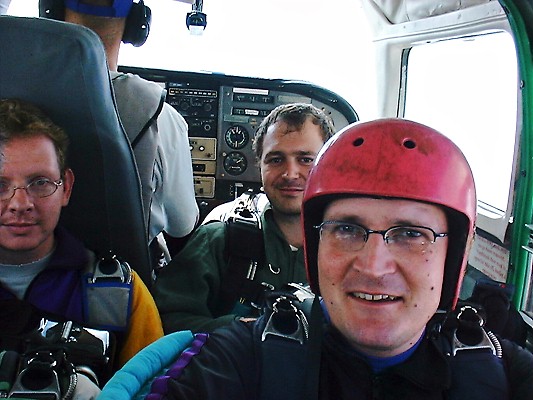
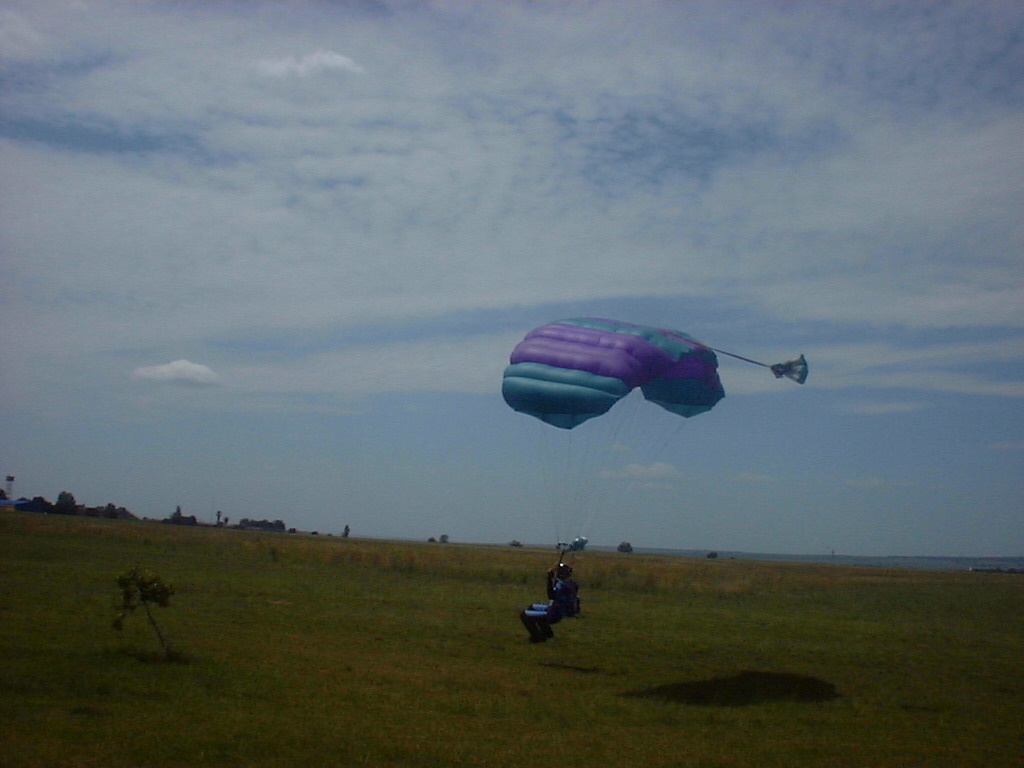
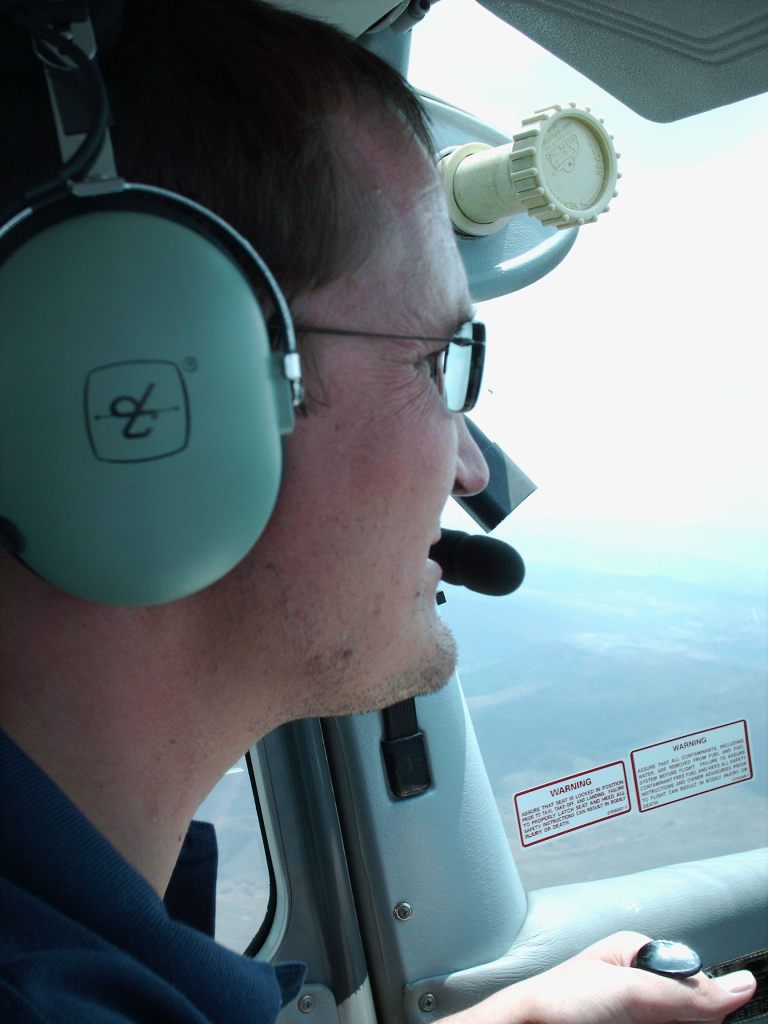
In 2003 on my round the world trip, I decided to learn to fly in Port Elizabeth. I studied at Algoa Flying School. It took about five weeks and flying was done in Cessna 150s. The previous year, I had learned to skydive at Witbank Skydiving Club in Mpumulanga Province, South Africa. I continued to skydive there when I began working in Swaziland as it was only about a four hour drive. I haven’t flown myself since 2006 as it is so expensive. I stopped skydiving about the same time when I adopted my son as I didn’t have the time. I found the kind of people who skydived in South Africa very macho and there was a fair bit of racism at the club so I wasn’t sorry to stop going there.

Fluffy was a cat that I acquired when I was living in Hungary. I lived in Hungary for three years from 2008 whilst working as a maths and physics teacher in Bratislava. There were a number of feral cats that I used to feed in the village where I lived. One gave birth to a litter of kittens in my living room, and fluffy was the runt of the litter. She died in December 2018.

fullsizeoutput_f7c.jpeg

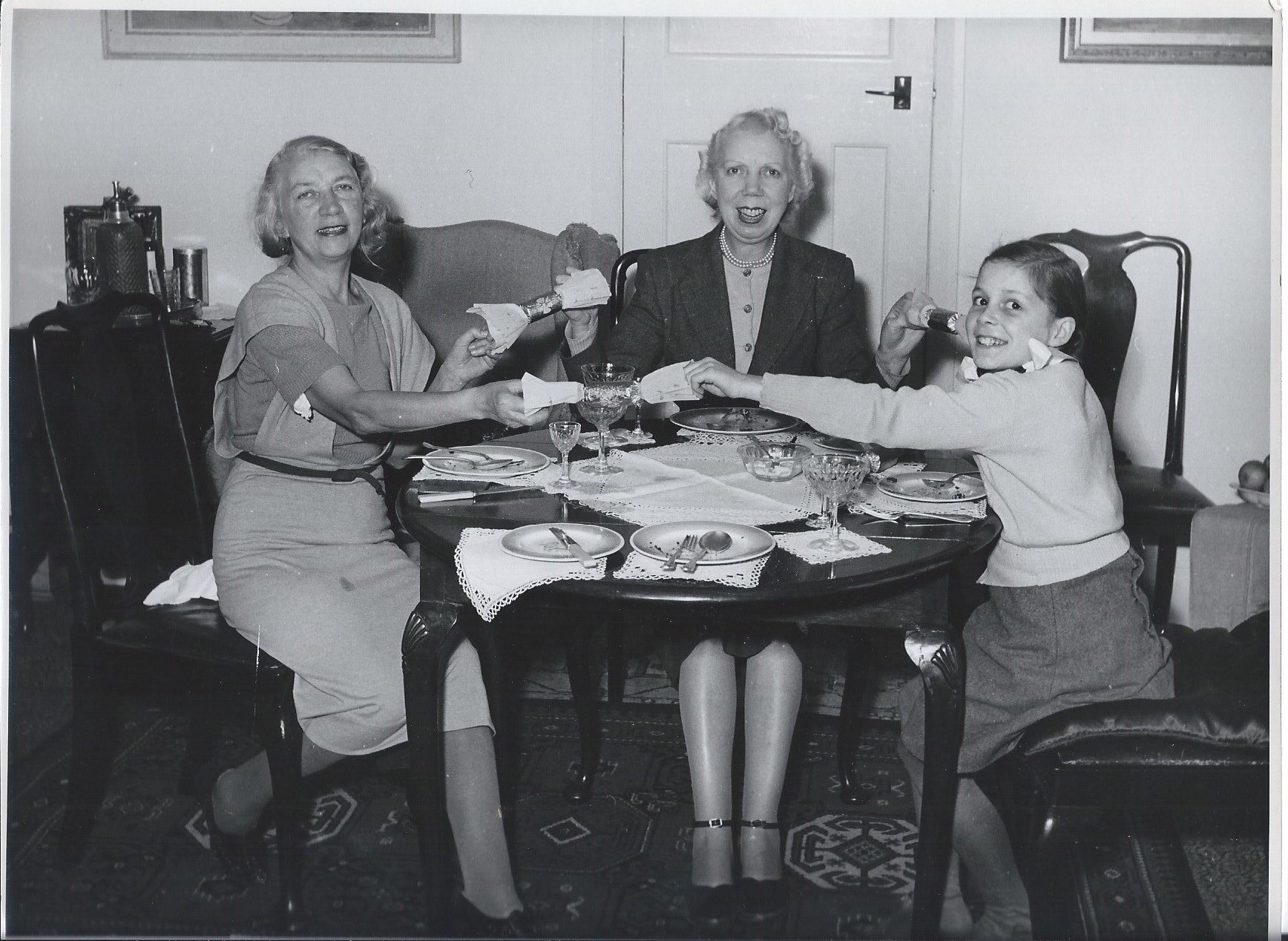
This photo was taken in about 1950, and shows my mother and her two aunts. This is probably taken in Slough where one of her aunts lived at the time. On the left is Edith and in the middle is Ada.

LOGS – The Hodd Years 1993-2000


By Alex Stirling-Reed

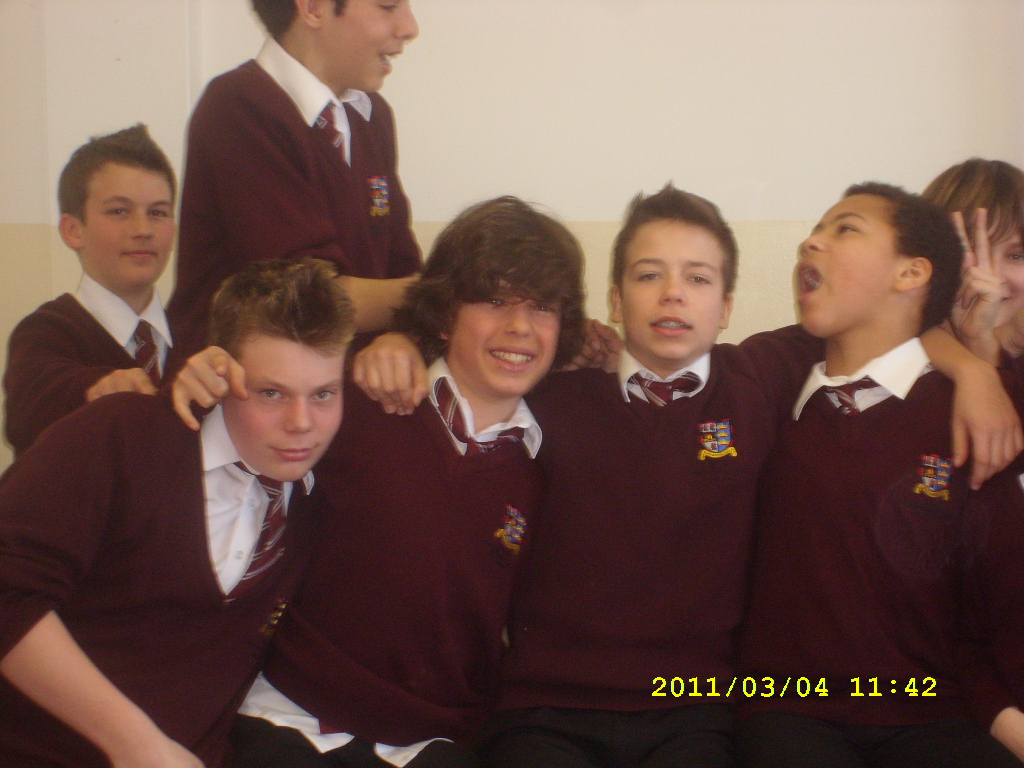
Having recently read the blog on life at LOGS from 79-85 I thought I would add a sequel comprised of my memories of the school I attended from 93-2000 – The Hodd years.

I remember the Lewes Grammar as a giddy, chaotic establishment, somewhere between a Dickensian School For Boys, full of antiquated rules and old, outdated morals and a lovable Roald Dahl cartoon character of a place, where it was more important to be seen to do the right thing, rather than to actually do it.

I began in the primary school and spent most of my days holed up in the attic, endlessly spilling ink on the carpets as we were forced, even aged ten, to write in clumsy fountain pens (presumably because quills were becoming hard to find in WH Smiths) The school had one computer which seems only to be used for one purpose – playing an 80’s game called “Magic Mushrooms” in which a blocky character collected other brightly coloured blocks for little or no reason. Technology being used educationally was obviously a priority.

The school seemed full of strange characters such as the ironically named “Mrs Bigg” who stood at about 3 foot tall and seemed to be well over 90, but was probably actually a little over 30. Break times were filled with thrillingly violent games of British Bulldog where 10 year olds would go to any length, including hospitalising tiny Reception children or tearing holes in other boys’ shirts, to stop the other team from reaching their piece of fencing at the end of the playground. I imagine many parents had to remortgage their houses to pay for an endless string of pricey Old Grammar blazers that had been torn from their innocent little Jimmy or Thomas’ back in the gaiety of the moment. That, along with trying to urinate as high as possible up the wall of the boys’ toilets, seemed to be the main pastimes. My only other memories of the junior school are of a teacher named Mr Elson who seemed to endlessly make us ‘silent cheer’ by patting ourselves on the back and of two trips, one to The Brickell’s farm where several children were lost in the corn for hours and an end of year trip to Sam Harris’ house, as he had the fortune to own a small indoor pool, which we all dutifully squeezed into. What a way to end our days in primary school! Private education truly is for the privileged.

In 1995 I reached the lofty heights of year 7 and begun my senior education in earnest.

The first thing a visitor would notice would be the noxious gas smell emanating from Mr Blackwell’s physics lab. This, combined with the fog of decades old cigarette smoke and a hint of strong alcohol in the air, made it hard to fully apply oneself in any physics lesson; or maybe it was just the dull “Adventures in Physics” DIY teaching booklets we were given to work through on our own from years 7-9? These were faded and had been created somewhere near the dawn of time to ensure than no real teaching had ever be attempted and so we kissed goodbye to any contemporary ideas that may have been discovered or explained post Renaissance and resigned ourselves to playing listlessly with magnets for the following three years. Any questions we had, I seem to remember, were directed at the smart kid in the class “Matthew Thacker” who really should have been on the pay roll as a substitute teacher. Occasionally Mr Blackwell would take us for P.E where he would stand barking army-style orders whilst chain-smoking King Size Benson and Hedges. It was inspiring stuff.

The other thing a visitor might notice as the entered the main entrance was the towering, red Coke machine, standing sentinel under the stairs. This attracted those fortunate enough (or not) to have the required 50p, like moths to a diabetes-inducing flame. If coke wasn’t your thing there was always the tuck shop at break where, if you could beg or borrow a few pennies, you were able to purchase any number of brightly coloured sugary treats. Some students used skittles as a sort of friendship currency. If you promised to be ‘Lobby’s friend’ for the day you would receive a sweaty handful of skittles from a bulging, rattling pocket. Lunch inevitably followed the tuck shop where all manner of nutritious treats awaited. “Meal of the day” seemed to be forever “chips and slush” served by dinner ladies still exhaling the yellowing smoke from the cigarette they had been smoking three feet from the food preparation area. As mentioned in the last blog, once a term a victim would be named as that term’s “Grovellie” as in you had to ‘grovel’ by donning your labcoat and serving glowering teachers such as Mr Main, affectionately known as ‘Gannet’ and Mrs Prior. Wackford Squeers would have been proud. I quickly worked out that if you spilt things or made a poor job of the whole business you were less likely to find yourself doomed next term. Others were not so wily.

After all that sugar and all those coma inducing chalk and talk lessons you would think we would have had a large area to tear about in. Perhaps a green field with trees to sit beneath to enjoy a stimulating discussion on the day’s hot topic? A tennis court to let off steam in?  At least a playground bigger than the one we enjoyed playing British Bulldog in all those years before, surely? Sadly this was not so. In fact, I remember hearing a rumour that NASA were going to use our “playground” as a test run for landing on Mars as it was so deeply poker marked and uneven. At the top end were a ledge and a raised platform of sorts. Here boys would be positioned as the victims of the game alliteratively known as “wall ball”. I can still here the high pitched screams now as Craig Hanwell and his friends launched a volley of tennis balls at James Stalard. If anyone refused the game they were treated to a practice known as “wall hanging” which sort of speaks for itself really. No teacher ever seemed to be on duty to stop these Gladiatorial style games in all of my five years at the senior school. If, by chance, the tennis balls found their way over the walls into the next door garden (as they were wont to do) a small child was chosen and pushed forcibly over the wall to retrieve it. The wall had a much larger drop on the other side which made the return journey all the harder, especially as by the time the ball had been retrieved, everyone had inevitably forgotten they were there and had left them to struggle back to base camp alone. At the other end (if you can say a space of about six foot by six foot has ‘ends’) of the playground, sunk forbiddingly into the floor stood the mysterious hut where the unfortunately named Mr Gay and his…colleague? … Mr Vincent worked and – as was believed – lived. Both were men of few words and seemed to communicate in Neanderthal grunts. The only time I saw either of them move with any pace was when Mr Vincent physically pinned me against a wall by grabbing me by the front of my shirt and threatening me with his chisel.

P.E, thankfully didn’t take place in our Reading Gaol-like prison yard but rather happened either in a field behind the school known as “The Paddock” or at “Baxter’s”. To avoid the long three minute walk around to the entrance of The Paddock we used to tear ahead of Mr Turner, our omnipresent P.E teacher (who was for some unknown reason, rumoured to have only one testicle), risking life and limb by leaping over the wall and running down the vertical slope through the seven foot stinging nettles. The journey to Baxters was equally perilous, as you were forever having to negotiate the screams and curses of the “Window Witch”. The Window Witch adored the tiny concrete forecourt in front of her flat and it seemed that we did too. No matter how many times she threated to call Mr Anderson (a teacher who had retired in the mid 60’s) we never were able to resist the temptation of the sound of football boot studs on concrete. ‘Games’ was brilliant. All we ever seemed to do was play endless games of football, ten on each side and who cares about the skills! At the end of our two hour “lesson” we would return, via the forecourt having defeated the ever vigilant Window Witch for a second time, to the showerless changing room to drag our school trousers and white shirts over our sweaty, mud-caked bodies. In winter the pitch was frozen and our hands burned red with the onset of frostbite making it hard to do up the fiddly shirt buttons. Eventually, I abandon my P.E kit altogether and just opted to play in my school uniform instead, much to my mother’s dismay.

Perhaps the thing that most obviously set LOGS apart from of its contemporaries was the fact that all male students were made to purchase and carry briefcases. We were the original “briefcase wankers”. Whilst students from other schools in the 1990’s proudly displayed their ‘Slammin’ Vinyl’ or ‘Spliffy’ record bags we walked home like dwarfish businessmen minus the bowler hats. Briefcases never lasted long as some students tried to carry all of their books, exercise and text, in their briefcases in order to avoid forgetting to bring the right books to the right classes. Inevitably a hinge burst or Abraham Cambridge built Empire State Building-like towers out of them and in the 9/11 style crashing fall, something on them would break or tear off.

When I look back at my time at LOGS, I seem to remember only two emotions: firstly the frustration of battling what I saw to be old fashioned and pointless rules about how long your hair could be or what item of clothing could be worn in what part of the school, and secondly pure hilarity. I don’t think I’ve ever laughed as much since. Just the thought of a certain teacher or class can bring a smile to my face. Whether it was watching Mr Boyden struggling for hours at a time to look up all the random words that we had asked for in a German dictionary or trying desperately to get the huge box of a TV to work or seeing Mr Mitchell (Art) wander passively past a corridor in chaos, just pausing to mumble “carry on” before drifting off into the distance again. Whether it was hearing Dr Hodd, the headmaster no less! saying the immortal line: “I’ll have no gays in my school” or hearing Mr Blackwell roar “You again…I I I just don’t Beliveeee it” – it was an endlessly an entertaining place to be young.

Occasionally, the struggle of teaching a small class of thirteen year olds would become all too much and teachers would launch any objects they could get their hands on across the classroom in a Hulk-like explosion of rage. Two famous incidents include Mr Dumbavand throwing mini Casio keyboards across the class, as yet another sniggering student prodded the “demo” button and played the tinny tune of “The Entertainer” for what must have been the millionth time. The other involved Mr Ashford hurling breeze block-like chunks of off-cut timber and shouting “There’s wood here, and here and here.” Another occasion I remember a teacher really losing their shit was when a peer of mine by the name of Robert Bagley locked the aforementioned Mr Mitchell out of the school by quietly flicking the lock on the back gate. With interest, my friends and I all retreated to what we thought was a safe distance, not unlike a bomb disposable unit in Helmand Province, preparing for the inevitable. Silently we waited. At first there was a confused shove on the door, then an experimental small thump and suddenly, without warning the gate began to be battered and assaulted as a frenzy of blows rained down. We all stood transfixed waiting to see which would win, teacher vs. door. Whether he broke it down or not I don’t remember. Perhaps the school bell went and we all fled thankfully to the safety of lessons?

Other teachers/members of staff who deserve a mention are the loveable and eternally scruffy Mr Senior, also mentioned in the previous blog, who as well as being “hopelessly disorganised”, seemed to have no set job role and spent his days declaring “oh isn’t it marvellous” about everything and anything. The other is the equally kind Mr Wood (History) who was only ever able to frown for the briefest of moments, hopelessly trying to feign annoyance, before breaking out into a wide, slightly tipsy, looking grin. In some lessons we seemed to learn more from our contempories than the teachers. One afternoon, a pupil by the name of Phillip Brooke, who was an avid cadet, spent most of lesson explaining how The Allies could have crushed the Nazis with a clever two-pronged pincer movement. The teacher, Mr Knight, seemed at one point to eagerly taking notes -presumably in order to pass on this wisdom to the next class of students he had lining up at his door.

The building itself was more like a large, rundown house your crazy aunt lived than a school. Complete with secret staircases and dusty attics, some of the corridors were so tight that it was a struggle to pass other students even in single file. Frequent blockages often led to the timeless cry of “bundle” followed by the shrieks and pleas of any smaller student who had the misfortune to be passing by. One boy in particular by the name of ‘Dom Palmer’ could often be found at the bottom of these human mountains with arms and legs twisted at odd and unnatural angles.

The girls’ school was a far away, alluring land, fiercely protected by the red-haired dragon “Mrs Prior”. Humourless and jagged, Mrs Prior was all glares and buckteeth. She eyed any male within 100 yards of “her girls” with an air of deep suspicion and had an expensive card-activated lock put on the front door of the girls’ school to prevent any of us boys straying in that direction. With these draconian rules, combined with an almost non-existent sexual education programme, and the fact that we only had 8 girls in our year anyway, it’s a wonder that any of us red-blooded males entered 6th form with any knowledge of the female world at all.

For all the chaos and lack of structure LOGS was a great place to spend your younger years. A blind spot on the metaphorical Ofsted map, the 90’s must, surely have been the dying gasps of LOGS way of life. Despite the often poor quality of lessons, the lackadaisical behaviour management, the rundown facilities and the two hour daily commute on a stinking, tired bus, I wouldn’t change my time there for the world. Who needs an excellent education when you can say you spent your teen years laughing all day?

Sponsoring Nhlanhla

In 2005, I was living and working in Swaziland. The boys from the neighbourhood used to tout for business cleaning cars at the school where I worked and so forth and it was this way that I met Thabo. I’m not using his real name because there is a lot of jealousy towards people who manage to advance themselves in Swaziland. At that time, he was fourteen years old and his family had not been able to afford his school fees. Consequently, he had been out of school for a year. I offered to meet his mother and discuss the possibility of paying for his school fees where he was already enrolled for the new school year due to start in September. So it was that he started form 1 at Mbabane Central High School that year. He progressed very well and was a keen student. He completed five forms and left school in 2010.

uniswa_banner_top_02

In 2011, he enrolled at the University of Swaziland to study for a business management and accounting degree. I pay for his accommodation and a living allowance. He is now in the final year of his studies. Most likely, he will continue in education for a year to study for a post-graduate qualification in education so that he will be able to get a job as a teacher if he cannot find a job in business.

Having sponsored him for over nine years, I have seen him grow in confidence and expand his horizons. He keeps in contact with me and is good friends with my son. He also helps my son keep in touch with his roots in Swaziland. My hope is that he will be able to start a business one day. I have probably spent in the region of £5000 so far in supporting him and if he leaves with a University degree and gets a job, it will be worth it. Hopefully, I will have contributed in some way to the development of the country.

Update January 2019

Nhlanhla at his graduation ceremony, 2015

In 2015, he graduated from university with a bachelor of commerce degree. He then got a job with Swazi Railways in May 2016, being one of only three selected for interview. He has recently been promoted.

British International School Bratislava

57580f4f5fed8f70b95e7a5ac96d7236_slovakia_l_7035

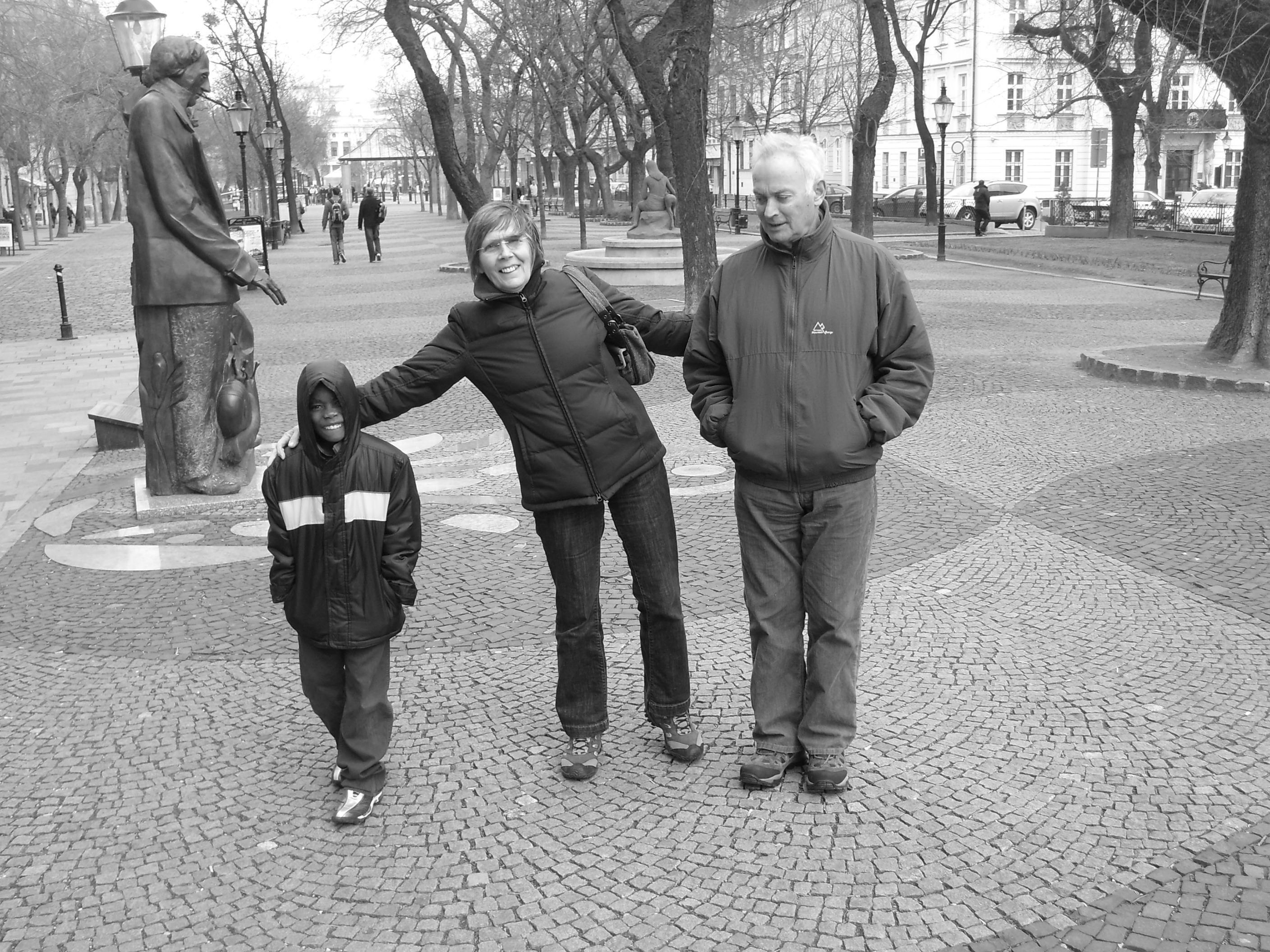
In 2007, I began teaching mathematics and physics at this school in Bratislava. My son Paddy began attending in year 4 although he was ten years old. He had missed out on many years of education in Swaziland and could not read or write. He had probably only had a year of schooling. I was impressed that the school had been prepared to take him on. We lived a short walk away from the school in the northern suburb of Dubravka.

The school was staffed by a mixture of British and Slovak teachers. It was increasing in popularity and had a new principal. I taught mostly mathematics. The physics I taught was to the 11-14 age group. I taught HL mathematics for the IB Diploma too. The salary was excellent. The students were from many different countries. One of the biggest groups was the Koreans. The parents worked for Kia cars or one of the other Korean manufacturers that had relocated to Slovakia. I taught children from the UK, France, Germany, Slovakia, Russia, Serbia, Spain, China, the United States, Japan, New Zealand, Ireland, amongst others. I like to think that I made the lessons entertaining. I liked to try different learning styles and avoided formal lesson planning like the plague.

I loved teaching physics to the young ones. They were very interested in science practicals and we had a lot of fun. I designed a website for Key Stage 3 Physics. We built electric motors and we had great success designing model houses to see who could make the design that kept the heat in the most. I never enjoyed teaching as much as I did at this school.

Paddy and grandparents in Bratislava

In 2008, I bought a house over the border in Hungary. The idea was to save money on rent and buy an affordable home in the countryside. It was a 45 minute drive to work in the morning and really not at all bad. The house was in the sleepy village of Halászi. In 2008, the border controls came down and Hungary joined the Schengen area though it seemed that the Slovak police took about a year to realise this. I lost track of the number of times we were stopped crossing the border. For a while, we took an alternative but parallel route back home because of this hassle at the border crossing. Another reason for moving to Hungary was the overt racism that my son had received in Bratislava on numerous occasions. One on a crowded tram, a young man began making a monkey impression at my son. It was clearly directed at him. I did not react because when I get angry, I can lose control. I don’t like to do this. On another occasion in 2008, we were in a small supermarket called Billa in Dubravka and I could tell that my son was upset. I urged him to tell me what had happened and he did not want to tell me. In the end, he told me that a woman had pushed him out of the way. He pointed her out to me and I let her have it. Then there were the looks that people gave us. You may say that it’s just a look but I called it ‘the look of disgust.’ People stared. It was just rude. Paddy liked to ride his bike and I would not allow him to ride ahead of me in the park because I was concerned about his safety. He had been called ‘nigger’ by some youths in a park once, with me within earshot. Of course, unless we were walking close together, people assumed that we did not know each other. We were required to go to the ‘foreign police’ once a year to have our resident permit renewed. When I went the first time, the policeman at the desk looked at my son and asked if he had a passport. I felt like saying ‘No, I smuggled him into the country in a suitcase.’ I never experienced problems like this in my three years living in a village in Hungary.

The school knew of the difficulties I had but chose to ignore them and offered no support to me. When you are constantly faced with these difficulties, it has a detrimental effect on your psyche. When my son Paddy got into trouble. the school was not interested in taking into account the difficult background he had. They made no exceptions for him. They were just concerned about how the other parents might react.

I don’t want you to think that we had a bad time in Slovakia. The school was a very safe place and great for my son to grow up with. There were many lovely Slovak staff there who really went out of their way to help.

This slideshow requires JavaScript.

Continue reading “British International School Bratislava”

People I admire

Some of these people are known for their academic brilliance and others for their bravery in standing up for what they believe is right. There is no particular order to the list that I present below. It is just as it comes.

Paul Erdős was a brilliant and eccentric Hungarian mathematician who had a long and productive career. He spent most of his adult life living out of a suitcase and worked ceaselessly. He was truly single-minded in his devotion to the subject.

Paul Erdös
Paul Erdös

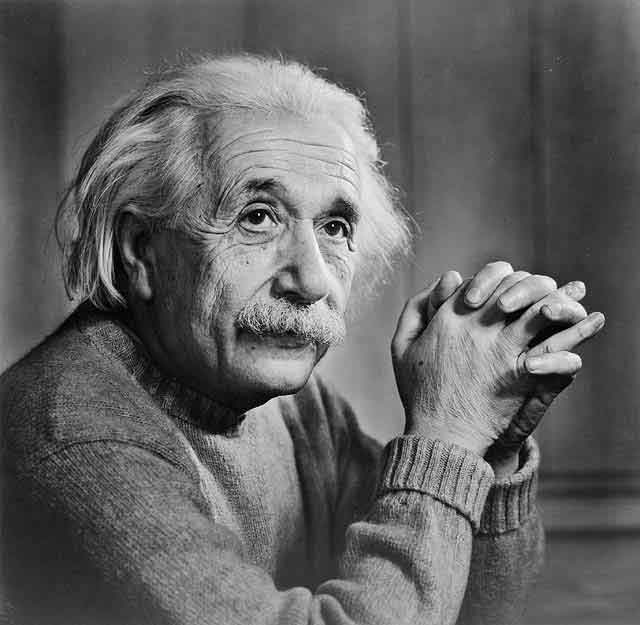
Albert Einstein revolutionised physics in the twentieth century. He was responsible for shaking up its foundations and introducing relativity. The idea behind special relativity theory is very simple. The laws of physics must be the same as seen by any observer in the universe.  He was also a respected social commentator. He believed in compromise as the best approach to any problem.

Albert Einstein
Albert Einstein

Continue reading “People I admire”

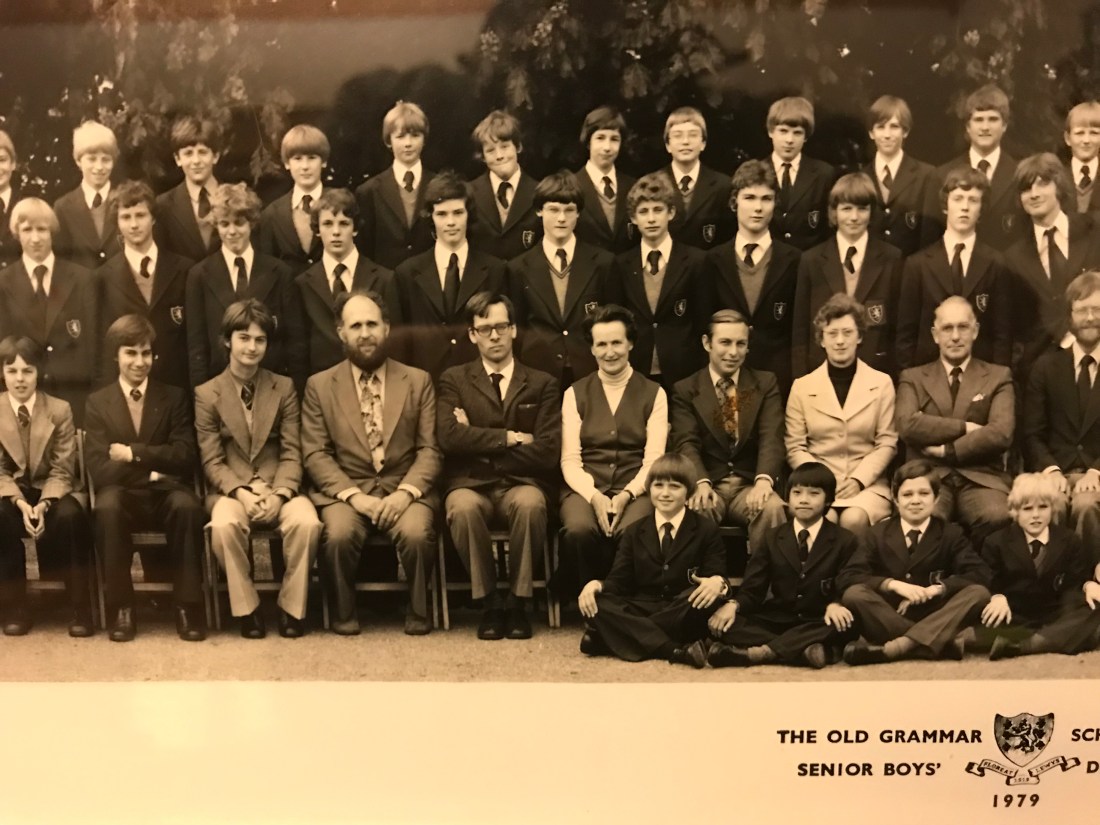
Memories of Lewes Old Grammar School from 1979 to 1985

EmpLogo

The headmaster at Lewes Grammar at the time was Roy Mead. He was a very authoritarian figure and ran the school how he saw fit. It was a small school and still is. There were only two forms per year with each form taking about 14 boys. It had a junior department on the other side of town and a girls’ school just a few doors down on the High Street. There had been a boys’ grammar school on this site since 1714. The school was founded in 1512 at Southover near Lewes. Lewes is the county town of East Sussex and is surrounded by the South Downs, the chalky hills that run parallel to the south coast.

I joined in the summer term of 1979 aged 12 years old. I was very shy and didn’t make friends easily. I was collected with about twelve other boys in a minibus driven by one of the teachers. I was so shy that at first, I waited in my mother’s canary yellow Ford Escort Estate for the minibus to arrive at my pick-up point near St. Johns Park a short walk from home. I’d had an extended Easter holiday because I had left my father’s house at the end of March where I had been living with my two brothers. I returned to live with my mother and stepfather of my own volition because I was being emotionally abused at my father’s house. The first day at my new school was on 8th May, being the day before Margaret Thatcher’s new parliament assembled for the first time. I had not spent much time with my mother in the preceding twelve months and I was upset and homesick for the first week or so. I fought back tears each morning before lessons started.

Continue reading “Memories of Lewes Old Grammar School from 1979 to 1985”

Forgiveness

What does forgiveness mean? Can we forgive when the person who caused the pain refuses any responsibility or any balanced discussion?
We can’t change the past. Brooding on the past is unhealthy however a certain dispassionate understanding of it can help us move forward. It’s fair to say that I have done my fair share of brooding.

I think what I found difficult was that the need for a relationship with my father meant that the obvious option of cutting off contact was not properly considered. It was my father who ended up cutting off contact with me however I wish that I had made that decision myself. I nearly did on more than one occasion.

I had group therapy for three years between 1990 and 1993. I don’t think that I found this useful because in my case, I ended up figuring out my problems on my own. We mostly sat in a circle with two facilitators,  staring at each other.

I had a lot of anger towards my father and was very introverted even as a young man. I had poor social skills and found making friends difficult. I seemed to irritate people when I spent a lot of time with them and I found this upsetting. I found studying for my PhD stressful and I vacillated too much. My work suffered. The constant interference by my step-mother in my personal affairs upset me. When I stayed with my father and step-mother, I could overhear them discussing me in their bedroom as the room I used shared a bathroom.

By the time I was twenty-six,  I still had not been in a relationship. I came out as gay in 1993 and told my father and step-mother first.  Though I found her suffocating at times, I respected my step-mother and overlooked or ignored her overbearing side.  We were having supper after I had been taken to the theatre in Stratford-upon-Avon and I told them then. My father was reading the paper and he pretended that he hadn’t heard. My step-mother said ‘Alan, did you hear what your son said’. She said this so loudly that the whole restaurant heard. We sat up late (me and her, not my father who was clearly unimpressed) discussing it. I would have said at the time that she was happy for me. I wrote a letter to my brother Jack in South Africa. He later told me that it was the best letter he had ever received.

I asked my step-mother not to tell her sons until I had had the chance to do so. She broke this promise and told her eldest who called me at home in Oxford. He was genuinely happy for me and we had a long conversation. I thought that she was supportive.

A little while later, I forget exactly how long, my father was sitting at the table in the kitchen and he said to me,’Old chap,’ as he liked to say, ‘please refrain from sexual relations with your step-brothers.’ Well, I was gob-smacked and insulted. I went ballistic. ‘Please don’t get upset old chap!’ he pleaded. Well, what the fuck am I supposed to do. He had just suggested that because I am gay, I’m going to start shagging my step-brothers who were at that time twenty and twenty-two years old. It was clear to me now what the mutterings of my step-mother and father had been behind their bedroom door.

With this family, you are always an outsider and treated like crap if you let them. My eldest step-brother Nick used to leave Post-it notes on the kitchen notice board telling my dad to mow the lawn that weekend because his friends were coming down and wanted to play croquet. He was treated like a servant.