In pictures: A time capsule of Leeds’ lost buildings – BBC News
Category: childhood
Then and now
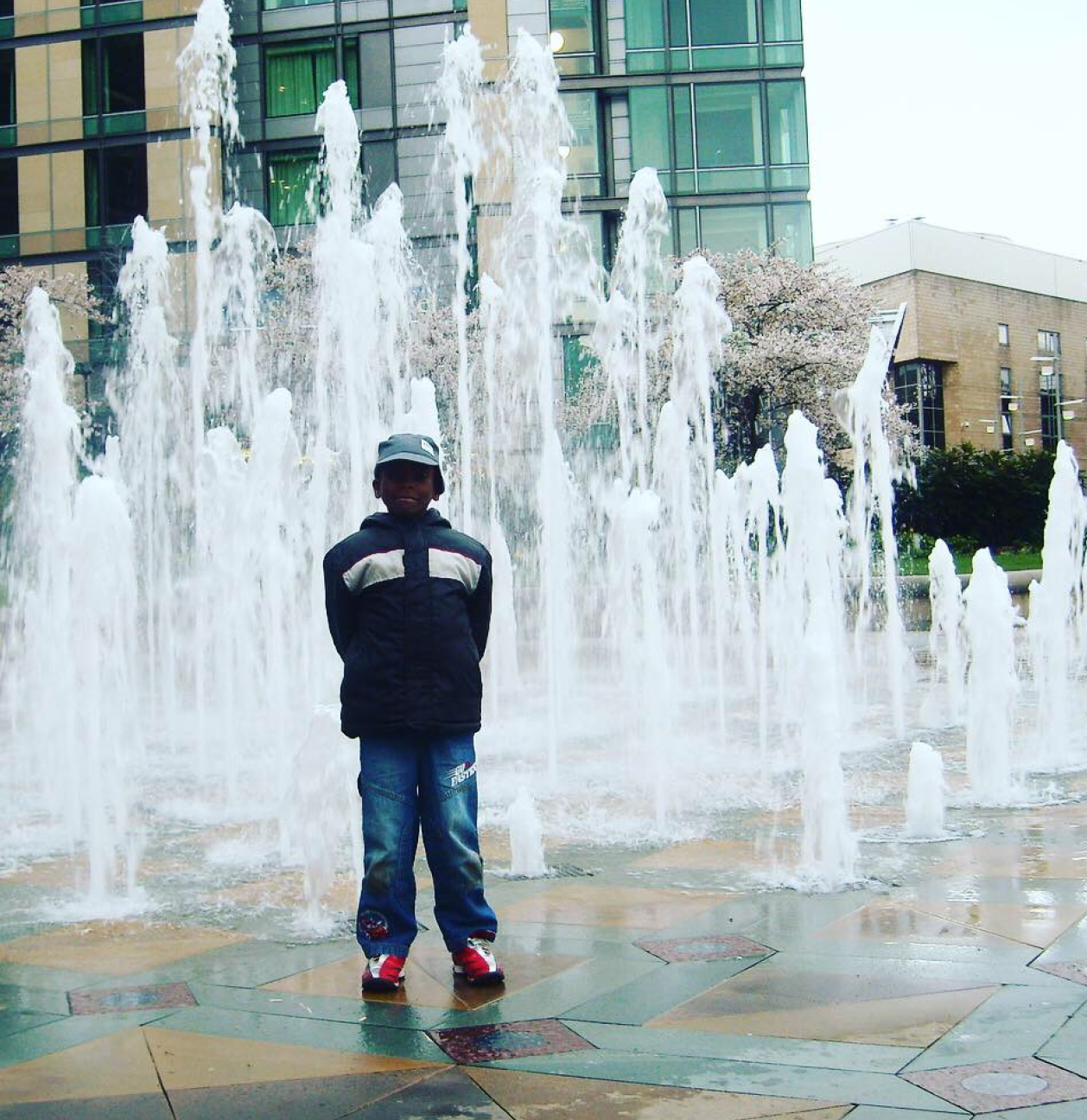
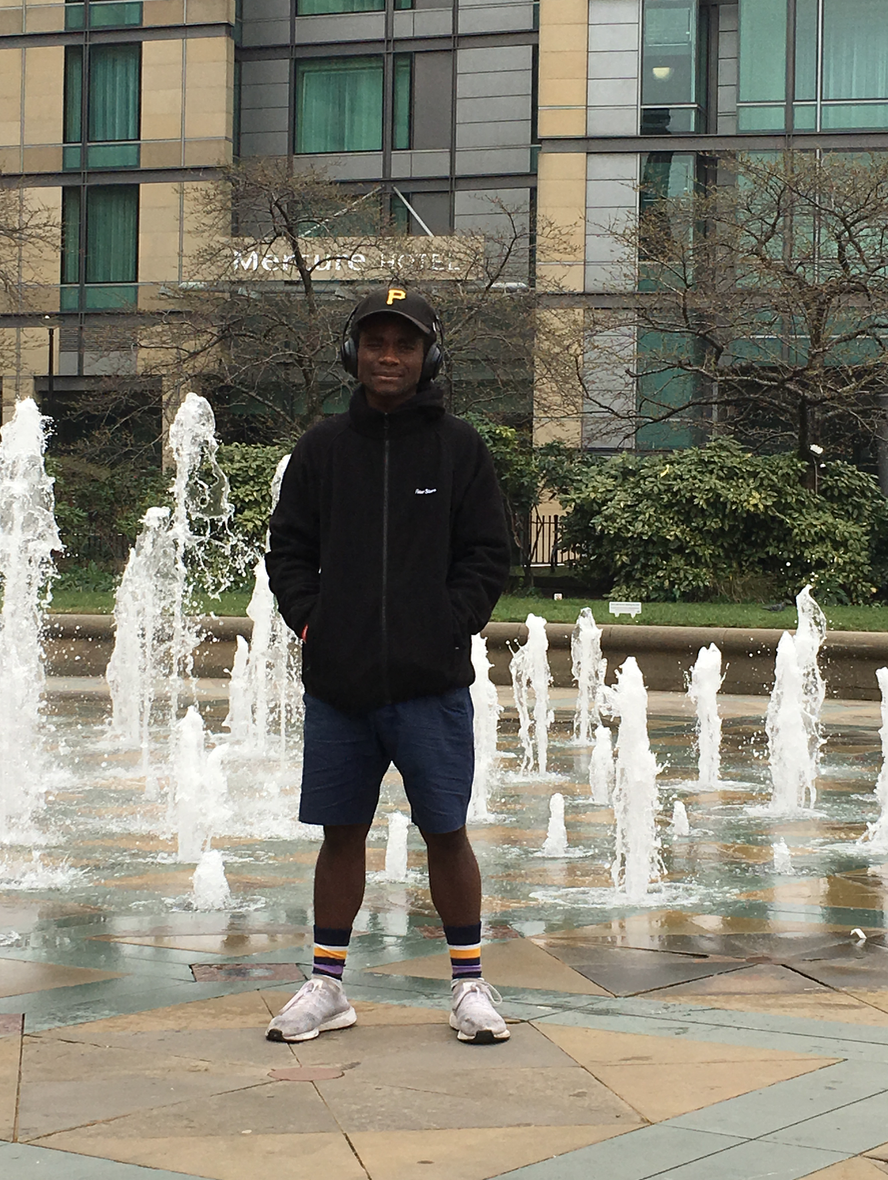
This was my rather poor effort at reproducing a photo that I had taken of my son in April 2008. I’m going to have a proper go tomorrow. The location is the Peace Garden next to Sheffield Town Hall. The photos were taken almost 11 years apart. Ages eleven years and twenty-one years respectively.
Finding my grandfather
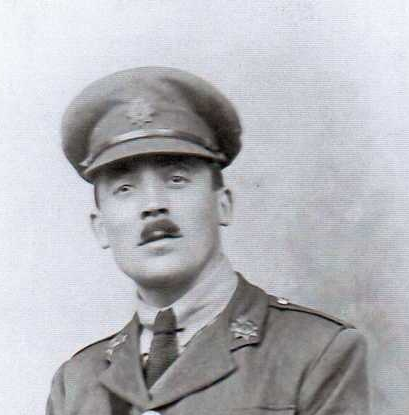

My mother never knew her father. She was brought up by her aunt Edith, after her mother died in childbirth. Her aunts would not discuss her father’s identity. However, when Edith died in 1967, my mother found a clue amongst her possessions in the form of two scraps of paper, photos of which are shown below.


His name was Captain George E. Huntley and his army number was given as P/80355. I searched for all the George E. Huntleys and the only sign I could find was of a Sgt G. E. Huntley in the Great War. Could this possibly be my grandfather?
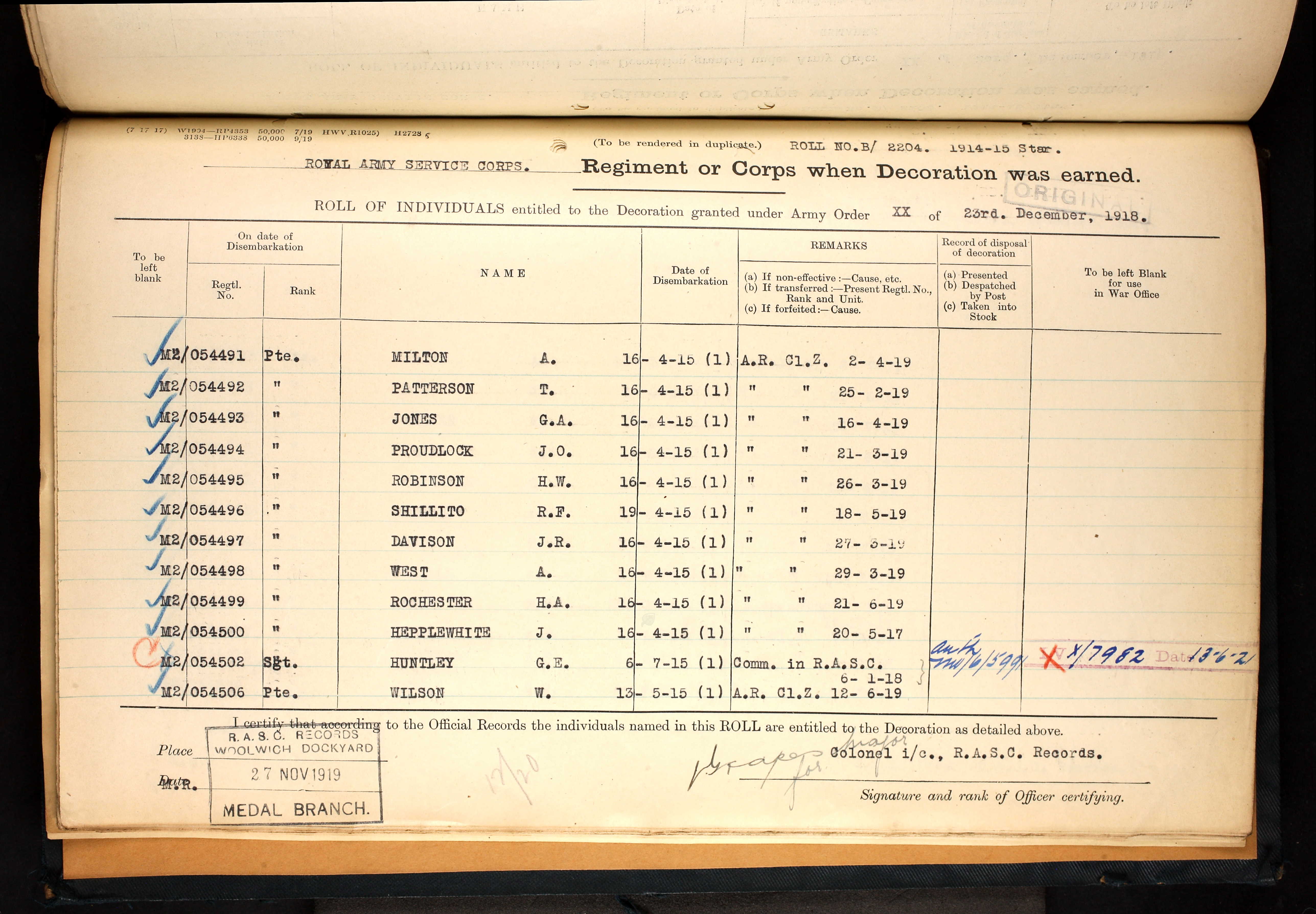
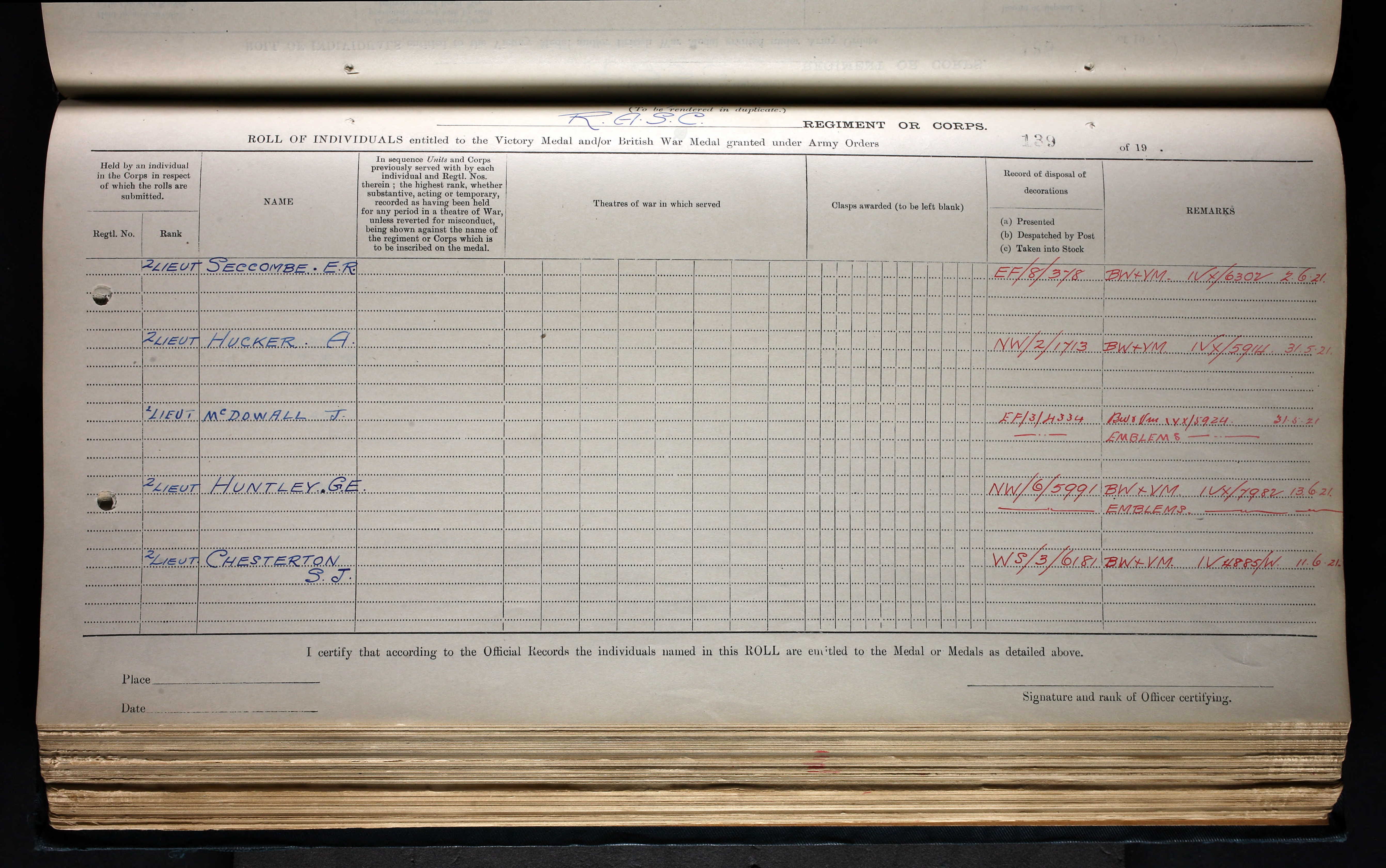



I paid a researcher to look into his service record who discovered the following information.
George enlisted under a short service (duration of war) engagement to the Army Service Corps (Mechanical Branch) at Sheffield on 18/03/1915. He was issued with the Regimental number M2/054502 – the ‘M2’ prefix denoting the Mechanical Transport Branch and the ‘0’ at the front of his number denoted a short service/duration of war engagement.
George is posted initially to Grove Park, the Depot of the Mechanical Transport Branch, where he is given military and trade training. He is promoted to Corporal on being posted to 10th Motor Ambulance Convoy (359th Company) Army Service Corps on 07/06/1915 and on the same date (probably to fill a vacancy of formation of the unit) he is promoted to Sergeant. The 10th Motor Ambulance Convoy embarked for France from Southampton on 06/07/1915 and landed in France the next day from the ‘Princess Victoria’ before they proceeded to Rouen. The diary for the unit is in WO 95-496-3.
George is appointed as Mechanical Staff Sergeant on 26/09/1915 which suggests he was heading up the maintenance & repair section of the Company. By 29/09/1915 he is appointed as the Acting Company Sergeant Major of 10th Motor Ambulance Convoy, his substantive promotion to this rank is later confirmed with the same seniority date. He is mentioned in despatches in the London Gazette of 04/01/1917 for his actions during the Somme operations in 1916 at which time he has proceeded back to the UK, arriving on 01/01/1917 according to his papers.
George seems to have had some participation in the German Spring Offensive in late March and April of 1918 but there are no specific details about this. He is promoted to Lieutenant on 01/12/1918 and Acting Captain on 10/05/1919 before returning to the UK for discharge to the Reserve of Officers on 15/02/1920.
George is re-mobilized on 31/08/1939 at the onset of WW2 and his career is as follows from that point:-
31/08/1939 – Joined at Regent’s Park Barracks as an Impressment Officer (Lieutenant) and is given the Acting rank of Captain.
09/11/1939 – Posted to No.2 Motor Transport Depot at Slough in the role of a Draft Conducting Officer. The officers were employed to ‘escort’ drafts of other ranks from the Training Depot to the ports for embarkation on the basis that they could not be trusted to get from A to B by themselves! This is almost 9 months to the day before the birth of my mother. A perfect match.
01/12/1939 – Appointed Temporary Captain after holding an acting rank for 90 days.
12/12/1940 – Reverts to Lieutenant on being posted to 29th Station Transport Company, Shropshire. Note that this is the same address given in my great-aunt’s note and coincides with the time when my grandmother became pregnant with my mother. My grandmother’s mother came from Hereford which is in the adjoining county of Gloucestershire.
28/12/1940 – Posted to a War Office Post at Benhall Farm, Gloucester Road at Cheltenham for temporary duties as a Transport Officer.
08/02/1941 – Posted to No.3 Training Brigade & posted to No.8 Training Battalion.
18/02/1941 – Posted to Royal Army Service Corps, Cambridge District as a Liaison Officer.
15/07/1941 – Posted to Anti-Aircraft Command as a Workshop Officer, starting at 182nd Company RASC at Eccles.
15/08/1941 – Posted to 904th A-A Company, part of 2nd A-A Division at Eccles.
10/09/1941 – Posted to attached station of 1st Holding Battalion (at Worthing) whilst he is on the ‘Y’ List – this is the code used for men who were sick and not fit for duty. This was a few weeks after the death of my grandmother, so he may have heard the news.
23/09/1941 – Discharged from General Hospital at Llandudno and joins 1st Holding Battalion after sick leave. He had been medically down-graded for Grade ‘B’ Garrison duties only. I discovered that his son was born on 27/1/42 in Conwy, a mere four miles from Llandudno, so is consistent with him being there.
18/11/1941 – Posted to Anti-Aircraft Command at Stanmore to await allocation. He is then posted to 930th A-A Company at Pontefract with effect the same day.
06/12/1941 – Posted to 192nd A-A Company at Edinburgh.
26/03/1942 – Posted to 1st Holding Battalion at Worthing having been classified as medically unfit.
07/05/1942 – Relegated to ‘Unemployed’ and put into the Reserve of Officers.
21/08/1948 – Having reached the age limit for their rank, George relinquishes his rank and is given the honorary rank of Captain (LG 20/08/1948).
My mother was delighted to have found the identity of her father. The sad news was that I then discovered that he had died in 1981 so my mother would have had the opportunity to have met her father.
Details discovered in the public records confirmed what my mother had been told, that he was a married man at the time my mother was born however my mother’s aunt had lied and said that he had died in the war, meaning the second world war. This was not true.
He was born in Sheffield in 1884 to a middle class family and went to university to study engineering. He worked as a consulting engineer for Sheffield City Council at some point and was also a representative for sales of lorries and cars at a Sheffield garage after the First World War. He contributed regularly to the letters pages of local newspapers of the time.
In 2018, I finally took the Ancestry DNA test which confirmed that I and George Huntley have common ancestors. The person who kept popping up as a common ancestor is my two-times great grandmother Susannah Offer, born in 1814 in Swindon, Wiltshire. I made contact with Canadian cousins as a result of this. Susannah’s daughter Julia (George’s aunt) married a Frederick Nash. They had four sons, Albert, Norton, Frank and Julien, who migrated to Canada. Many of their descendants, my cousins, live there today and I have managed to contact some of them.

Julien Nash, my grandfather’s cousin, was a pioneer Mountie in Alberta having joined the service in 1908. I found a fascinating obituary. Finding my grandfather has opened up so much more that I had expected.


I located George’s two sons, both in their seventies. One is living in Suffolk and the other in Australia. Neither replied, which disappointed me. If someone contacted me with irrefutable evidence that they were the child of my long lost half-sister, I’d be interested to know more.
My brother settled in British Columbia in 1996 and had no idea that his third cousins were living in the same and neighbouring provinces of Canada.
TBC
Manor Field Primary School

In 1973, I started at Manor Field Primary School, which is in Burgess Hill, a rapidly expanding town in mid-Sussex. My family had moved there from neighbouring Lindfield and my mother and step-father had just bought their first house. My mother had married her second husband Colin the same year. I joined the infants department aged 6 years old. I have few memories of this year but I do recall being lead by my mother on my first day to the school office. I was six years old. A year later, I joined the junior school where my first form teacher was a Mrs Randal. She was probably in her sixties at the time. She told us once that we should always look at the world around us because even on the most mundane day, there should be interesting things to see. She was talking about being observant and studying the world around us. Someone had taught me some basic yoga and I remember sitting in a cross-legged position with both feet up on my thighs. I was showing off but I was always finding ways to get the teacher’s attention. I suppose I was bored.
I had a friend called Nigel who was always getting into trouble. I don’t know why I did this but one day, I scratched his name on a desk and went and told the teacher that he had done it. The readiness for her to believe me was surprising.
I remember that one thing we used to get up to was climb up into the roof space of one of the old buildings during playtime. That was near the main playground. Ice would form on the playground in the winter but we were not allowed to skate on it. I remember athletics on the sports field and a pair of big trees that grew close to the entrance to them. Other memories are of playing stool-ball on the recreation ground and fire practice with a hand wound fire alarm.
In the second year, our form teacher was a Mrs Maize and Mr Simpson. We were a large class hence the two teachers. I remember cookery lessons in the second year (we had to wait for our turn as there was only a small room and a big class of us). When it was my turn, I was disappointed that it did not involve any cooking. We made a sweet out of condensed milk and coconut. It was coloured with food colouring and cut into little squares.
In the second year, I remember one afternoon asking to use the toilet. I needed to do a number two. The teacher told me to wait and I was too shy to ask again. I soiled myself and after school, my mother and step-father picked me up and we went on a drive to collect meat from a butcher they always went to. My mother noticed the smell and I recall her then saying that perhaps it was the smell of the meat. After we got home, I then owned up to it, much to my embarrassment and had to clean myself up in the bathroom.
Then in the third year, we had a very kind teacher called Alan Barker and a Mr Lee as well as a Mr Souter from Scotland. Mr Barker was a kindly teacher, who must have been in his late fifties at the time. I saw a mention of him on the Friends Reunited website maybe ten years ago so he was still alive then. He played the piano and took us for music lessons. I remember him commenting that I did not stammer when I was singing. Mr Souter devised a punishment for us involving sitting against the wall in a seated position without a chair. We must have been a noisy class. We also had a retired teacher for a bit – a Mr Gumble, who told us his wartime stories. He talked about the food they used to get in the army. Apparently, they used to get steak so often that he got fed up with it.
In the final year, we had Mrs Watson who told us that she had taught in Botswana. Mrs Watson, quite a young teacher, took an interest in my welfare when, in 1978, I was about to move to live with my dad. She asked if I was sure that was what I wanted. As it turns out, I wish that I had listened to her.
We had a field trip to a farm out Hassocks way in the third or fourth year. At that time, there was a row of prefab classroom running along the side next to the park. School dinners cost 12 1/2 p. The headmaster at that time was a Mr Coward. I can’t recall seeing him much around the school though. Other names I remember are a Mrs Cole, a very strict playground monitor, Mrs Davies , and Mrs Poland who taught French. I remember studying French in the third year.
My memories are mostly happy though I do remember being bullied by one teacher, Mr Lee, who would pick on me with a comment about a TV advert of the time to make the class laugh at my expense, since I was shy and withdrawn. I also recall being shoved violently by him when asking him a question. A comment he made to my mother at a parents evening was “At first, I thought Alan was backward but then I realised that he is very intelligent.”
Assemblies then still involved singing hymns – such as “Morning has Broken” and others. We used to have sports days out in the big field at the back of the school. There was a pair of tall trees – growing side by side close to the entrance to the field. The fire alarm was a hand-wound bell. Assemblies were held in the large hall near Junction Road by the Infants School. I think we probably only had them once or twice a week. I don’t remember there being assemblies taken by classes – they were generally assigned to a particular teacher to give.
 Meanderings of a peripatetic maths teacher