
Resolving a Mystery
My mother never knew her father’s identity. She was brought up by her Aunt Edith Williams after her mother, Harriet, died in childbirth in early August 1941. Her aunts would not discuss the matter. However, when Edith died in 1967, my mother found a clue amongst her possessions in the form of two scraps of paper shown below.


His name was Captain George E. Huntley, and his army number was P/80355. I conducted a search for George E. Huntley and found a Sgt. G. E. Huntley in the Great War. Could this be my grandfather?
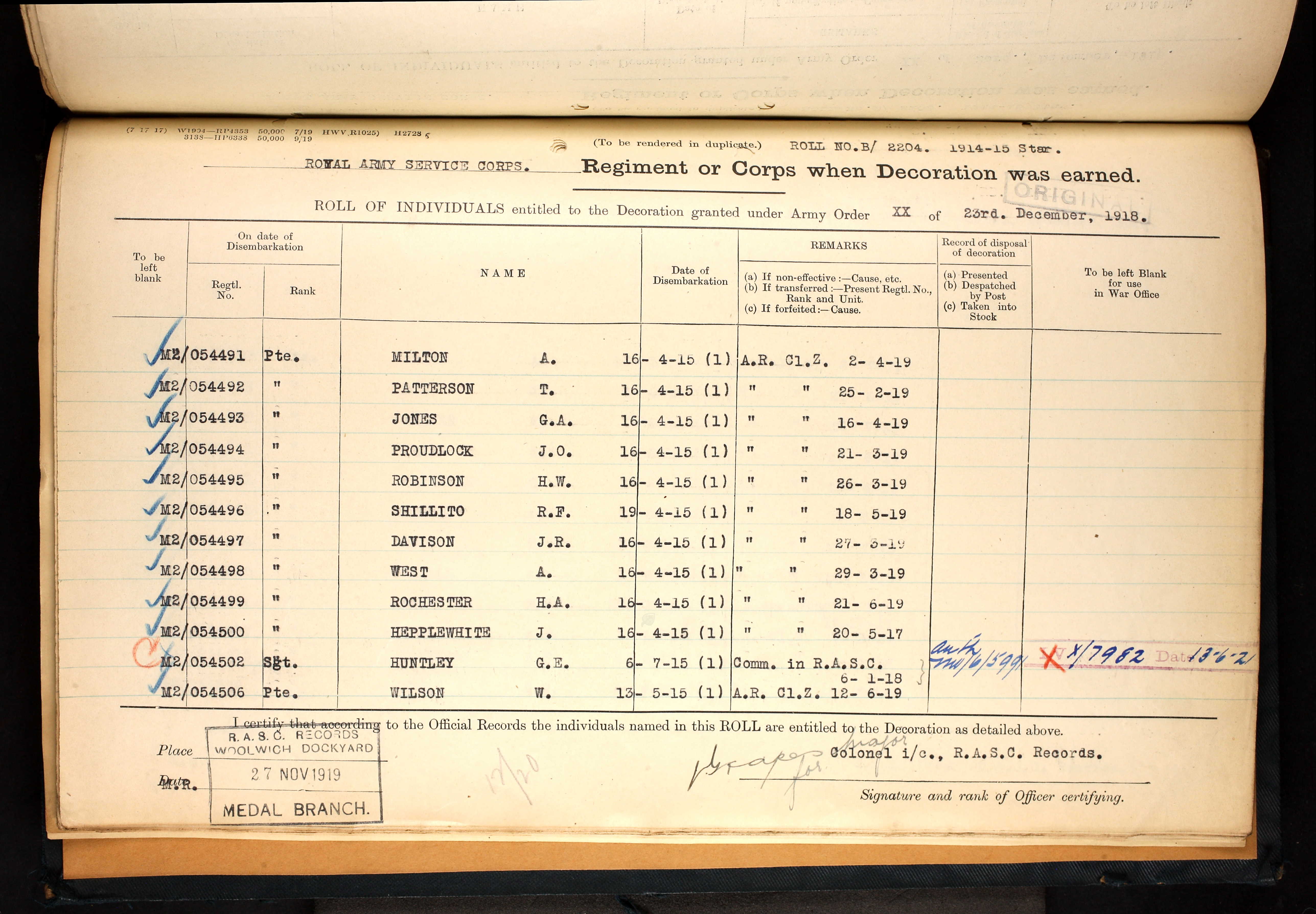
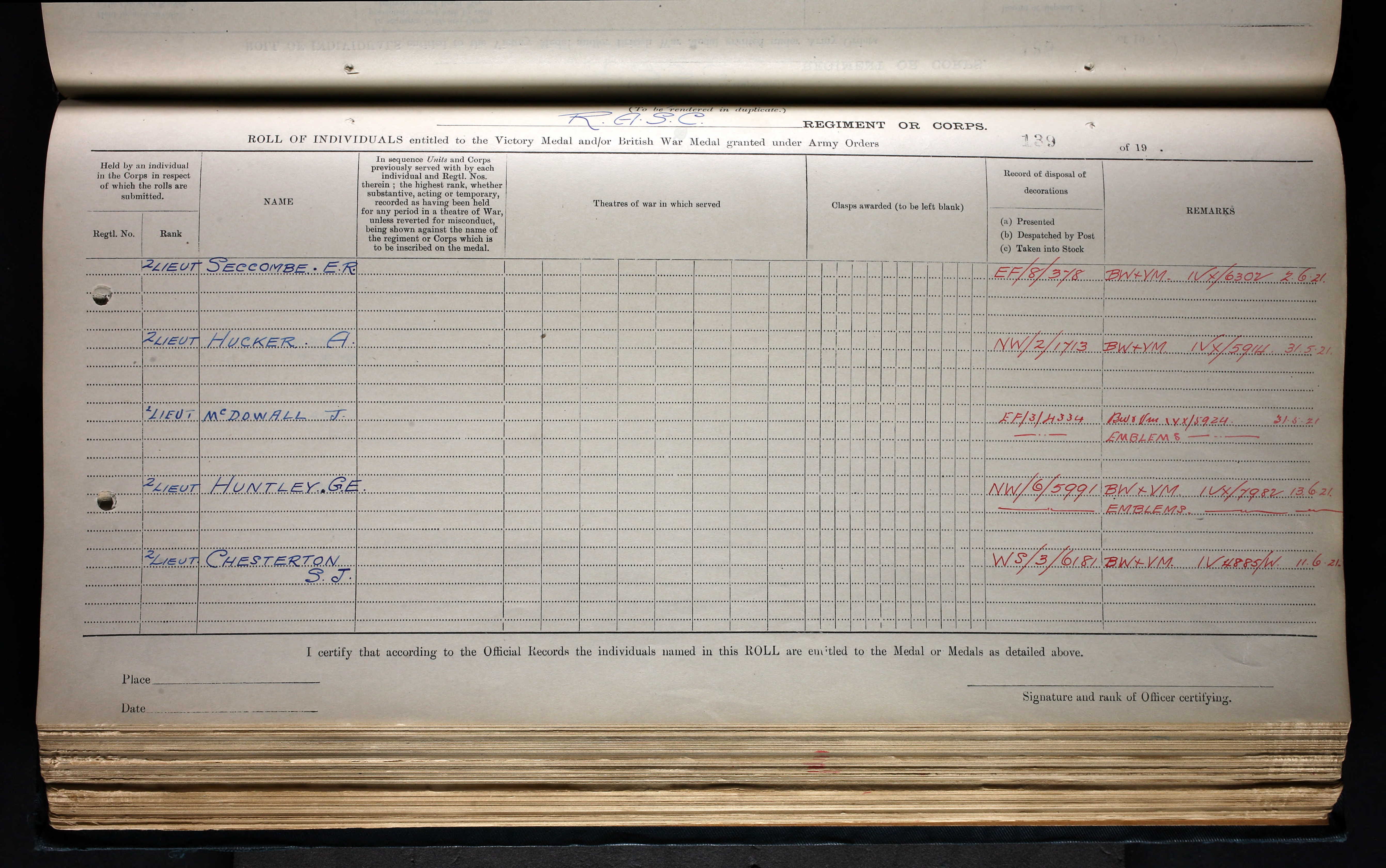



I paid a researcher to look into his service record, who discovered the following information (in italics).
The Western Front 1914 – 16
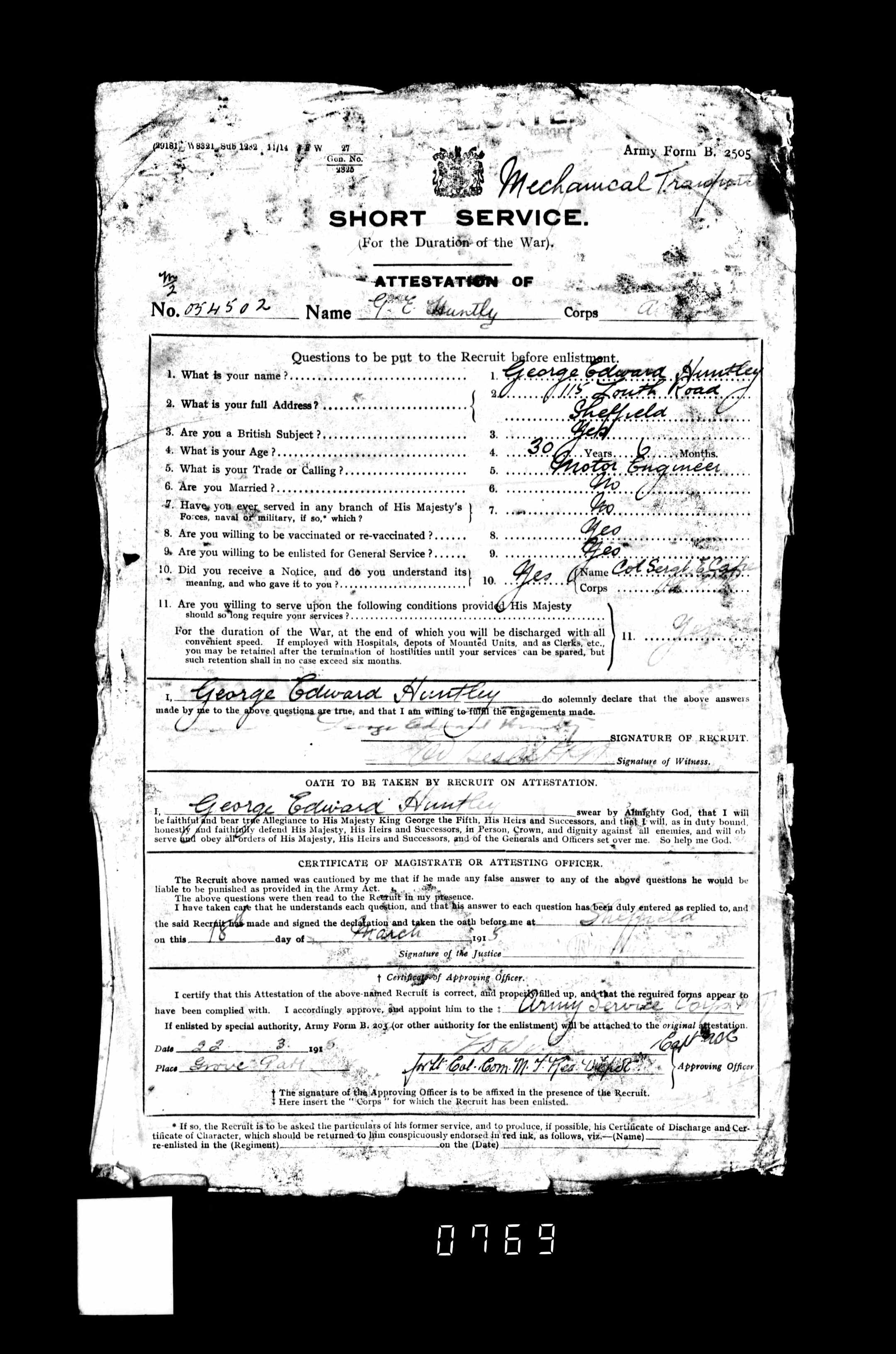
George enlisted under a short-service (duration of war) engagement in the Army Service Corps (Mechanical Branch) at Sheffield on 18/03/1915. He was issued with the regimental number M2/054502 – the ‘M2’ prefix denoting the Mechanical Transport Branch, and the ‘0’ at the front of his number denoted a short-service/duration of war engagement.
George is posted initially to Grove Park, the Depot of the Mechanical Transport Branch, where he is given military and trade training. He is promoted to Corporal on being posted to 10th Motor Ambulance Convoy (359th Company) Army Service Corps on 07/06/1915 and on the same date (probably to fill a vacancy of formation of the unit) he is promoted to Sergeant. The 10th Motor Ambulance Convoy embarked for France from Southampton on 06/07/1915 and landed in France the next day from the ‘Princess Victoria’ before they proceeded to Rouen. The diary for the unit is in WO 95-496-3.
The history and purpose of Motorised Ambulance Convoys are described in more detail in a very informative website called “the Long, Long Trail“. It describes the formation of these convoys as follows.
The convoy would consist of a total of 50 motor ambulance cars, 3 lorries, 2 motor cars and 1 motor cycle with the following personnel.
- “A”, or Headquarters, Section would have 20 motor ambulance cars, 1 lorry for mechanical transport stores, 1 lorry for first aid, 1 lorry for general supplies, 1 motor car for the commanding officer and 1 motor car for the Army Service Corps officer
- “B Section would have 15 motor ambulance cars and 1 motor cycle for RAMC officer
- “C” Section would have 15 motor ambulance cars
George was appointed as a Mechanical Staff Sergeant on 26/09/1915, which suggests that he was in charge of the maintenance and repair section of the Company. By 29/09/1915, he was appointed as the Acting Company Sergeant Major of the 10th Motor Ambulance Convoy. His promotion to this rank was later confirmed with the same seniority date. He was mentioned in dispatches in the London Gazette of 04/01/1917 for his actions during the Somme operations in 1916. At that time, he had returned to the UK, arriving on 01/01/1917 according to his papers.
George seems to have had some participation in the German Spring Offensive in late March and April of 1918 but there are no specific details about this. He was back in France on about 10/1/18. He is promoted to Lieutenant on 01/12/1918 and Acting Captain on 10/05/1919 before returning to the UK for discharge to the Reserve of Officers on 15/02/1920.
The War Diary for the period of the Somme offensive is very informative. The officer writing the diary was Captain William Wallace Boyce and he describes the duties of the convoy in detail, which was attached to the XIII Corps holding the southern flank of the British line.
The unit consisted of 20 Studebaker, 15 Daimler, and 15 Siddely Deasy ambulances. The ambulances were converted for the purpose. There were four officers’ cars consisting of one Sunbeam and three Vauxhall cars. There was a Daimler lorry and three Peerless lorries. There were also seven B.S.G. motorcycles. Eight officers and 147 men formed the 10th MAC.
The Siddely-Deasy cars were difficult to handle when the roads were at all slippy. By 26th July the convoy had made its way from Rouen approximately 250 km northeast to the front at Aire-sur-la-Lys where they began work. This was the headquarters of the First Army from 26th June that year that was involved in attacks on the Western Front between May and September in the Loos and Festubert areas. They remained in the area until 19th September when they relocated further along the front lines to the south-east near Corbie-sur-Somme.
By the beginning of December 1915 they were at Proven in Flanders and a Major J. F. Crombie had taken over command. On 18th December 1915 command was again transferred to a Captain Jones and then back to Major Crombie on 30th December. Captain Boyce was back in command on 1st January 1916. I wonder if he had taken a month’s sick leave. The new year sees the unit deployed in the Somme.

The Siddely-Deasy cars almost immediately began to overheat. The solution was to alter the vanes on the flywheels to allow a better draft of air. The carburettor jets were also altered to conserve fuel. The Daimler cars “gave great trouble through gear slippage,” and ” … also break ball races constantly” (Captain W. W. Boyce). Spare parts were in short supply such as gear wheels and replacement tyres. It is likely that my grandfather would have been supervising this work.

An important task on arrival at a new headquarters was the establishing of suitable accommodation. This included digging latrines. They used the petrol tins for this purpose. I presume that they must have been large and more like drums than tins.

It was dangerous work to drive without lights at night.

For the first three months of 1916, they were at St. Ouen but by April, they were at Corbie-sur-Somme.
On 1st July 1916 the British attacked at the Somme. The 10th Motorised Ambulance Convoy was in support of the XIII Army extracting dead, sick and wounded from the Main Dressing Stations near the front line.
- add explanation on how men were transported back from the front lines.

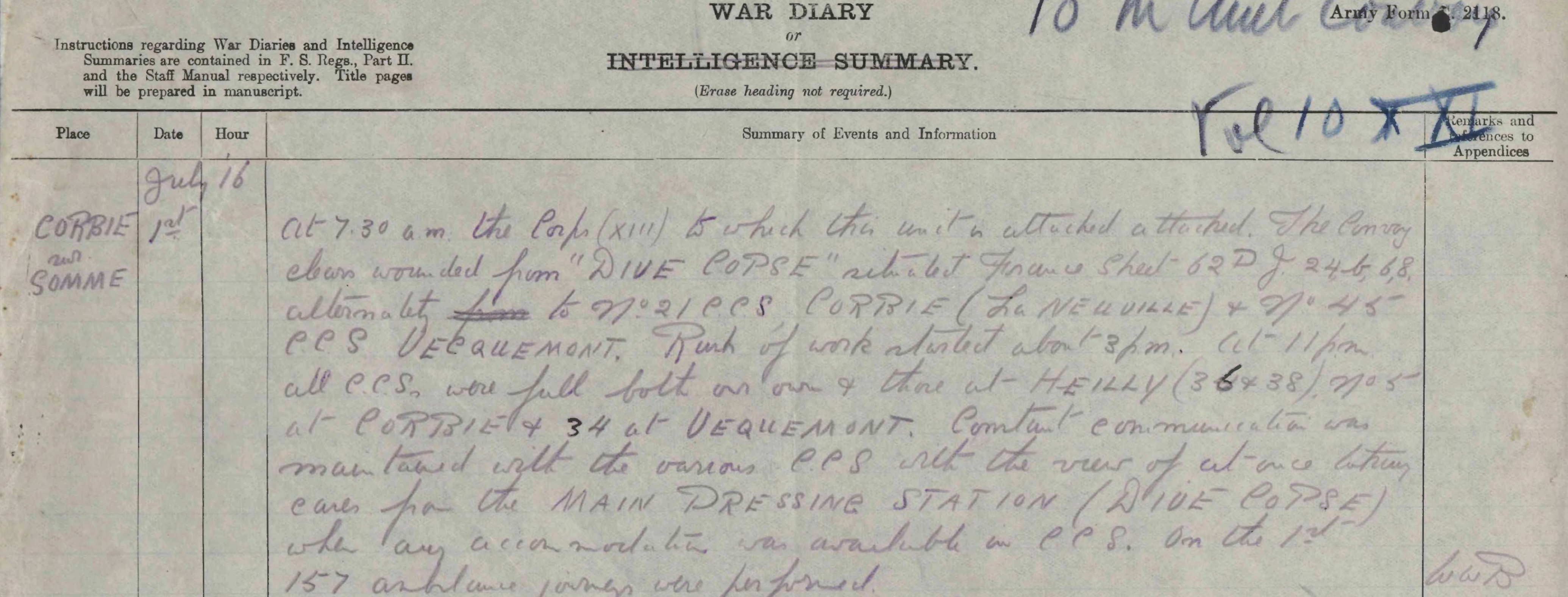
Here is the entry for 1st July 1916, the first day of the offensive. Many of the entries describe the number of journeys made, mileage, patients carried and other statistics. In this entry, it is reported that ambulances were transporting wounded and sick from the Main Dressing Stations (MDS) at Dive Copse, about ten miles behind the lines, to Casualty Clearing Stations (CCS) at Corbie, about 6 miles further back. There are constant complaints about the appalling state of the roads, lack of food for the men, the constant changing of personnel, and shortage of accommodation for the drivers.
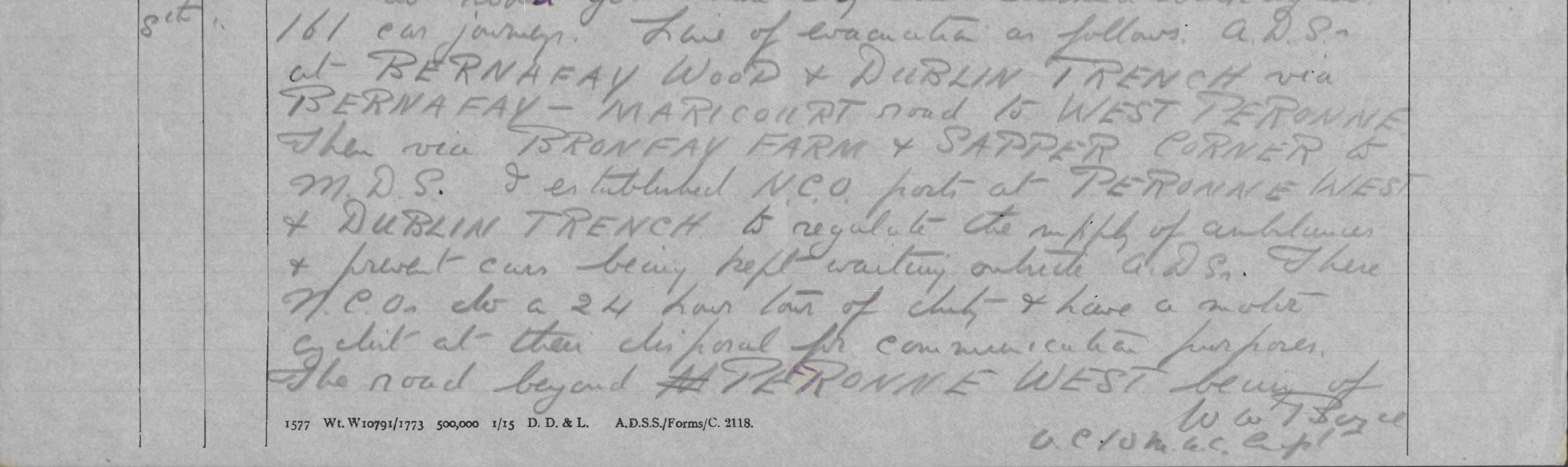
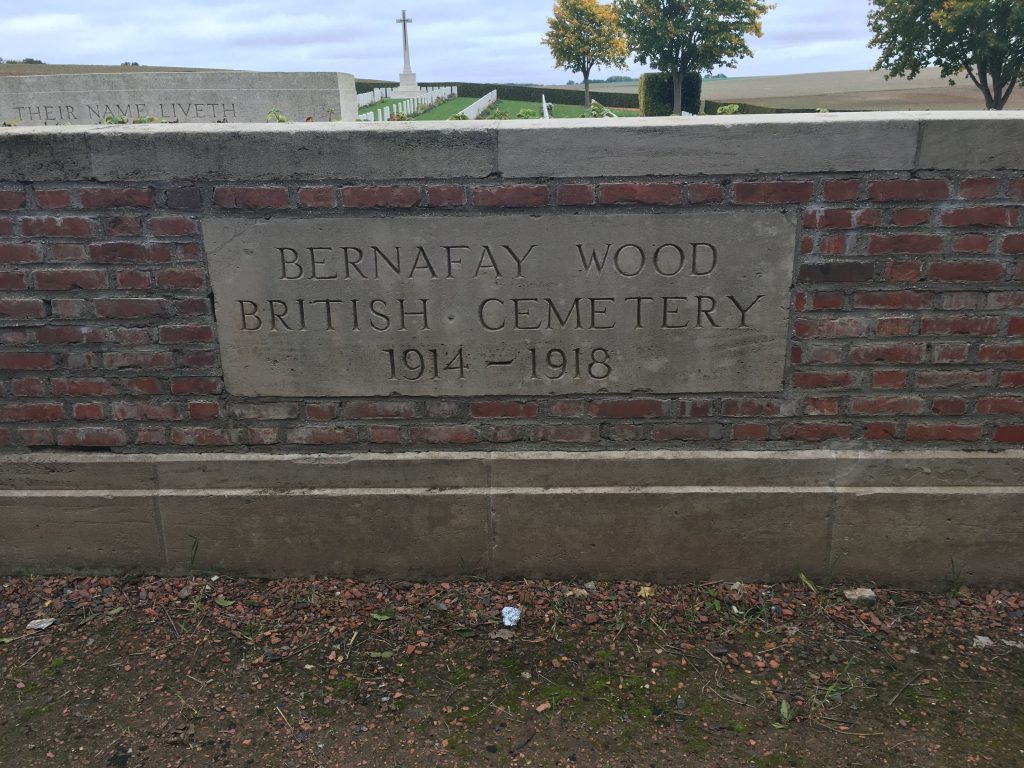
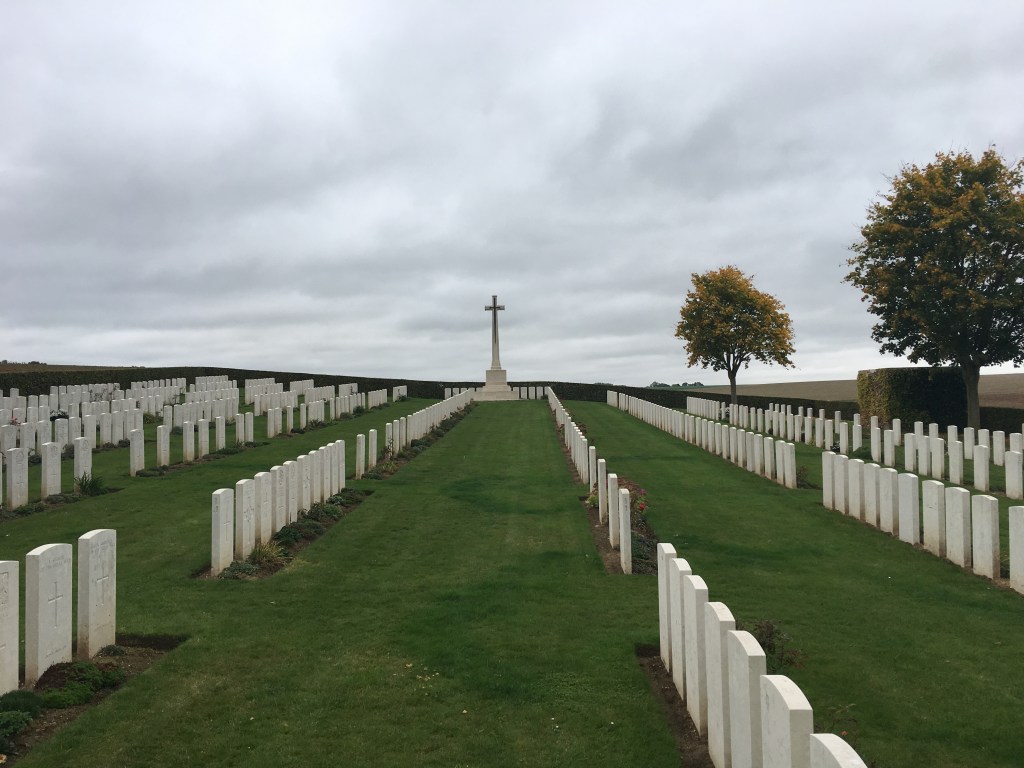
In October 2017, I visited France with my son and a friend on a day trip. We visited the British cemetery at Bernafay Wood which is mentioned in the war diaries for the first time on 8th August 1916. There was an Advanced Dressing Station (ADS) here.
According to a memorial sign at the cemetary:
“On I July 1916, British soldiers captured the German defences around Montauban, and over the following days patrols pushed towards Bernafay Wood. On 3rd July, men of the 9th (Scottish Division were able to occupy Bernafay Wood but found the neighbouring Trônes Wood still heavily defended.
A dressing station was established here, and Bernafay Wood became a base for British units fighting for nearby woods and villages. Soldiers and medical staff began to bury their fallen comrades here in August 1916, and by the Armistice over 280 men had been laid to rest in this cemetery. It was later expanded with over 650 graves brought here from the surrounding battlefields and other small cemeteries.
This is now the final resting place of over 940 servicemen, of whom over 415 remain unidentified. The cemetery was designed by Arthur James Scott Hutton, who served with the Royal Engineers during the war, and Sir Herbert Baker.”

The Second World War
The text in italics was written for me by a researcher.
George was remobilised on 31/08/1939 at the onset of WWII, and his career is as follows from that point:-
31/08/1939 – Joined at Regent’s Park Barracks as an Impression Officer (Lieutenant) and was given the acting rank of Captain.
09/11/1939 – Posted to No.2 Motor Transport Depot at Slough in the role of a Draft Conducting Officer. The officers were employed to ‘escort’ drafts of other ranks from the Training Depot to the ports for embarkation on the basis that they could not be trusted to get from A to B by themselves!
01/12/1939 – Appointed Temporary Captain after holding an acting rank for 90 days.
12/12/1940 – Reverts to Lieutenant upon being posted to the 29th Station Transport Company in Shropshire. Note that this is the same address mentioned in my great-aunt’s note and corresponds to the period when my grandmother became pregnant with my mother. It is worth mentioning that my grandmother’s mother came from Hereford, which is located in the neighbouring county of Gloucestershire.
28/12/1940 – Posted to a War Office Post at Benhall Farm, Gloucester Road at Cheltenham for temporary duties as a Transport Officer.
08/02/1941 – Posted to No.3 Training Brigade & posted to No.8 Training Battalion.
18/02/1941 – Posted to Royal Army Service Corps, Cambridge District as a Liaison Officer.
15/07/1941 – Posted to Anti-Aircraft Command as a Workshop Officer, starting at 182nd Company RASC at Eccles.
15/08/1941 – Posted to 904th A-A Company, part of 2nd A-A Division at Eccles.
10/09/1941 – Posted to attached station of 1st Holding Battalion (at Worthing) whilst he is on the ‘Y’ List – this is the code used for men who were sick and not fit for duty. This was a few weeks after the death of my grandmother, so he may have heard the news.
23/09/1941 – Discharged from General Hospital at Llandudno and joins 1st Holding Battalion after sick leave. He had been medically down-graded for Grade ‘B’ Garrison duties only. I discovered that his son was born on 27/1/42 in Conwy, a mere four miles from Llandudno, so is consistent with him being there.
18/11/1941 – Posted to Anti-Aircraft Command at Stanmore to await allocation. He is then posted to 930th A-A Company at Pontefract with effect the same day.
06/12/1941 – Posted to 192nd A-A Company at Edinburgh.
26/03/1942 – Posted to 1st Holding Battalion at Worthing having been classified as medically unfit.
07/05/1942 – Relegated to ‘Unemployed’ and put into the Reserve of Officers.
21/08/1948 – Having reached the age limit for his rank, George relinquishes his rank and is given the honorary rank of Captain (LG 20/08/1948).
Family
My mother was delighted to have discovered the identity of her father. The unfortunate news was that he had passed away in 1981, so my mother never had the chance to meet him.
Details discovered in the public records confirmed what my mother had been told: that he was a married man at the time my mother was born. However, my mother’s aunt had lied and said that he had died in the war. This was not true.
In late 1939, he was posted to Slough, a town to the west of London, as a Draft Conducting Officer, and this is presumably where he met my grandmother. She was born in Slough, and her sister Ada lived there at the time. His war records put him in Worthing in September 1941, about a month after the death of my grandmother.
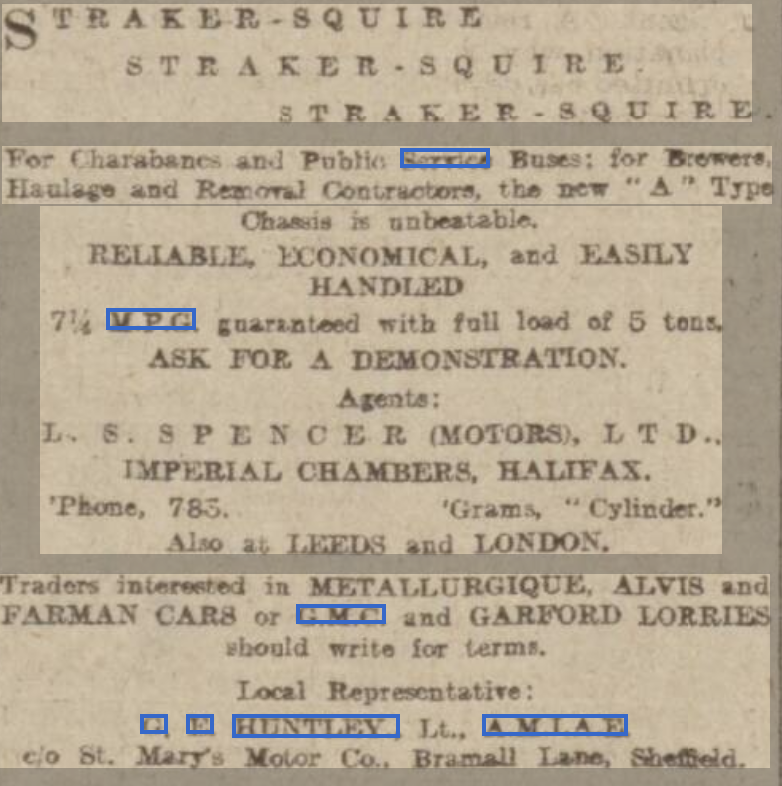
He married Betty B. Graham on 25th February 1941, six months after the death of my grandmother. They had two sons, George Edward Gordon Huntley and John Peter Julian Huntley. They divorced in late 1947. The divorce proceedings were publicised in a local Sheffield newspaper and were very acrimonious. George Huntley alleged that his wife was having an affair. She wasn’t the only one.


In later life, he emigrated to Australia and settled in Blairgowrie, Victoria with his second wife Helen Marion Graves Hay. One of his sons lives in Queensland, and the other is still living in the UK. I wrote to both of them in 2018 but never received a reply. I tried to contact the family of his second wife but again received no reply. I can only imagine that it would be strange to be contacted by the grandchildren of a relative so long after his death. Nevertheless, I would have liked to know more about him and perhaps see some photographs of him in his later years. I searched the local newspapers around Melbourne for any articles including an obituary but came up blank.
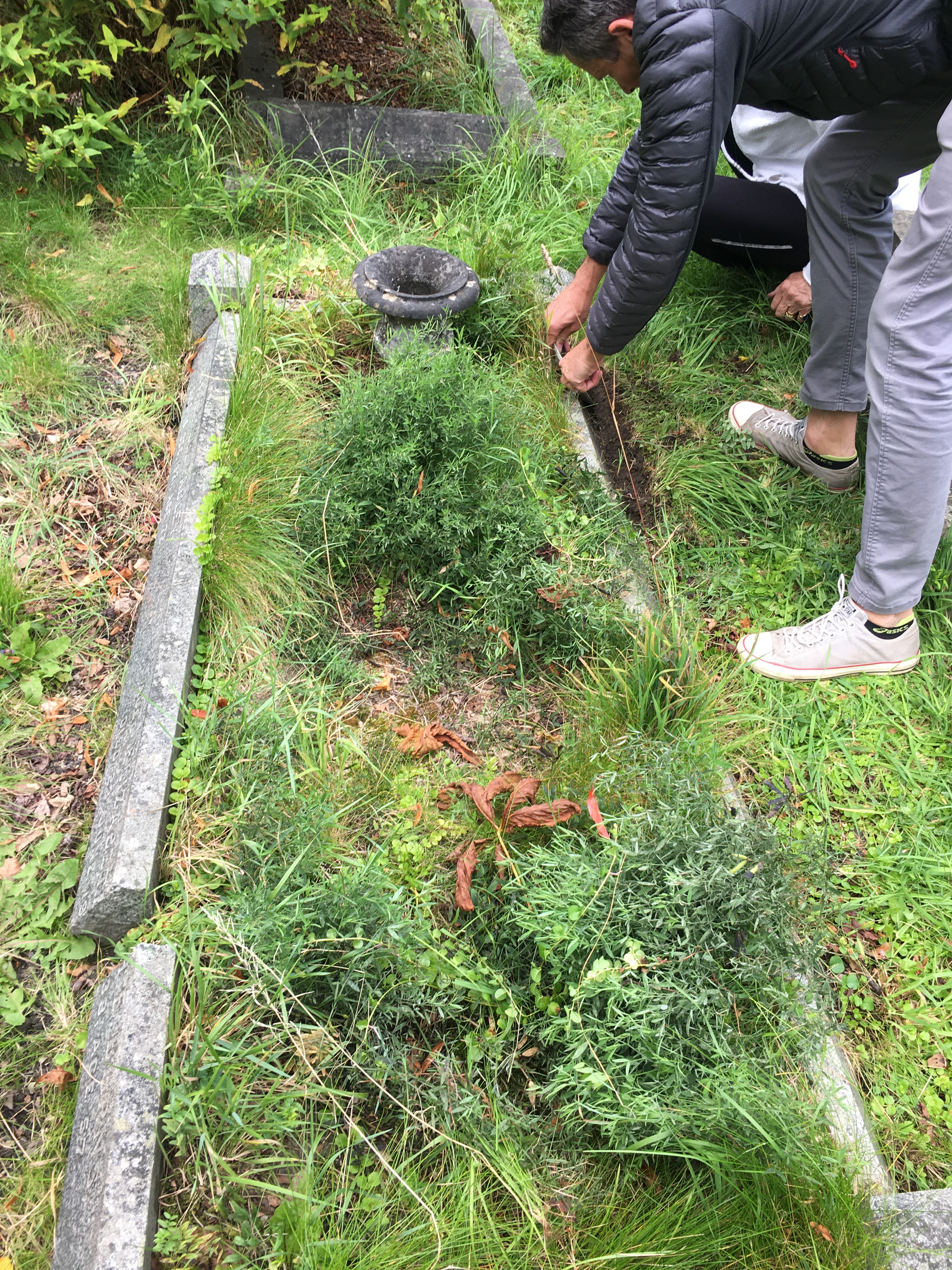
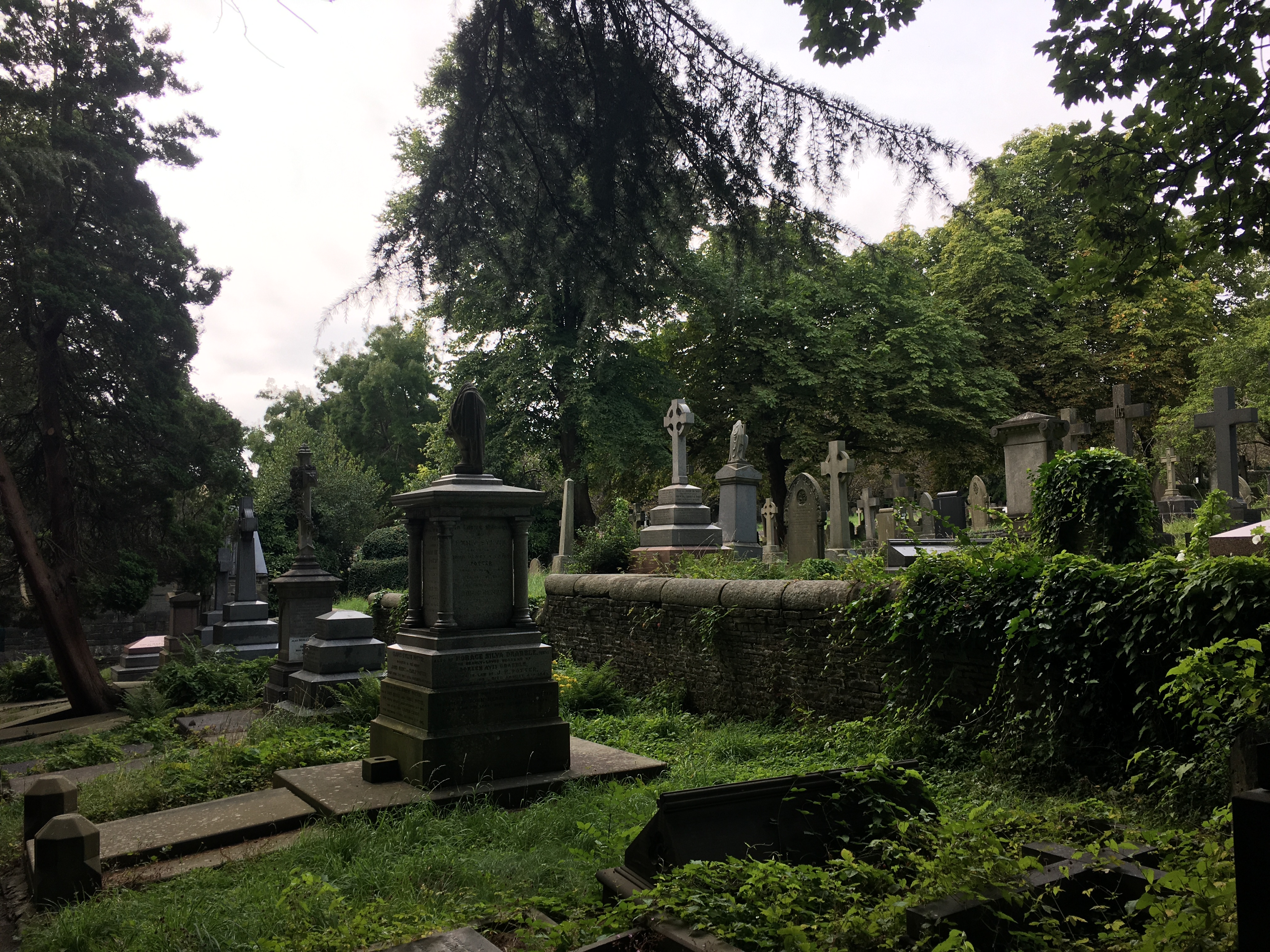
In August this year (2023) I visited Sheffield with my brother and mother. I managed to find the grave of George’s parents Kossuth Huntley and Mary Jane Padley. They are buried at All Saints Church, Ecclesall in the same grave as one of his uncles and his sister. As you can see, it is badly neglected. I wondered when the last time was that George visited the grave.
Questions that may never be answered are: What illness was he suffering from in 1941? Did he know that Harriet was pregnant with my mother? Why did he transfer to the Worthing area after her death? Had he been seeking contact with his newborn child perhaps? I think it is worth checking to see if his wife Betty was also in the area or had relatives in that area at that time.
What did he do at the Somme in 1916 to be mentioned in despatches?
Did he meet Helen Marion Graves Hay through his duties in the 2nd World War? When did he move to Australia, and did he have Australian citizenship on his death in 1981? He lived to be 97 years old. Perhaps I could write to a local Melbourne paper and see if they would be interested in writing a brief article.
I’ve researched a few of his cousins and their descendants, in particular, a first cousin who emigrated to San Francisco and became a journalist, and four brothers who moved to Alberta, amongst others. It has been a fascinating journey.


 Meanderings of a peripatetic maths teacher
