I've travelled widely and have had many adventures in my life. I am a full-time mathematics and physics tutor and have worked in Southern Africa, Asia and Europe. I've travelled widely in Zimbabwe, Swaziland, Mozambique, Namibia, South Africa, Oman, Georgia and Malawi.
I am one of the few people on this world who actually enjoys mathematics. I like its abstraction and self-contained nature. I’m reasonably good at it up to a point. It is satisfying to ponder a question and to have insight into how to approach it. And however good you think you are, there is always going to be something that leaves you floundering.
Mathematics has a great deal of relevance in the ‘real’ world, whatever that means. Most people don’t realise it, but there is a great deal of mathematics involved in how for example mobile phones encode your voice into a stream of 1s and 0s in an efficient manner. In decoding the signal at the other end, many factors need to be taken into account. The signal being transmitted may be from a moving object and therefore there are Doppler shifts to take into account. The signal may be received as one strong signal and smaller delayed signals corresponding to the reflection of the transmitted signal from buildings. All of this needs to be done in real time and is actually transmitted by your phone at multiple frequencies in packets and not continuously.
Telecommunication is just one area where mathematics plays a vital part in our lives. The encoding/decoding problem occurs in situations such as writing/reading a DVD, encrypting and sending data over a public network, to name just two others.
I taught at a school in Kuwait for the academic year 2003/4. This was an “interesting” experience culturally. I had not lived in a Muslim country before. I taught mathematics up to A-level at Kuwait English School. This is one of the better international schools in the country. Some of my classes were difficult and it was hard work. We started the day at 7 am which was the time we had to be on site. Lessons started at 7.30 and finished by the early afternoon. This had its advantages as we could then have the afternoon free. To be honest I was often so tired that I just went home and slept.
We had an alcoholic maths teacher in the department. She had the classic red nose of an alcoholic and was very bad-tempered. The principle, Janet Carew, had a large house with a basement and invited us around for drinks – all strictly illegal of course. The alcoholic maths teacher got very angry because I was talking shop to another teacher and insisted that we stop. She was scary.
I lived in a block about ten miles from the school which was where the school rented or owned some basic apartments for staff. I hired a car each term, which worked out surprisingly cheap. I think petrol worked out at about 10 US cents per litre. Driving in Kuwait is an experience to be missed. The standard of driving is amongst the worst I have seen anywhere in the world. The main technique could be called “point and push”. It was very scary. There were horrendous accidents every day on the highway which ran south from Kuwait City. There was even a website (no longer in existence) called Car Crashes of Kuwait which was grisly and horrific viewing. One particular photo I saw on this website I can never unsee. It was of the face of a motorcyclist who had crashed his bike sans helmet. I’m not normally squeamish but this was just too much.
A famous landmark in Kuwait City
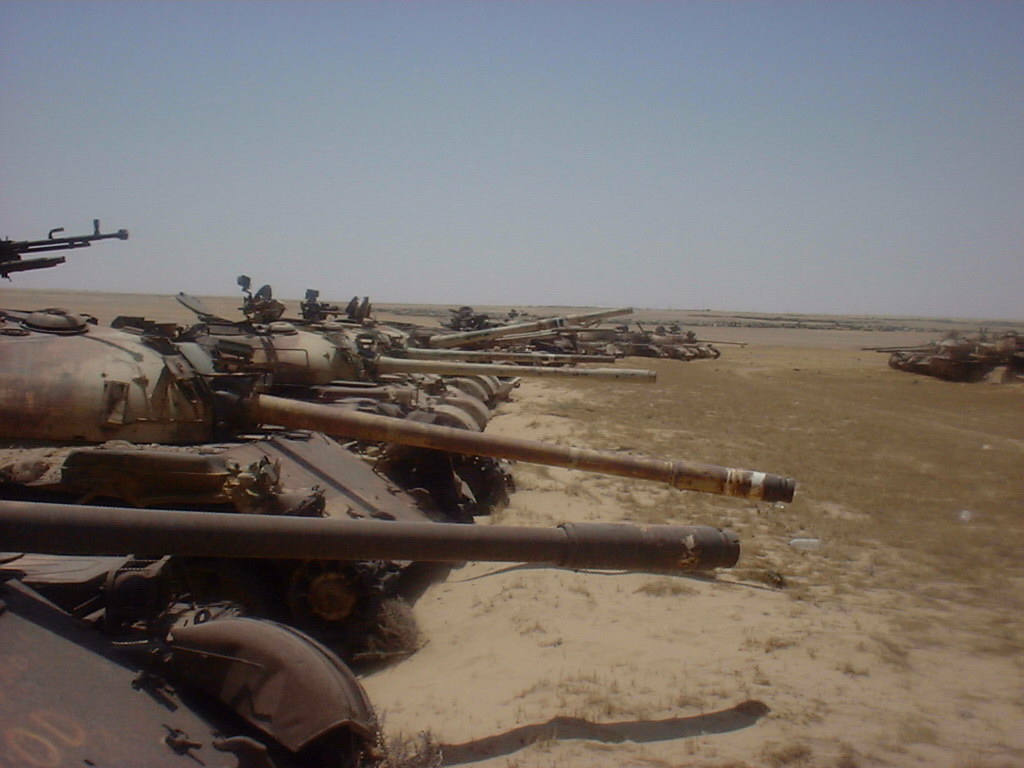
The weekends were on Thursdays and Fridays. We called this the virtual weekend. Saturdays and Sundays were normal days. One weekend, we went out for a drive in the desert to see if we could find the so-called tank graveyard which was where the US military had dumped all the Iraqi tanks and trucks that it had attacked during the Iraqi retreat from Kuwait in the first Gulf war. There were hundreds of tanks in row upon row as well as armoured vehicles, unexploded ordnance and so on. It was blisteringly hot in the desert and I only had a rough idea of the location as we were following directions given to us by other teachers. But we found the site in the end.
This huge amount of scrap metal rusting (figure 29) in the desert is worthless. The reason is that depleted uranium, a by-product of uranium enrichment, is used in the armour-piercing shells that the Americans used. What better way to get rid of your radioactive waste than firing it at your enemies. The result is a lot of contaminated metal. It will lie there for many years to come. Unbeknown to us, there was a military base nearby, and we were soon spotted by some soldiers who came over and arrested us. We were questioned in broken English and our cameras were confiscated but not before I had removed my camera’s memory card. One of the soldiers seemed to think that my friend’s garage remote was a secret device. I had to mime opening and closing a garage door with sound effects to try to get this idiot to see sense. We had to report the next day to the army headquarters to collect these items. We were politely questioned by a well-spoken Kuwaiti officer and given tea. He asked if we worked for CNN. A subservient Pakistani officer brought the tea and his Kuwaiti superior made derogatory comments about him after he’d left.
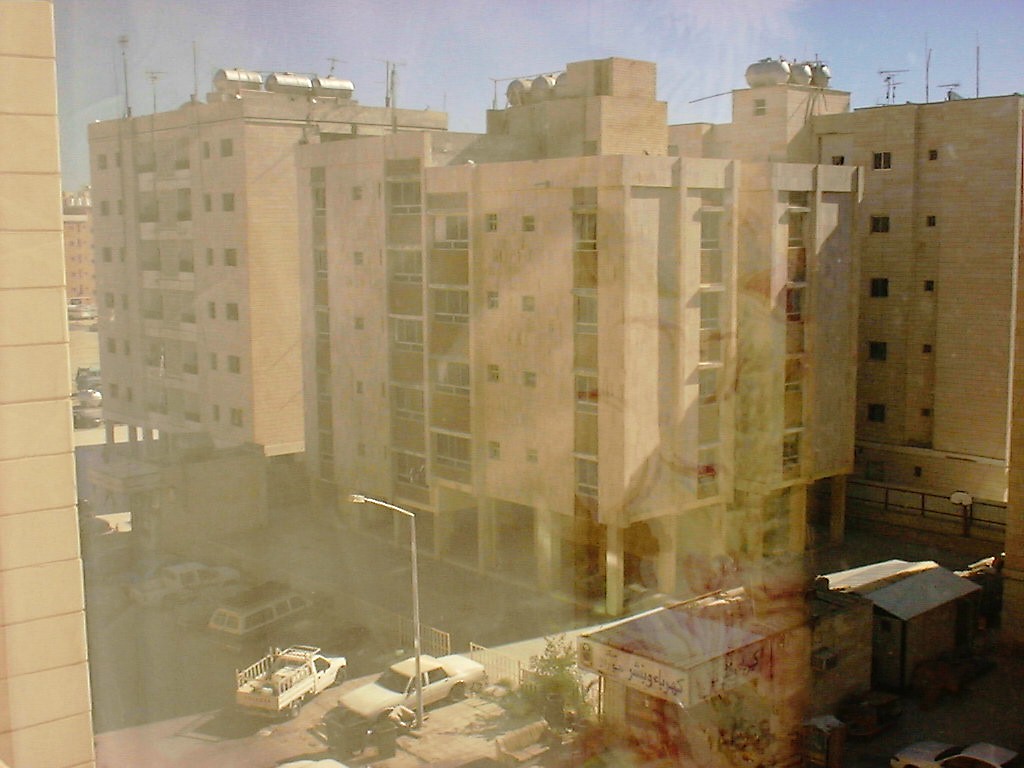
View from my window – lovely
I didn’t enjoy living in Kuwait at all. The culture is extremely misogynistic and racist. If you have not lived or worked in a Muslim country before, especially in the Middle East, you have no idea. The whole region has a mindset from the Middle Ages with the added danger that they have modern technology. I heard horror stories of how Indian workers were treated. An English colleague told of how, when he was at a ministry building renewing his work permit, he was ushered to the front of the queue and saw lines of Indian and Pakistani workers being shouted at and hit by Kuwaiti officials. I did some private tuition on the side and saw one of my students, a seventeen-year-old Kuwaiti youth, being extremely rude to his adult servant because he had not made his birthday cake the way he wanted it. Another colleague spoke of how he knew of two Sri Lankan maids who had been abducted and raped in the desert and left there bruised and traumatised. When they made a complaint to the police, they were charged with adultery. Their abductors were Kuwaitis.
Around every Valentine’s Day, there was a competition amongst the students to vote in the most good-looking male and female sixth formers. It was always Kuwaitis who were chosen. Roses were sold by sixth formers to raise money for the school, but it was alleged that much of the money went astray. A school geography trip was organised, and parents charged. The geography teacher, the wife of the maths head, said that the school was grossly overcharging the students. The school was a great earner for the owners.
In the one year I spent living in the country, I never did get my work permit. There was no good reason for this, but it meant that every time I left the country, I could not be sure of being allowed to board a flight back. It did not help that a friend of mine went down to see the person in charge of visas at the school and called him a lazy Jordanian bastard.
I did some private tuition during my time there and tutored four students together at one of their villas on the coast. I saw a row of luxury cars parked as I drove through the entrance. The father was very wealthy, and he used to own a Learjet. I asked why he no longer owned it and if it was because it was too expensive. He said no, they got rid of it because they did not use it.
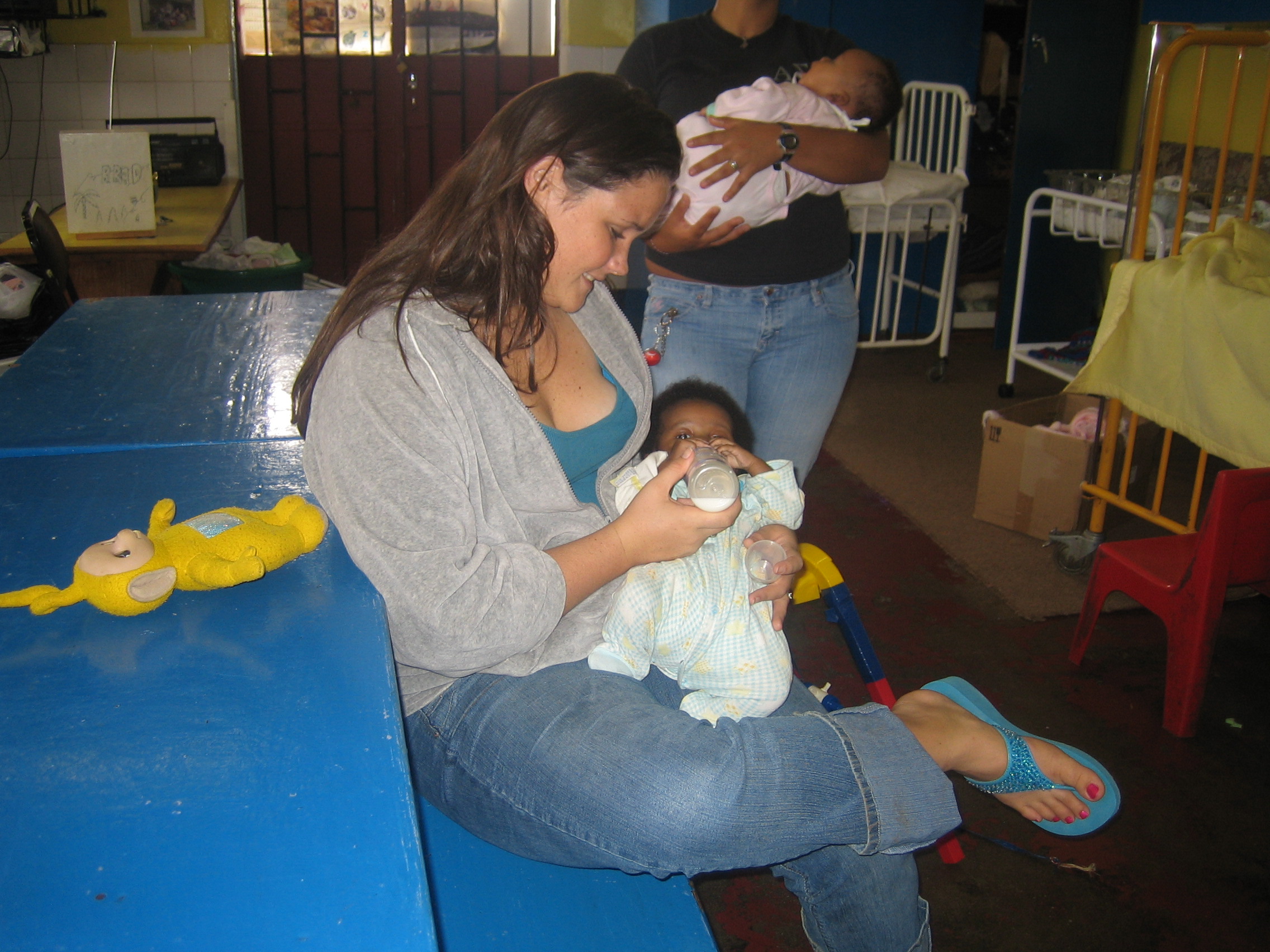
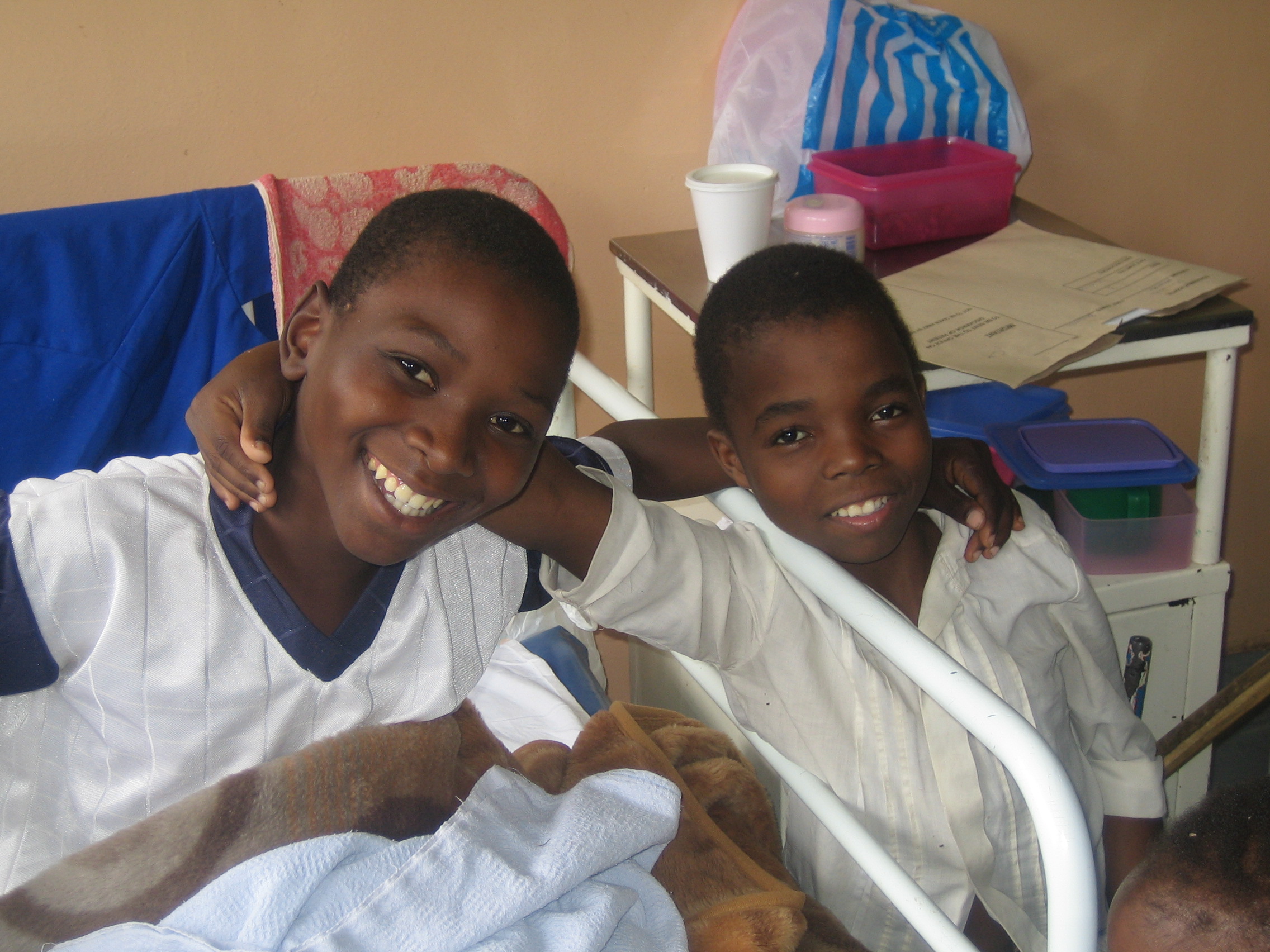
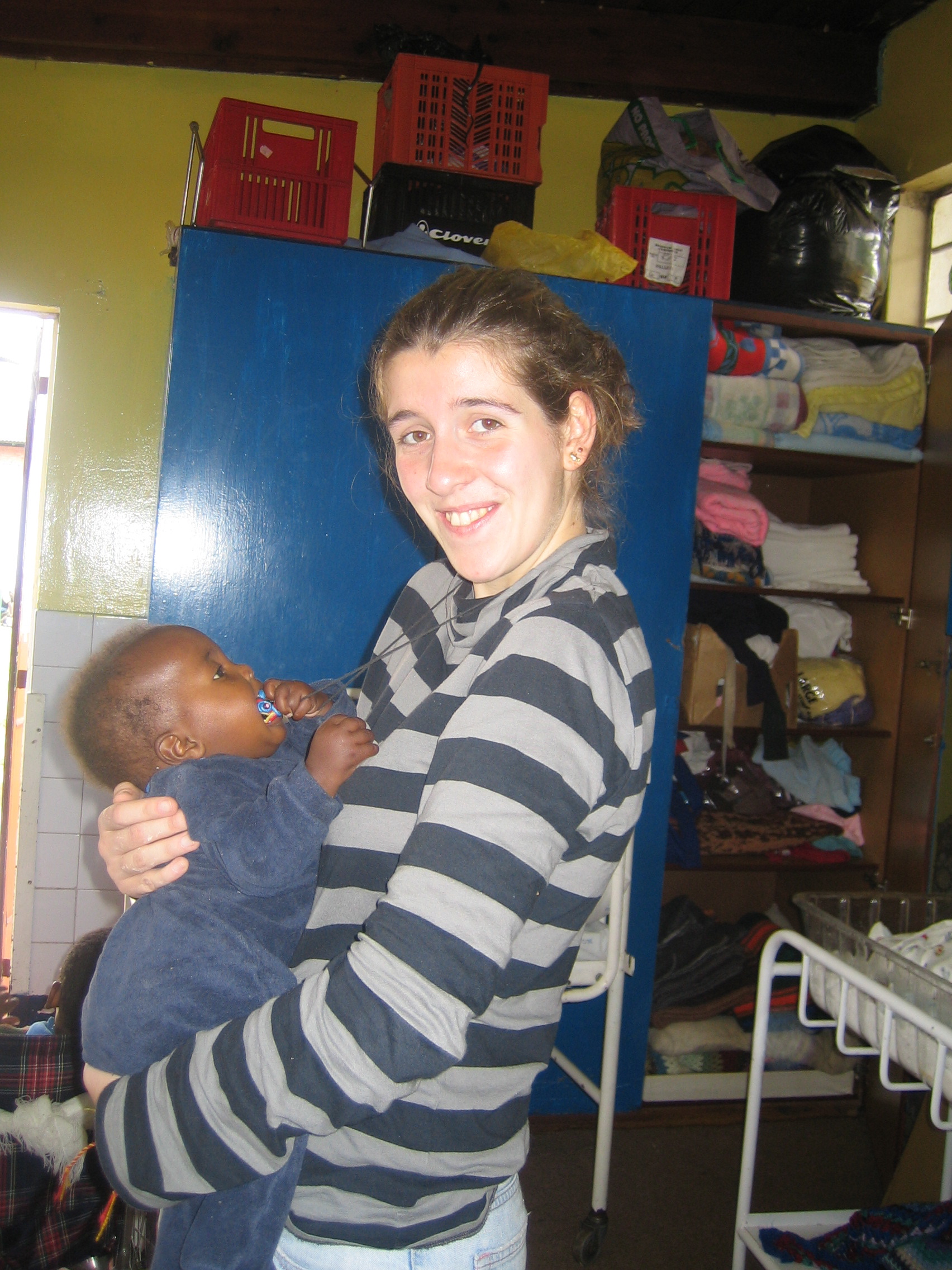
In 2006, I was living and working in Swaziland. I was teaching mathematics and science at a well-known school in the capital city, Mbabane. I also helped out with a community service project which fifth and sixth forms were involved in. At Mbabane General Hospital on the children’s ward, Ward 8, was a single room where abandoned babies, handicapped children and young adults were housed. There was a row of cots, a table and benches and a television in a metal cage that was left on permanently during the day. I took the school children down to the hospital on a Friday afternoon in a minibus and we usually took the residents of the ward to Coronation Park to play. These children weren’t sick for the most part but desperately in need of human interaction.
There is only one government children’s home in Swaziland, a country with tens of thousands of orphans. It does not take handicapped children. There are several private orphanages funded by evangelical Christian churches as well as organisations such as SOS Children’s Village and these do a great job. However there are not enough of them.
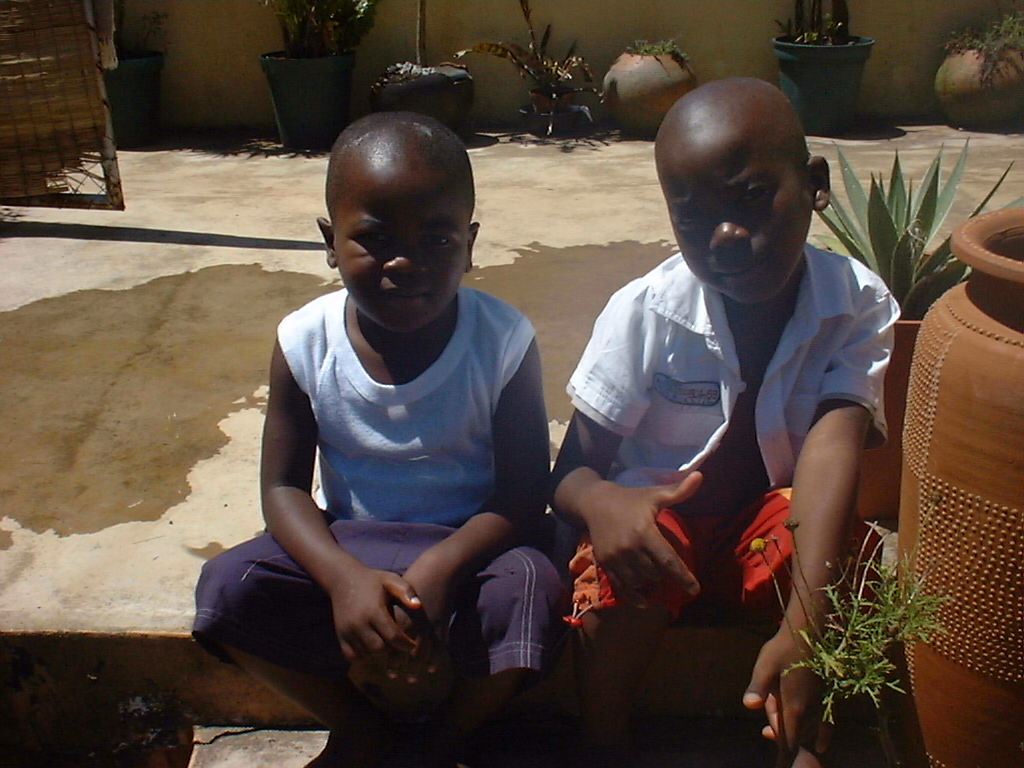
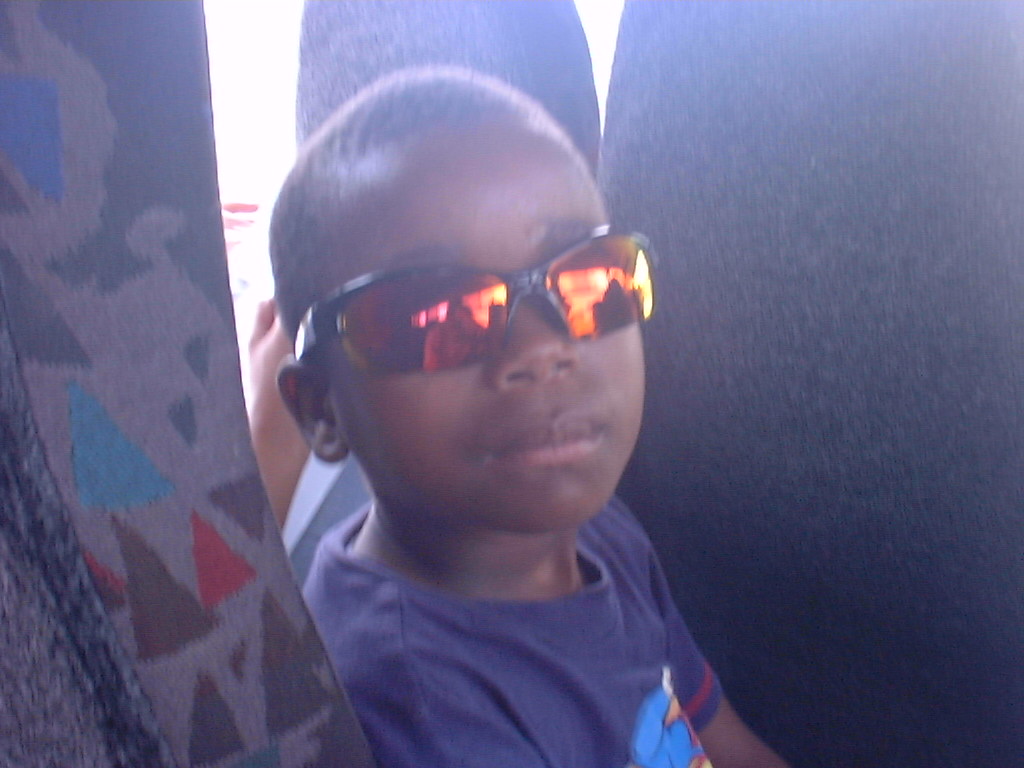
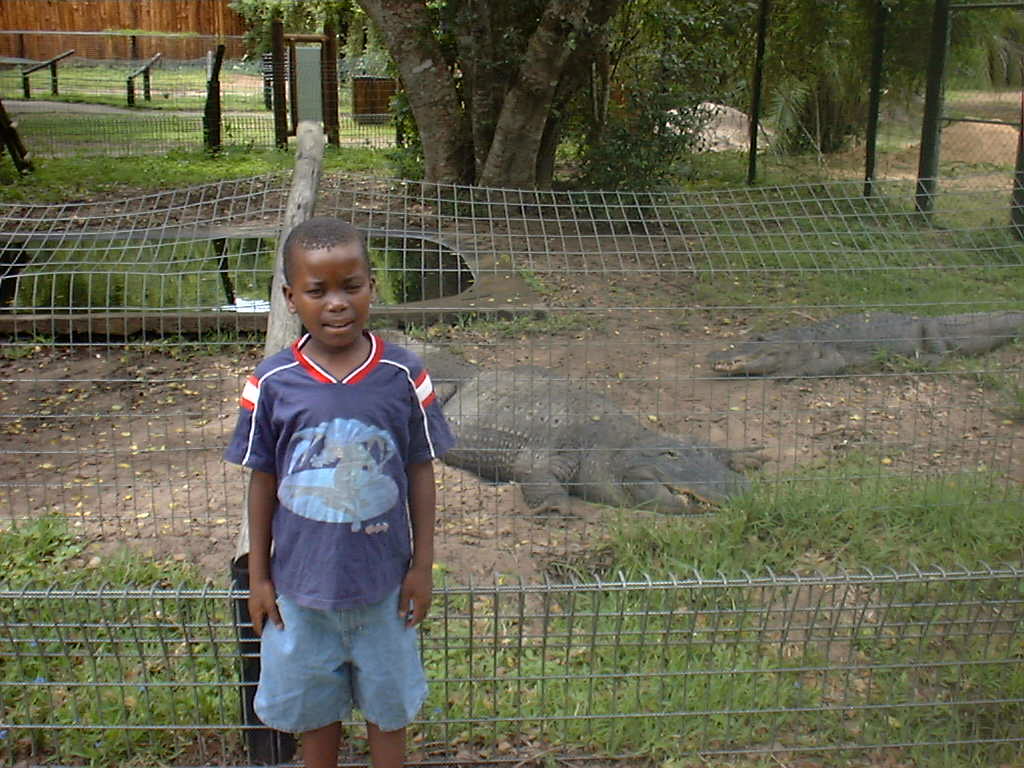
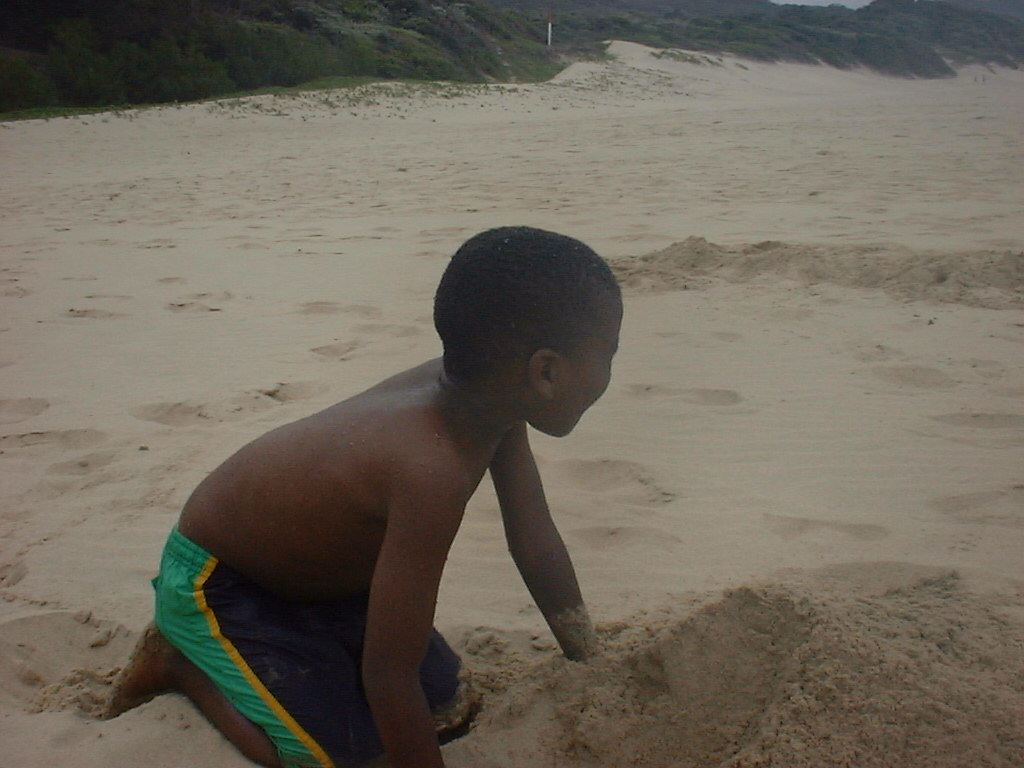
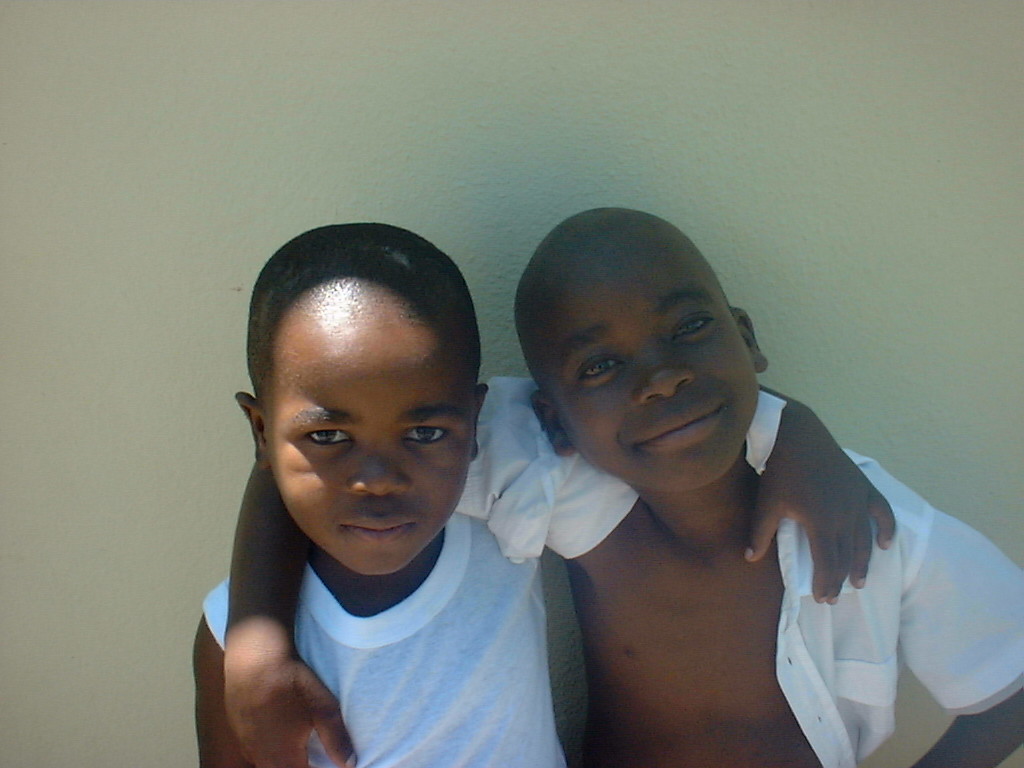
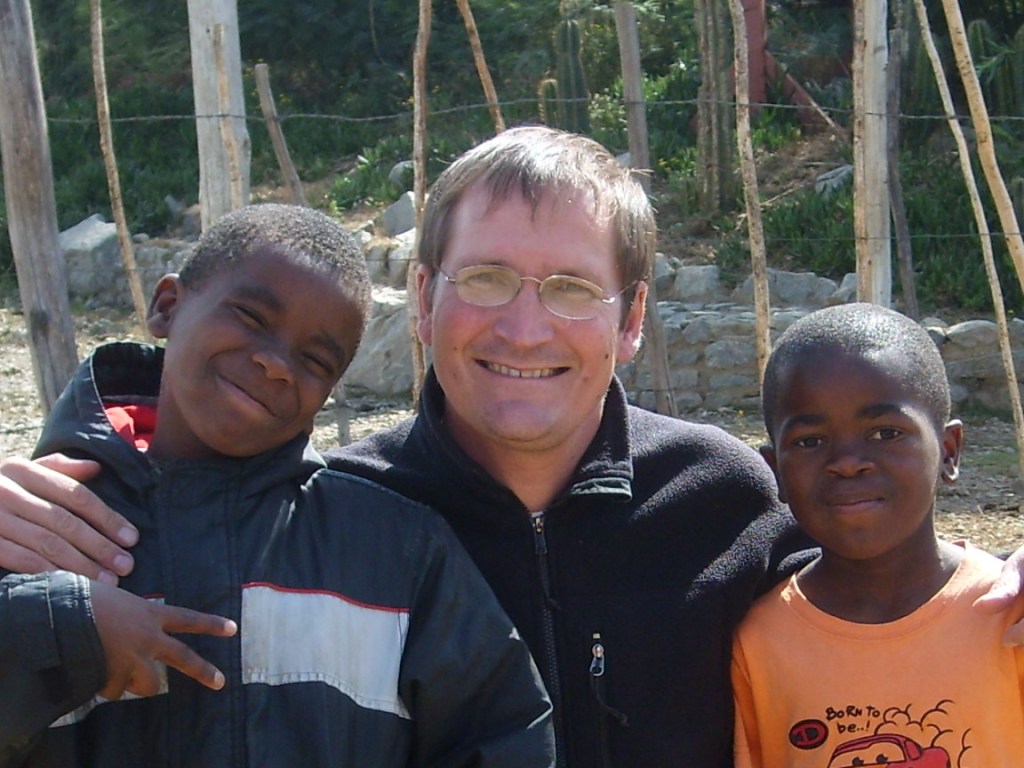
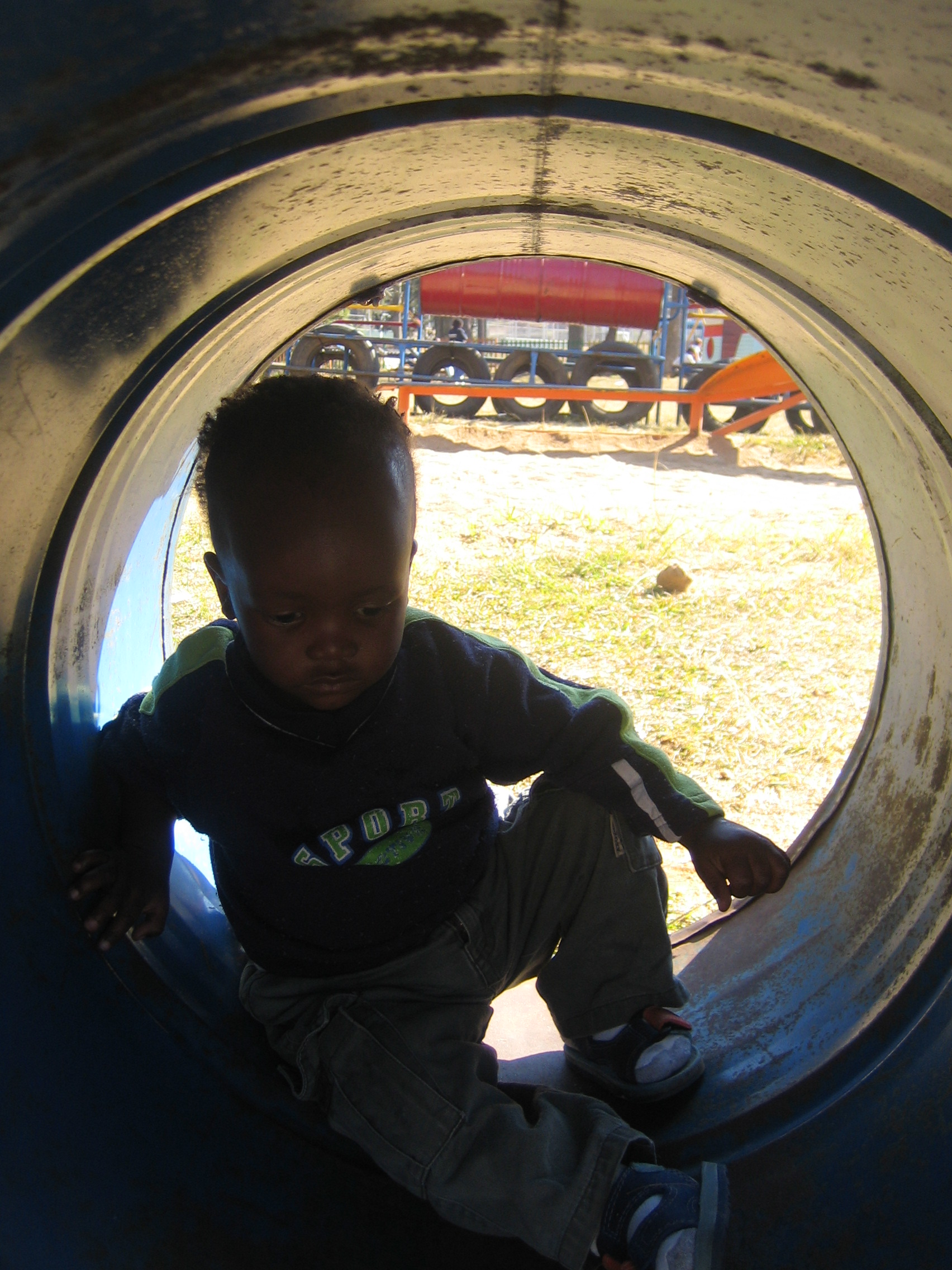
The young boy pictured above in all eight photographs was one such child and had been left at Ward 8 for almost two years with little contact from his family after he was orphaned in 2004. I found out a little about him. He always seemed lively and curious however it was obvious that he suffered from ill-health.
I knew that the future was bleak for him if I did not do something. Another teacher at the school had recently adopted a baby from the same place and so I thought why shouldn’t I do the same. I made arrangements to foster the boy as well as another boy who was in the same situation. So started a long journey.
I asked about the possibility of fostering at the hospital and they were happy for me to take the two boys home for the weekend. I did so. I very quickly realised that I would like this to become a permanent arrangement. Arrangements were made for me to visit the offices of Social Welfare. A very kindly lady called Babazile Sigwane was my social worker. After a couple of visits with her, she suggested that I go for adoption. I would not have done this had I not known that I could get British citizenship for my adoptees. I looked into this and as I was resident in Swaziland at the time, the adoption was the responsibility of the local authorities. Swaziland and the UK recognise each other’s adoptions and so after I adopted Sikhumbuzo as he was then known, I applied for British citizenship at the British High Commission in Pretoria in early 2007. The smaller boy in the top set of pictures had a more complicated situation. His father’s location was unknown and he had been physically abused by his step-mother. He had an open wound on his head that was healing when he was with me. He grew very attached to me and it was very sad that I was told that it would not be possible to adopt him. I tried my hardest but it was not allowed. The reason stated to me was that the father could not be located however it had been over six months since he had had any familiar contact so I think this was not a valid reason.
So I adopted my son in December 2006. In June, we left Swaziland for the UK. I had already secured a new job in central Europe due to start that September but in the meantime, we spent the summer in England staying at my mother’s place. In August, we both moved to Bratislava in the Slovak Republic where we remained for four years. My son attended the same school as I worked at. In 2008, I bought a house and things were looking good.
There was a happy ending to what happened to the other boy I could not adopt because he did find a place at the Lighthouse children’s home. It is a very well-run orphanage with a system of house mothers who are responsible for a small number of children. It is a very caring environment and the children grow up in a family atmosphere. I send regular parcels of clothes and books to him there and keep in touch.
What I couldn’t understand about the situation at Ward 8 was the fact that the nurses seemed so apathetic and disinterested. A lot of toys had been supplied and were stuffed into a cupboard and never taken out. The walls were bare. Food was very basic and the older children slept on old mattresses on the floor with no-one to ensure their safety at night. There was a playground at the back of the hospital just behind the room which housed these children and the grass was overgrown. Our plan at the start of the project was to cut the grass and paint the swings and slides so that they could be used. But this was discouraged as the nurses wanted us to take the babies off their hands in the afternoon.
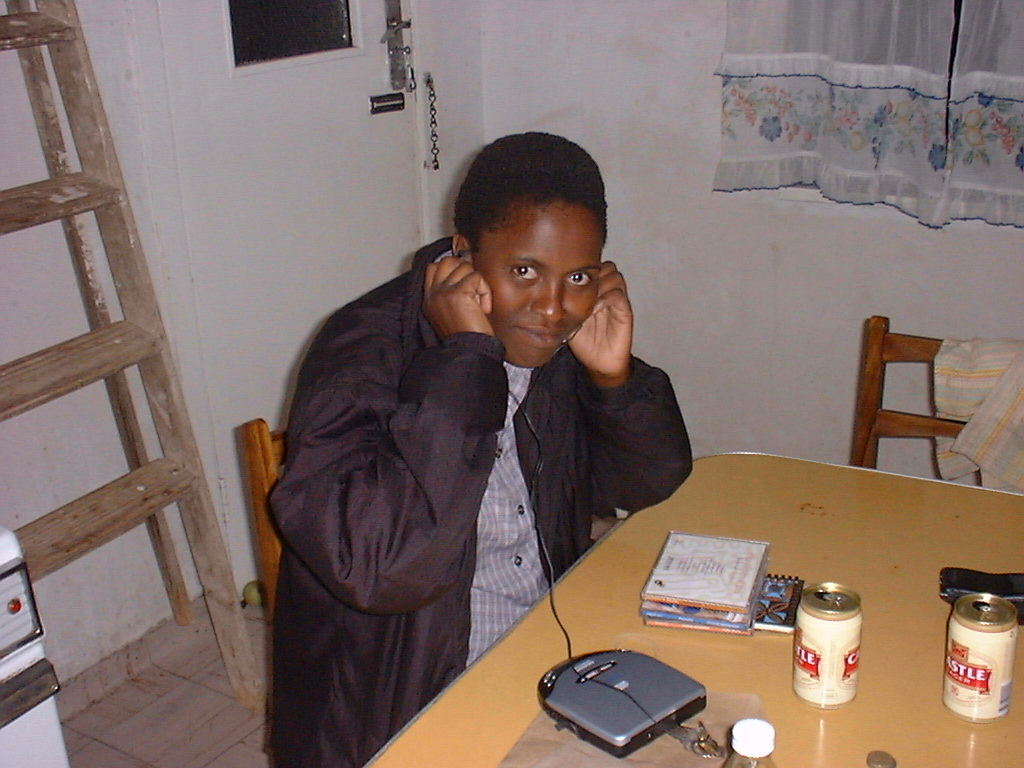
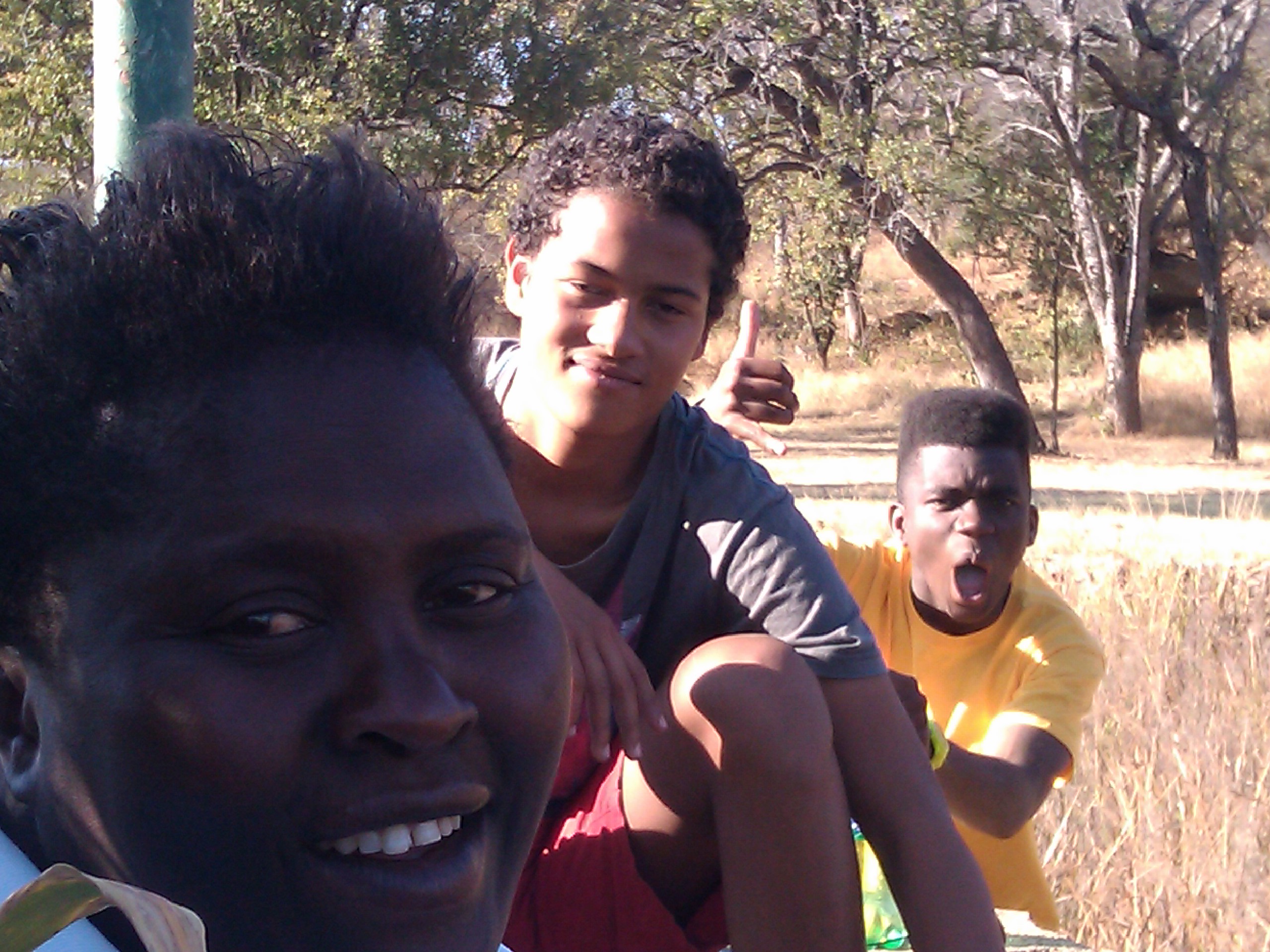
My friend Nontando is shown here in her flat in Bulawayo. This was possibly at the end of our road trip in the summer of 2001. I had known Nontando since the time that I had taught in Zimbabwe during 1996 and 1997. I paid a lot of visits back to Zimbabwe after I left at the end of 1997. Each time I returned, the currency was worth less and less in real terms. The decline of living standards and the availability of food in the shops was shocking.
Nontando’s partner is a British man who emigrated to Zimbabwe in the 1960s as a young man. I rented a room in a house he owned on Barbour Avenue in the area called Parkview. It was a grand old house with a metal corrugated roof and a borehole with the date 1890 on it. I taught mathematics and physics A-level at Mzilikazi High School. I did an alright job but looking back on it, I realise that there was a lot that I could have done better. I had actually forgotten a lot of the A-level mathematics that I had studied in my youth. Despite this, I managed alright and the class that I taught for two years came out with decent results.
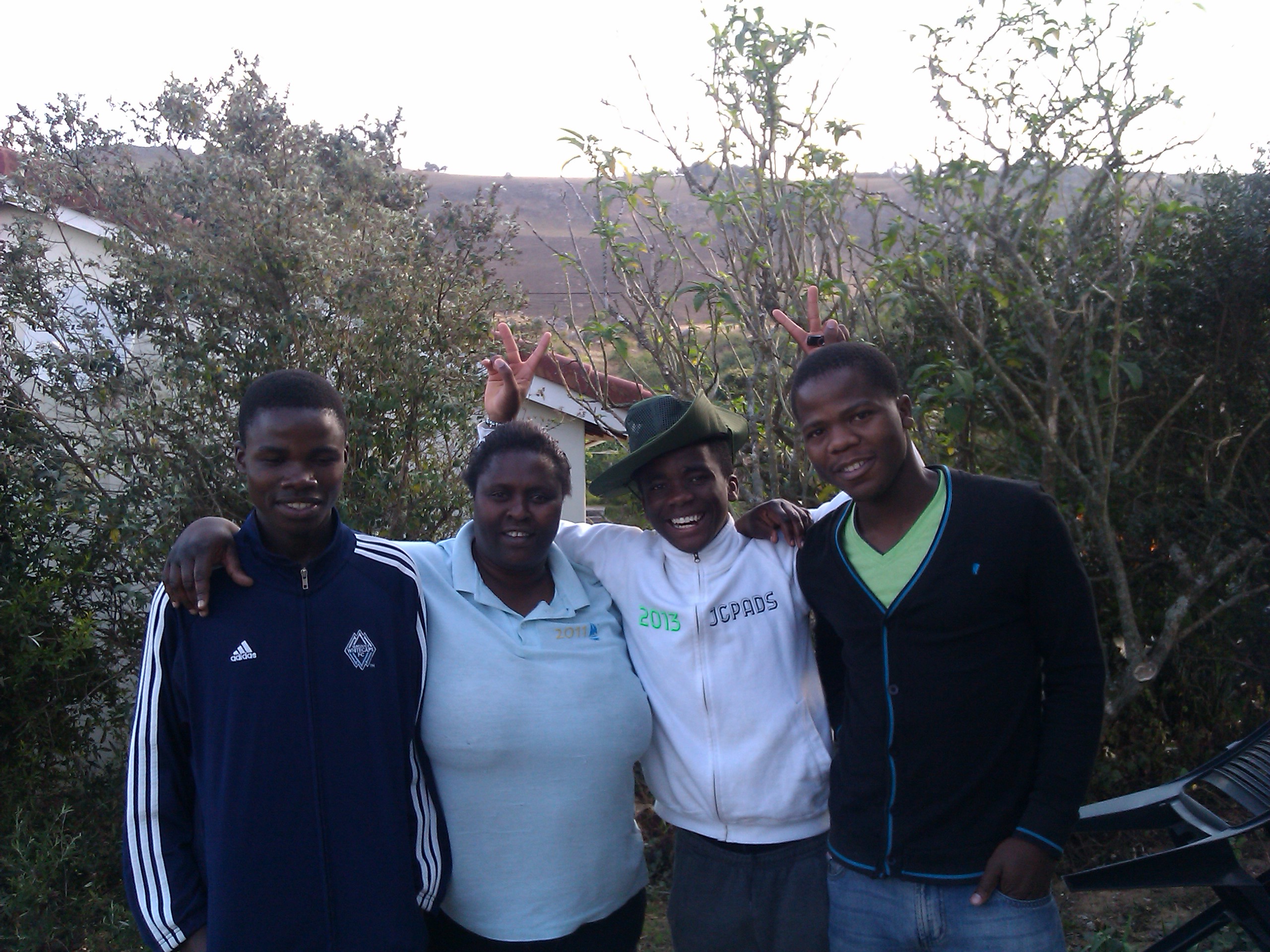
On my numerous visits back to Zimbabwe between 1998 and 2013, I have met up with Nontando either in Bulawayo, Johannesburg or Mbabane. She has a teenage son with her partner as well as another son from a previous relationship. In recent years, I havent seen her as often as I would have liked and it is always surprising to see how much bigger and older her sons are.
Bulawayo in particular has a special place in my heart. I know it very well and have spent many happy hours at Matopos National Park to the south of the city. This is well worth a visit and has beautiful granite balancing rocks that used to feature on the old Zimbabwe dollar notes. It also has cave paintings made by San bushmen many thousands of years ago.
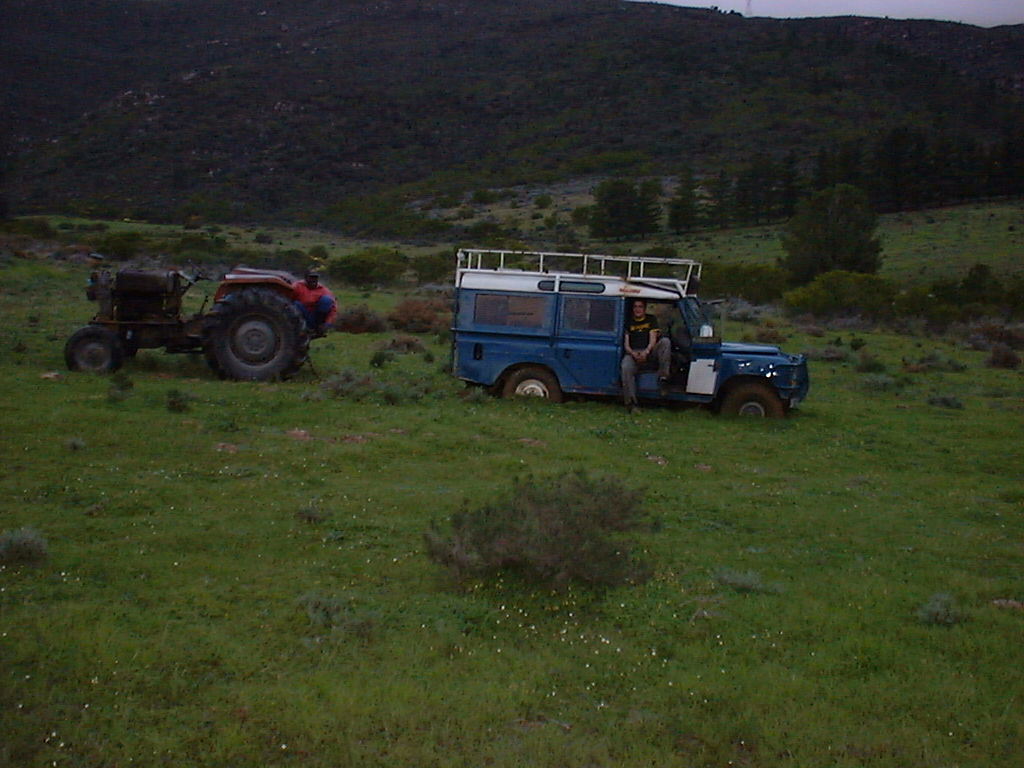
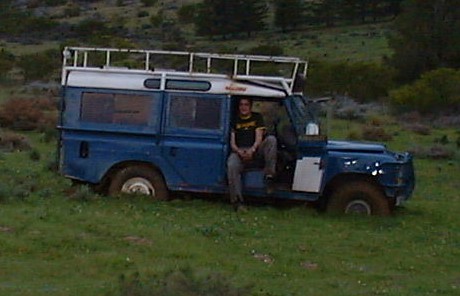
Here you see me sitting in the drivers’ seat. The land Rover is well and truly stuck in the mud. I was travelling with my friend Nontando from Bulawayo. We had just dropped off Maurice at the farm. We visited the local Drostdy Hoff winery where we picked up some rather nice white wine. After leaving Tulbagh, Nontando and I headed down to Cape Town. We were planning on meeting up with Nontando’s other half Tim Cherry and her young four year old son Andy. After a few days in Cape Town, we then followed the Garden Route via George, Knysna and Port Elisabeth. Our destination was ultimately going to be Durban before driving back to Zimbabwe via Beitbridge.
At Pietermaritzburg, I paid for Nontando to do a tandem skydive. I was doing some parachute jumps myself and had just started my advanced freefall course. She unfortunately threw up on the way down inside her jump suit, as recommended by the tandem master!
In July and August of 2001, I drove from Bulawayo to Cape Town and back in a friend’s old 1960s Land Rover passing through Botswana on the way. My mate Tim Cherry had bought it from new, but it had seen better days. A worker employed by Mike Barry’s father was unwell with a heart condition and I was asked if I could help take him down to the family’s farm at Tulbagh, about 100 miles north of Cape Town, where he could get better treatment. We left Bulawayo and headed out towards Plumtree on the Botswana border, but not before spending several days trying to get the old Land Rover roadworthy. I had been told by the owner that it was serviceable, but this was far from the truth. It would not start, had a flat spare, almost bald tyres, brake lights that did not work as well as poor brakes. The rear fuel tank leaked, the fuel pump was on the blink, the electrics were decidedly dodgy, and you could see the road through a big hole in the floor. The windscreen wipers did not work either.
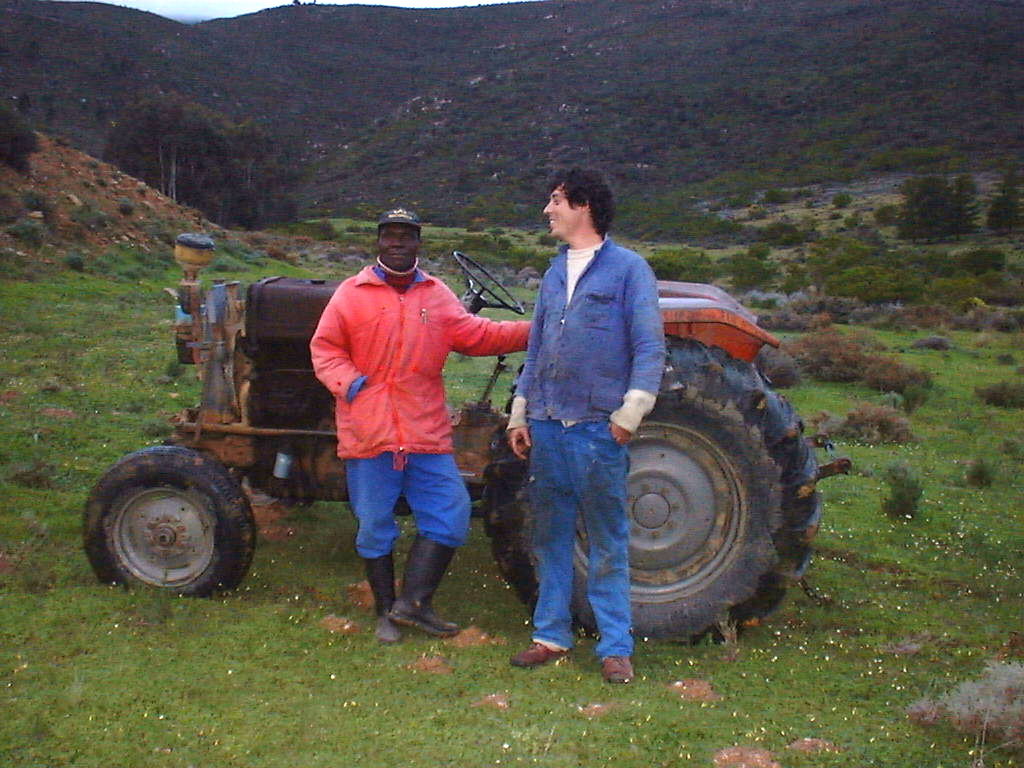
Once we got the worst of the problems fixed, it took several days to drive down to Tulbagh and we ran out of diesel a few times. The fuel gauges did not work, and we did not realise at the time, but fuel was draining from the rear tank. We slept in the vehicle on the way down. In figures 25 and 26 we see Maurice and Mike about to pull our Land Rover out of the mud with a tractor on their farm in the hills surrounding Tulbagh. The farm had extensive vineyards and a beautiful old farmhouse in the Cape Dutch style. The little town of Tulbagh had some fine cafes where you could sample the delights of milk tart, an Afrikaans speciality.
The Land Rover gave us a lot of trouble along the way. The battery went flat and wouldn’t charge, fuel leaked, and we often had to bump-start it. An electrical fire started in the dashboard. I spent a lot of money on repairs. Rachel and Mike were trying to make a success of a bed and breakfast business they were running. I heard later that Maurice died of a heart attack some weeks after we left Tulbagh for Cape Town. It was very sad.
Mike and Rachel had a turbulent relationship. Mike was a mechanic by trade and very skilled at fixing cars, trucks and tractors. I visited them both in early 1998 with my current partner Leonard who was from Cape Town. Rachel was very histrionic and went barmy when we stripped off and swam in the dam. She used to scream like a banshee at the farm workers and complained if Mike used one teabag per cup. Her driving was terrifying and she paid little attention to traffic lights. She was very erratic. The business was not exactly a success because they were quite a long way outside Tulbagh itself. Rachel had the daft idea of calling the guesthouse The Duck Pond. Nontando and I were among the first guests to stay. However, after a few days, Rachel turned around and said that she wanted us to contribute to our stay. I had been buying food, cooking and paying for wine. Whenever Mike had more than a couple of glasses, Rachel went into full banshee mode. She was like a fishwife when she got going. I told Nontando that I was leaving and did not say goodbye to Rachel, I was that annoyed.
Rachel and Mike subsequently married and had a daughter despite Mike’s numerous affairs and infidelities. Some years later, I heard from Nontando that Mike had committed suicide in Bulawayo after Rachel had returned to the UK and told him that he would never see his daughter again. He had gassed himself inside his car. It was a tragedy.
After Tulbagh, we drove along the garden route stopping at Cape Town, Stellenbosch, Plettenberg Bay, Tsitsikamma National Park, Port Elizabeth and Coffee Bay finishing up at Durban. After this, we visited Pietermaritzburg where I started a skydiving course which was cut short when I badly twisted my ankle. Travelling with Nontando was not without its difficulties. She tended to wander off with Andy after she woke up in the morning when we were camping and not come back for hours. This was very frustrating. When we stopped by the side of a main road to check the Land Rover, she let Andy, who was three years old, wander unsupervised in the road.
This is my son Patrick in Sønderborg, Southern Denmark, taken in October 2011.
I taught at a college in this small provincial town in Southern Denmark for just over a year. It was called EUC Syd. I found the transition from working in Slovakia (where I had lived previously) to cold and wet Denmark difficult. Part of the reason was the high cost of living and my reduced income. The other factor was getting used to the Danish rules and the culture of expecting foreign workers to find out important facts by osmosis. The attitude was one of unhelpfulness. I found this very frustrating. The language barrier was also another factor and the high tax regime.
EUC Syd would fall broadly under the category ‘community college’ in the UK. It is mostly for vocational students but also has a technical high school. There was being set up an IB department (International Baccalaureate) here but there were certain people in the school who seemed hostile to the idea that they should cooperate with the setting up of this school within a school. This caused a lot of difficulties.
The academic coordinator was a Czech man who had lived for thirty years in Denmark. He had recruited me and had been very optimistic about the opportunities the new department would afford. However the first cohort of students was too small. We only had eleven students to begin with and I had had no hand in recruiting them. They were mostly unmotivated, lazy and bored by the whole concept of education. I don’t know if it was something in the water but they were rude and surly too on the whole. Getting homework done was like getting blood out of a stone. Forget deadlines. Plagiarism warnings went unheeded as everyone copied off each other for coursework assignments. We went down from 11 students to four by the year’s end and two of these were students coming in from other colleges. I really felt that I was wasting my time.
The behaviour of a lot of the students in the college left a huge amount to be desired. They became aggressive when challenged. Some of them used to enjoy kicking a full water bottle as hard as they possibly could down the entire length of the corridor. Once, this happened right in front of the principle and he did nothing. They also enjoyed pushing each other on office chairs as fast as they could. After I began complaining, a spate of door knocking began on my classroom door – by the invisible man. I found the group behaviour amongst the students the strangest. They had an unnerving habit of all turning and staring at someone at the same time. It was very odd. Danish culture to me seems a warning against those who would say give young people all the freedom they want.
I made these notes about three months after starting to work there.
22nd Nov 2011
Teaching coordinate geometry. Harry, Nick, Nour and Deanna absent. Annetta may as well be absent too – not paying any attention. No one copies down any notes. No response from anyone to questions except by repeated questioning, even to simple questions. Last week, only one person did homework. Everyone looking at their computer screens instead of at the board. The exercise does not need the use of a computer. I cannot teach this SL class because they do not want to learn or listen. They just want to play on their computers. I have never known anything like it in 15 years of teaching.
Annetta browsing internet all lesson. Refusing to cooperate.
23rd Nov 2011
Daniel doing nothing for one whole lesson. Instructed to do work on paper but did not. Annetta seeming to sleep for first part of lesson, with head on the desk.
29th November 2011
Nick disappears after 5 minutes. No one greets me. Given tasks to do on paper and most of sl students are tapping away on their computers. Saw Daniel and Nour had facebook or similar open. Arndis not paying attention to what I am saying, looking intently at her screen. Harry, Agnieszka, Nick, Deanna are absent. No homework done from last lesson even though it was simple.
30th November 2011
No Harry, no Nick. Not greeted by anyone on arrival. Explained to everyone that when their absence is down at 50%, they can’t expect to do well. During this, Diana is chatting and ignoring me. Diana is doing some other homework during the lesson. Annetta is on the computer definitely not doing maths related work. Agnieszka and Nour are taking notes and Daniel and Arndis are working properly. Deanna really should leave and so should Annetta. Annetta, Deanna and Agnieszka are routinely not paying attention.
2nd December 2011
Went through simultaneous equations with Annette. She was only half paying attention. For the other half of the time, she was staring intently at her computer screen. Long silences. After 20 minutes, I decided that I would just leave her to it.
I was also struggling financially and I could not afford to own a car. Most of the other staff had two breadwinners. I was at the time a single parent with a teenage son.
Here is a comment I made on FB in 2011. “Been trying to persuade teachers in my school that the behaviour of the kids here is not good enough. Lost the battle a long time ago. ‘You’re used to working in private schools – their behaviour is fine. ‘ So kicking furniture around the corridors is fine. Disrupting lessons by fighting in the communal areas is fine. Not doing homework is fine. Being rude and arrogant is fine.
Meanwhile, our IB coordinator shows a prospective replacement around constantly introducing him with the wrong name. How difficult is it to get someone’s name right?”
“Danish students – a group walking past my classroom overhear another teacher giving instructions to their class:’Ok please sit down and …’ so they mimic ‘Please sit down motherf***ers’. In Denmark, this is normal and is not reacted to by any teaching staff.”
When something needed doing urgently, the attitude was ‘who gives a fuck.’ Not even the management seemed to care. No one seemed to try to plan ahead of time. My first pay packet was taxed 55 % and I had to inform the school that unless they taxed me correctly, I would have to leave. I needed my son’s residency permit in order to register him for school in August 2011 and to apply for educational support for him and I had to plead to get this piece of paper in time. No one had thought that I might need it. On some days, I would be the only one in the office 5 minutes before lessons started. One childish teacher began to accuse me regularly of not putting away lab equipment and would even chastise me for having an untidy desk. I would definitely advise anyone against working in Denmark.
“If you are interested in horrible places, I can recommend Denmark. No one starves. Everyone lives in small, pretty houses. But no one is rich, no one has a chance to a life in luxury, and everyone is depressed. Everyone lives in their small well-organized cells with their Danish furniture and their lovely lamps, without which they would go mad,” V.S. Naipaul.
The holidays were a lot shorter than in the UK and in Slovakia. In Denmark, the school year starts in the first week of August and continues right through to just before Christmas but nothing ever seems to get done for the amount of time kids spend at school.
To say that I disliked living in Denmark is an understatement. I noticed a “couldn’t care less” attitude in many different ways. I once got locked out of my bank account for entering my PIN incorrectly. I went into my bank branch and without showing any ID, they gave me money from account. They didn’t know me from Adam. After 17 months of this, I decided to leave because I could see that it was a lost cause. I did not make myself popular because I vented my frustrations in the staff room. Other staff did not seem to care or were too soft on the students. I would just say most didn’t care at all. Communication was very sloppy and my feeling was that many IB teachers were not following the IB guidelines in grading and assessing material and in assessing group coursework. Staff were always happy to make excuses for the students. This is how things work in Denmark: I call a meeting at work for all teachers who work in the physics lab. I invite the head of the section too. Out of 4 people, only 2 turn up. Even the head of section doesn’t turn up. He even acknowledged the invitation and I saw him moments before the start of the meeting. The other person disappears from the meeting while the first person who turned up is showing me something in the next room. I find the way people work in this country very strange.
Yes, I felt that the Danish claim to a perfect life was a big lie. Everyone seemed miserable, like the weather. And I didn’t mention the casual racism my son encountered.










 Meanderings of a peripatetic maths teacher