It would be wrong to say that I never enjoyed teaching in schools but it’s true that in general I did not enjoy it. It all depended on the class and the school. But for the most part, I did not have an easy ride. Most often, it was not the kids but the management that was the problem.
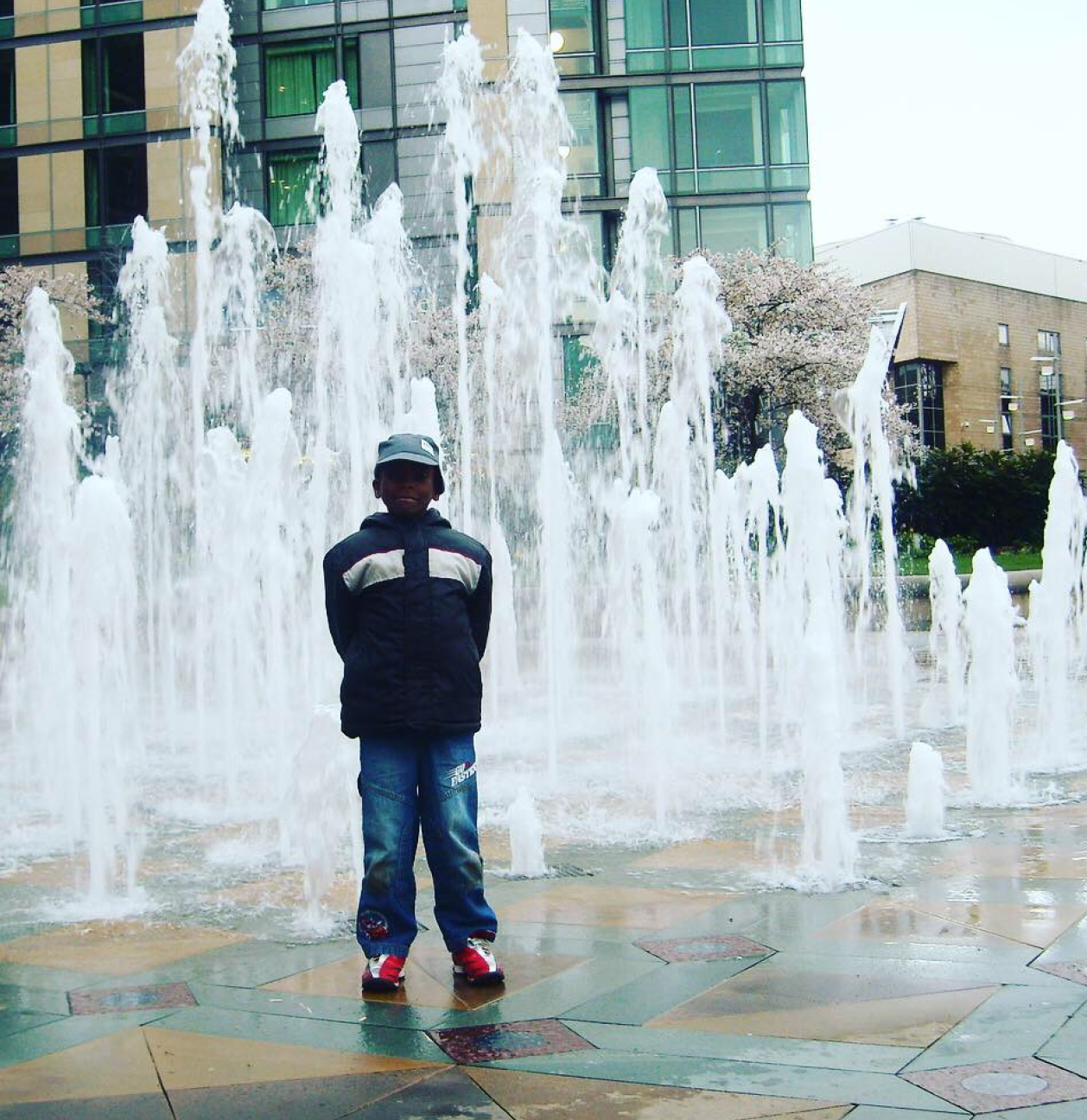
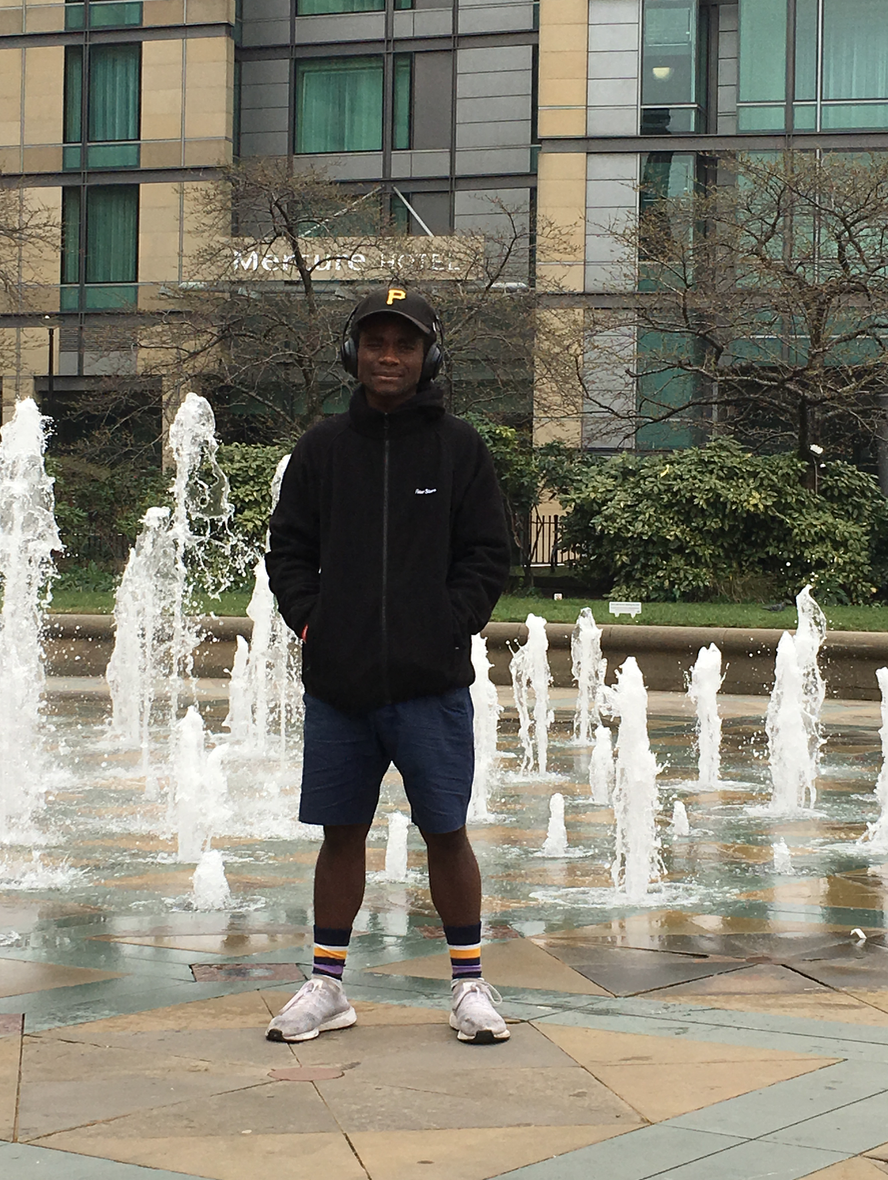
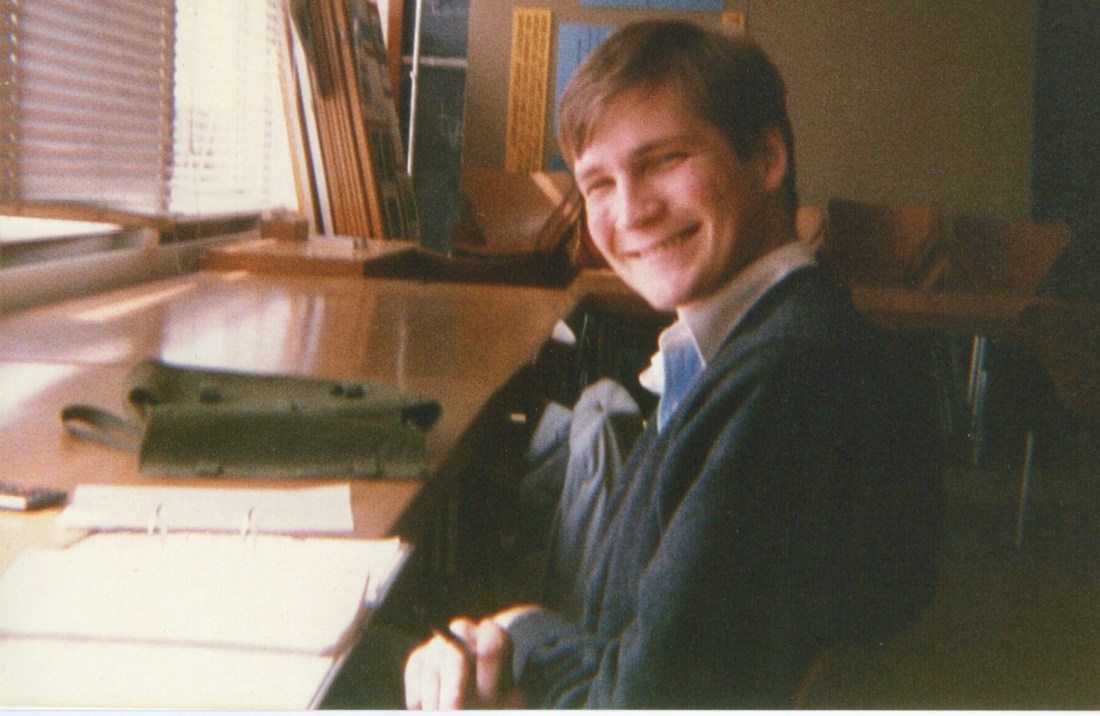
This was my rather poor effort at reproducing a photo that I had taken of my son in April 2008. I’m going to have a proper go tomorrow. The location is the Peace Garden next to Sheffield Town Hall. The photos were taken almost 11 years apart. Ages eleven years and twenty-one years respectively.
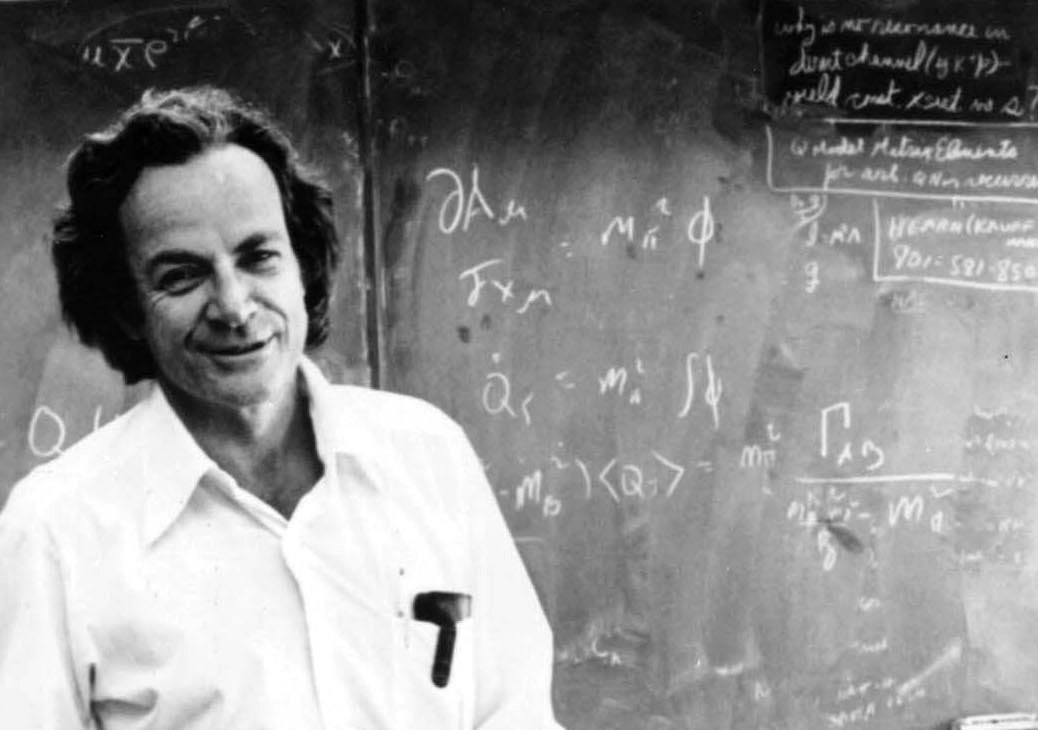
I recall that Richard Feynmann, one of the greatest physicists of the twentieth century, made a remark about philosophy along these lines. A quick Google search brought up this quote from his talk, here made into a book: “The Pleasure of Finding Things Out.”
My son is taking a course in philosophy, and last night we were looking at something by Spinoza and there was the most childish reasoning! There were all these attributes, and Substances, and all this meaningless chewing around, and we started to laugh. Now how could we do that? Here’s this great Dutch philosopher, and we’re laughing at him. It’s because there’s no excuse for it! In the same period there was Newton, there was Harvey studying the circulation of the blood, there were people with methods of analysis by which progress was being made! You can take every one of Spinoza’s propositions, and take the contrary propositions, and look at the world and you can’t tell which is right.
The Pleasure of Finding Things Out 1st Edition by Richard P Feynman, Jeffery Robbins, Freeman Dyson ISBN 8601300108087
I’m afraid that I agree with him. We cannot detach our reasoning from the rigours of testing against observation. This just seems so obvious to me. Anything else is just speculation.
I want to share this website which to me is replete with beautiful writing and extraordinary images of the beauty of Zimbabwe. I lived in Zimbabwe for two years and those two short years stand out in my memory. The people, the places the smells; there is so much to reward the senses.
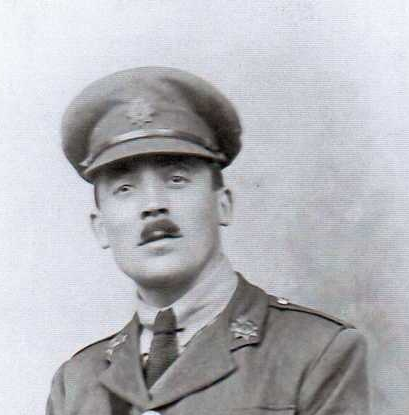
George E Huntley in his Colour Sergeant’s uniform of the RASC, circa 1915.
My mother never knew her father. She was brought up by her aunt Edith, after her mother died in childbirth. Her aunts would not discuss her father’s identity. However, when Edith died in 1967, my mother found a clue amongst her possessions in the form of two scraps of paper, photos of which are shown below.
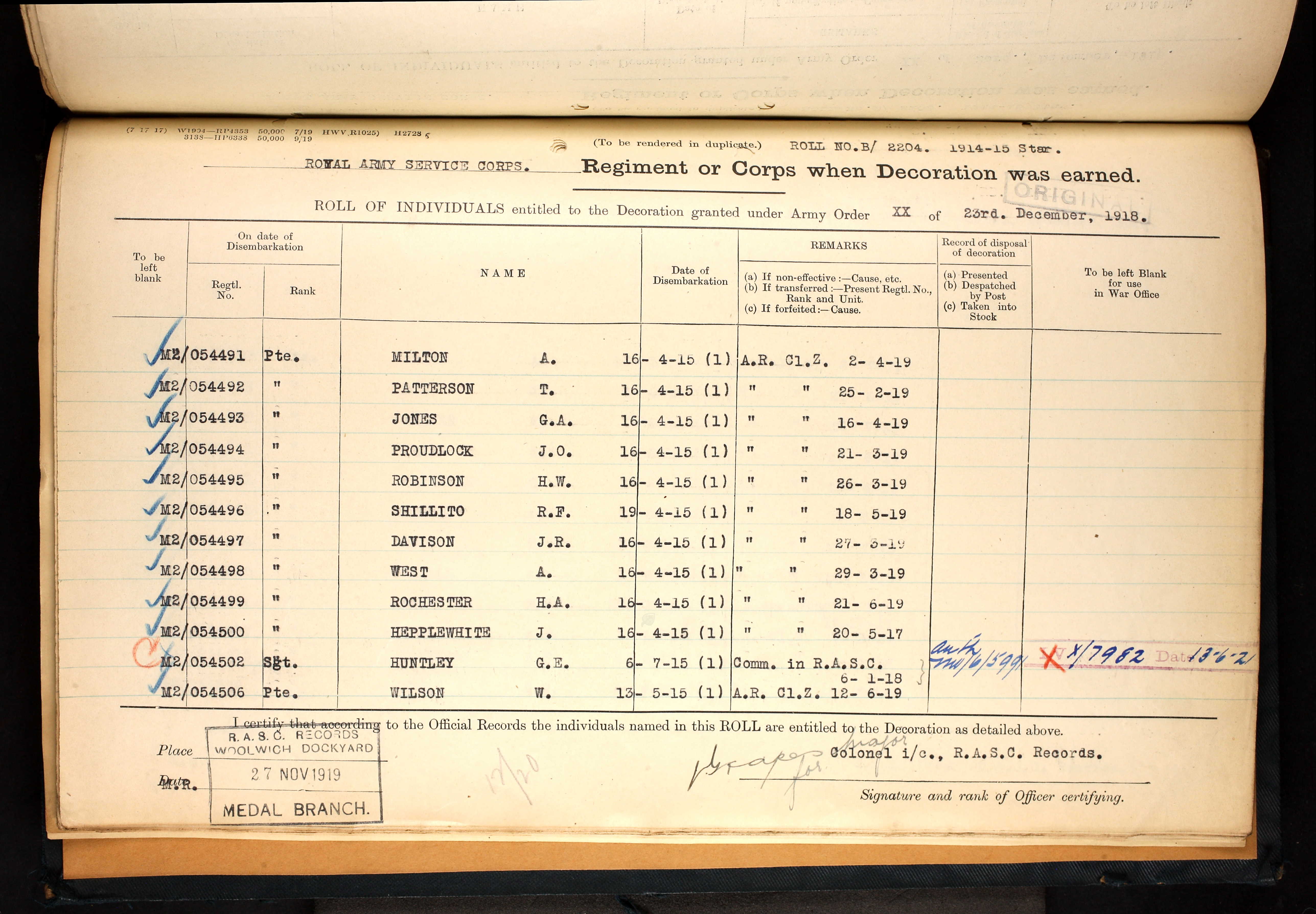
His name was Captain George E. Huntley and his army number was given as P/80355. I searched for all the George E. Huntleys and the only sign I could find was of a Sgt G. E. Huntley in the Great War. Could this possibly be my grandfather?
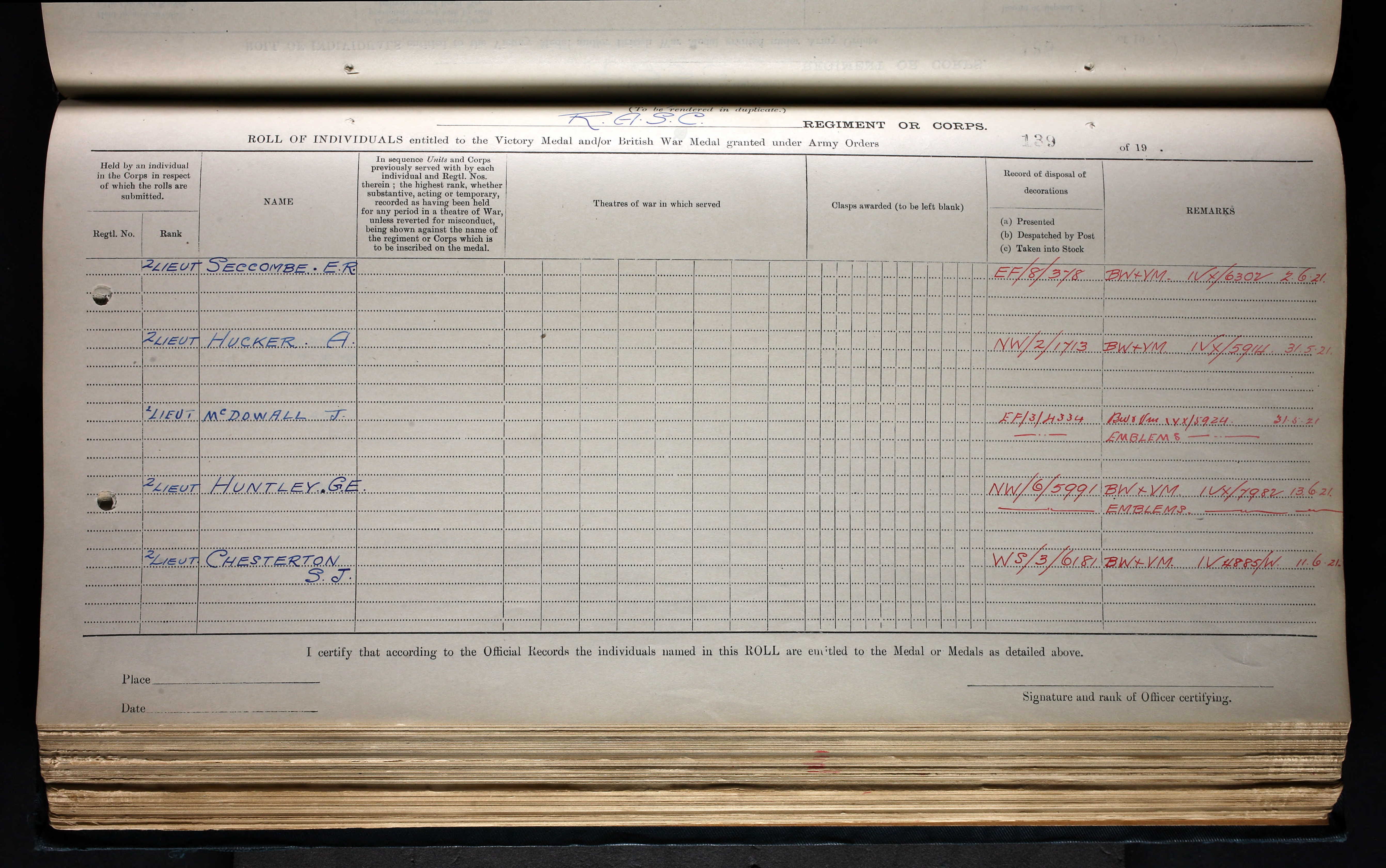
Evidence of a Sgt G. E. Huntley in the First World WarIn this document, he is Second Lieutenant G. E. HuntleyFinally, his full name George Edward Huntley His medal index card and two addressesA match with the WW2 service number stated in my great-aunt’s note
I paid a researcher to look into his service record who discovered the following information.
George enlisted under a short service (duration of war) engagement to the Army Service Corps (Mechanical Branch) at Sheffield on 18/03/1915. He was issued with the Regimental number M2/054502 – the ‘M2’ prefix denoting the Mechanical Transport Branch and the ‘0’ at the front of his number denoted a short service/duration of war engagement.
George is posted initially to Grove Park, the Depot of the Mechanical Transport Branch, where he is given military and trade training. He is promoted to Corporal on being posted to 10th Motor Ambulance Convoy (359th Company) Army Service Corps on 07/06/1915 and on the same date (probably to fill a vacancy of formation of the unit) he is promoted to Sergeant. The 10th Motor Ambulance Convoy embarked for France from Southampton on 06/07/1915 and landed in France the next day from the ‘Princess Victoria’ before they proceeded to Rouen. The diary for the unit is in WO 95-496-3.
George is appointed as Mechanical Staff Sergeant on 26/09/1915 which suggests he was heading up the maintenance & repair section of the Company. By 29/09/1915 he is appointed as the Acting Company Sergeant Major of 10th Motor Ambulance Convoy, his substantive promotion to this rank is later confirmed with the same seniority date. He is mentioned in despatches in the London Gazette of 04/01/1917 for his actions during the Somme operations in 1916 at which time he has proceeded back to the UK, arriving on 01/01/1917 according to his papers.
George seems to have had some participation in the German Spring Offensive in late March and April of 1918 but there are no specific details about this. He is promoted to Lieutenant on 01/12/1918 and Acting Captain on 10/05/1919 before returning to the UK for discharge to the Reserve of Officers on 15/02/1920.
George is re-mobilized on 31/08/1939 at the onset of WW2 and his career is as follows from that point:-
31/08/1939 – Joined at Regent’s Park Barracks as an Impressment Officer (Lieutenant) and is given the Acting rank of Captain.
09/11/1939 – Posted to No.2 Motor Transport Depot at Slough in the role of a Draft Conducting Officer. The officers were employed to ‘escort’ drafts of other ranks from the Training Depot to the ports for embarkation on the basis that they could not be trusted to get from A to B by themselves! This is almost 9 months to the day before the birth of my mother. A perfect match.
01/12/1939 – Appointed Temporary Captain after holding an acting rank for 90 days.
12/12/1940 – Reverts to Lieutenant on being posted to 29th Station Transport Company, Shropshire. Note that this is the same address given in my great-aunt’s note and coincides with the time when my grandmother became pregnant with my mother. My grandmother’s mother came from Hereford which is in the adjoining county of Gloucestershire.
28/12/1940 – Posted to a War Office Post at Benhall Farm, Gloucester Road at Cheltenham for temporary duties as a Transport Officer.
08/02/1941 – Posted to No.3 Training Brigade & posted to No.8 Training Battalion.
18/02/1941 – Posted to Royal Army Service Corps, Cambridge District as a Liaison Officer.
15/07/1941 – Posted to Anti-Aircraft Command as a Workshop Officer, starting at 182nd Company RASC at Eccles.
15/08/1941 – Posted to 904th A-A Company, part of 2nd A-A Division at Eccles.
10/09/1941 – Posted to attached station of 1st Holding Battalion (at Worthing) whilst he is on the ‘Y’ List – this is the code used for men who were sick and not fit for duty. This was a few weeks after the death of my grandmother, so he may have heard the news.
23/09/1941 – Discharged from General Hospital at Llandudno and joins 1st Holding Battalion after sick leave. He had been medically down-graded for Grade ‘B’ Garrison duties only. I discovered that his son was born on 27/1/42 in Conwy, a mere four miles from Llandudno, so is consistent with him being there.
18/11/1941 – Posted to Anti-Aircraft Command at Stanmore to await allocation. He is then posted to 930th A-A Company at Pontefract with effect the same day.
06/12/1941 – Posted to 192nd A-A Company at Edinburgh.
26/03/1942 – Posted to 1st Holding Battalion at Worthing having been classified as medically unfit.
07/05/1942 – Relegated to ‘Unemployed’ and put into the Reserve of Officers.
21/08/1948 – Having reached the age limit for their rank, George relinquishes his rank and is given the honorary rank of Captain (LG 20/08/1948).
My mother was delighted to have found the identity of her father. The sad news was that I then discovered that he had died in 1981 so my mother would have had the opportunity to have met her father.
Details discovered in the public records confirmed what my mother had been told, that he was a married man at the time my mother was born however my mother’s aunt had lied and said that he had died in the war, meaning the second world war. This was not true.
He was born in Sheffield in 1884 to a middle class family and went to university to study engineering. He worked as a consulting engineer for Sheffield City Council at some point and was also a representative for sales of lorries and cars at a Sheffield garage after the First World War. He contributed regularly to the letters pages of local newspapers of the time.
In 2018, I finally took the Ancestry DNA test which confirmed that I and George Huntley have common ancestors. The person who kept popping up as a common ancestor is my two-times great grandmother Susannah Offer, born in 1814 in Swindon, Wiltshire. I made contact with Canadian cousins as a result of this. Susannah’s daughter Julia (George’s aunt) married a Frederick Nash. They had four sons, Albert, Norton, Frank and Julien, who migrated to Canada. Many of their descendants, my cousins, live there today and I have managed to contact some of them.
Susannah Offer
Julien Nash, my grandfather’s cousin, was a pioneer Mountie in Alberta having joined the service in 1908. I found a fascinating obituary. Finding my grandfather has opened up so much more that I had expected.
Julien Nash
I located George’s two sons, both in their seventies. One is living in Suffolk and the other in Australia. Neither replied, which disappointed me. If someone contacted me with irrefutable evidence that they were the child of my long lost half-sister, I’d be interested to know more.
My brother settled in British Columbia in 1996 and had no idea that his third cousins were living in the same and neighbouring provinces of Canada.
In 1973, I started at Manor Field Primary School, which is in Burgess Hill, a rapidly expanding town in mid-Sussex. My family had moved there from neighbouring Lindfield and my mother and step-father had just bought their first house. My mother had married her second husband Colin the same year. I joined the infants department aged 6 years old. I have few memories of this year but I do recall being lead by my mother on my first day to the school office. I was six years old. A year later, I joined the junior school where my first form teacher was a Mrs Randal. She was probably in her sixties at the time. She told us once that we should always look at the world around us because even on the most mundane day, there should be interesting things to see. She was talking about being observant and studying the world around us. Someone had taught me some basic yoga and I remember sitting in a cross-legged position with both feet up on my thighs. I was showing off but I was always finding ways to get the teacher’s attention. I suppose I was bored.
I had a friend called Nigel who was always getting into trouble. I don’t know why I did this but one day, I scratched his name on a desk and went and told the teacher that he had done it. The readiness for her to believe me was surprising.
I remember that one thing we used to get up to was climb up into the roof space of one of the old buildings during playtime. That was near the main playground. Ice would form on the playground in the winter but we were not allowed to skate on it. I remember athletics on the sports field and a pair of big trees that grew close to the entrance to them. Other memories are of playing stool-ball on the recreation ground and fire practice with a hand wound fire alarm.
In the second year, our form teacher was a Mrs Maize and Mr Simpson. We were a large class hence the two teachers. I remember cookery lessons in the second year (we had to wait for our turn as there was only a small room and a big class of us). When it was my turn, I was disappointed that it did not involve any cooking. We made a sweet out of condensed milk and coconut. It was coloured with food colouring and cut into little squares.
In the second year, I remember one afternoon asking to use the toilet. I needed to do a number two. The teacher told me to wait and I was too shy to ask again. I soiled myself and after school, my mother and step-father picked me up and we went on a drive to collect meat from a butcher they always went to. My mother noticed the smell and I recall her then saying that perhaps it was the smell of the meat. After we got home, I then owned up to it, much to my embarrassment and had to clean myself up in the bathroom.
Then in the third year, we had a very kind teacher called Alan Barker and a Mr Lee as well as a Mr Souter from Scotland. Mr Barker was a kindly teacher, who must have been in his late fifties at the time. I saw a mention of him on the Friends Reunited website maybe ten years ago so he was still alive then. He played the piano and took us for music lessons. I remember him commenting that I did not stammer when I was singing. Mr Souter devised a punishment for us involving sitting against the wall in a seated position without a chair. We must have been a noisy class. We also had a retired teacher for a bit – a Mr Gumble, who told us his wartime stories. He talked about the food they used to get in the army. Apparently, they used to get steak so often that he got fed up with it.
In the final year, we had Mrs Watson who told us that she had taught in Botswana. Mrs Watson, quite a young teacher, took an interest in my welfare when, in 1978, I was about to move to live with my dad. She asked if I was sure that was what I wanted. As it turns out, I wish that I had listened to her.
We had a field trip to a farm out Hassocks way in the third or fourth year. At that time, there was a row of prefab classroom running along the side next to the park. School dinners cost 12 1/2 p. The headmaster at that time was a Mr Coward. I can’t recall seeing him much around the school though. Other names I remember are a Mrs Cole, a very strict playground monitor, Mrs Davies , and Mrs Poland who taught French. I remember studying French in the third year.
My memories are mostly happy though I do remember being bullied by one teacher, Mr Lee, who would pick on me with a comment about a TV advert of the time to make the class laugh at my expense, since I was shy and withdrawn. I also recall being shoved violently by him when asking him a question. A comment he made to my mother at a parents evening was “At first, I thought Alan was backward but then I realised that he is very intelligent.”
Assemblies then still involved singing hymns – such as “Morning has Broken” and others. We used to have sports days out in the big field at the back of the school. There was a pair of tall trees – growing side by side close to the entrance to the field. The fire alarm was a hand-wound bell. Assemblies were held in the large hall near Junction Road by the Infants School. I think we probably only had them once or twice a week. I don’t remember there being assemblies taken by classes – they were generally assigned to a particular teacher to give.
I was always interested in science growing up in the 70s. This was the era of space flight. I was too young to remember the moon landings but I must have watched them with my mother and two older brothers. I used to drive my mother crazy by doing experiments on mouldy bread. The colours of the different species of mould fascinated me. I also grew bacterial cultures in water and looked at them under my microscope. My interests also pointed heavenwards as I was given a pair of binoculars by my step-father. I was always looking at the stars and knew the names of the planets from an early age,
I used to ask my older brothers about what they were learning at school. It always seemed that we never did anything interesting at my primary school in Burgess Hill, a rapidly growing town in mid-Sussex. I really think that the teachers were very mediocre. For example, I never remember doing any experiments or learning much science. I was ahead on the maths programme so I was given a more advanced book to work through to keep me occupied. But I was bored at school where we seemed to always work at the pace of the slowest learner.
I remember receiving a big book from my father and step-mother on science for Christmas in 1978. It had one page which described the scale of the atom by describing the nucleus as a doorbell. The town was the atom. Things like that grabbed my attention.
When I was twelve and began at Lewes Grammar School, we had a pretty useless physics teacher so I was quite disappointed that he did not make the effort to explain anything to us. He just sat behind his desk and expected us to do worksheets. He hardly wrote anything on the board and was pretty lazy really. But these uninspiring lessons did not dampen my interest in science or physics. I did well in tests and exams despite the hopeless physics teaching. However, at the end of the third year, I only achieved 59% in the end of year test so I was not allowed to go into the top set physics class for my O-level.
I had a very intuitive understanding of how things worked so even though the teaching in most subjects was inadequate, I managed to do well and get an A-grade in my physics O-level. I was the only one in my class to do so. This was in 1983. I chose mathematics, physics and chemistry as my A-levels.
I breezed through my maths and physics A-levels. Chemistry was a different matter. We had a young ex-Rhodesian teacher who taught us this subject and she was not very good and was unable to get ideas across. I remember long tedious triple lessons on a Wednesday afternoon where she talked for two hours non-stop. They were very painful. My friend and I found ways to amuse ourselves by imitating her accent. We were so rude. We used to mimic her voice saying “2-4-dinitrophenyl hydrazine” and squirt ethanol through the Bunsen burners when she left the classroom to alleviate the chronic boredom. She mentioned it to my mother at parents’ evening and my mother was mortified.
There were two of us in my A-level year who were very good at physics. In 1984, I attended a three day summer school at the University of Sussex and it interested me in taking the subject at university. In the end though, I was offered BCD grades at A-level as entrance requirements for Warwick University I think because I must have been so nervous in the interview. I was deeply concerned that I would not achieve the D in Chemistry. I was struggling and failing to do much of the homework because I did not understand it. For the first time at this school in my experience, there were no consequences when I did not do it. I don’t know how, but I pulled a B out of the bag in chemistry. Mathematics and physics were no problem – I achieved A’s in both of these. These were in the days before grade inflation and the ridiculous A* and A^ grades offered at A-level now.
In 1984, I had applied to go to Oxford University. I had been called to interview at Magdalen College but I was so out of my element that it was clear to anyone with any sense that I would not be offered a place. I was chronically shy and handicapped by a severe stutter. I had been attending weekly free physics tutorials given by the husband of my physics teacher. He was a researcher at the University of Sussex. Those lessons were attended by me and my good friend Richard. I recall understanding very little indeed as Peter Dawber went through question after question from the sets of past papers published by Oxford for their entrance exams. They were beyond anything that I could cope with.
When I failed to get a place, I was so disappointed that I threw all the revision material that I had purchased in the bin. I was in a depression for a long time after that. It made me realise how little I knew.
I was offered a place at Warwick University to study physics and started in 1985. Warwick is one of the new ‘red brick’ universities built in the 60s to accommodate the growing number of students resulting from the population boom. It was built just outside Coventry, an unattractive city in the West Midlands that was heavily bombed during the war. I used to comment that perhaps the Germans should come back and finish the job. In the first year, I was staying on campus. I had been looking forward to starting university, but it had not turned out as I had hoped and I was not feeling happy.
I found that I was struggling to understand much of what was going on, especially in mathematics. A long lecture course was presented in the first term of the first year on electronics of which I understood almost nothing. I also performed poorly in the weekly laboratory sessions which were marked by physics PhD students. They were exceptionally unhelpful and I began to see my dream drift away from me. I was like a fish out of water and anyway, I was depressed and socially inept. I did not know how to make friends and was very lonely and missed home. I did make one friend soon after I started and we used to keep ourself amused and cheer ourselves up in the face of dire teaching by memorising and reciting catch-phrases that lecturers used to come up with such as “but does a real device behave like that” and “pi-be-two”.
Somehow, I got a high 2-1 in the first year exams. But my weakness in mathematics at university level was making coping with the work very difficult. There were weekly questions posted which we were supposed to tackle. I never did these and neither did most of my colleagues. However nothing was done about this. We had a weekly tutorial with a PhD student in the first year and also a weekly tutorial with our personal tutor whom I and a friend mockingly called our impersonal tutor since he was so distant. It was sink or swim.
I left Warwick University with a 2-1 Honours in Physics but felt that I had not deserved it. In our year, there was only one first and one upper second (me). All the others received lower second class or third class degrees. I had seen my dream of a career in physics drift away. I did not want to become a teacher or go into a technical or applied physics field. I did not have the interpersonal skills anyway.
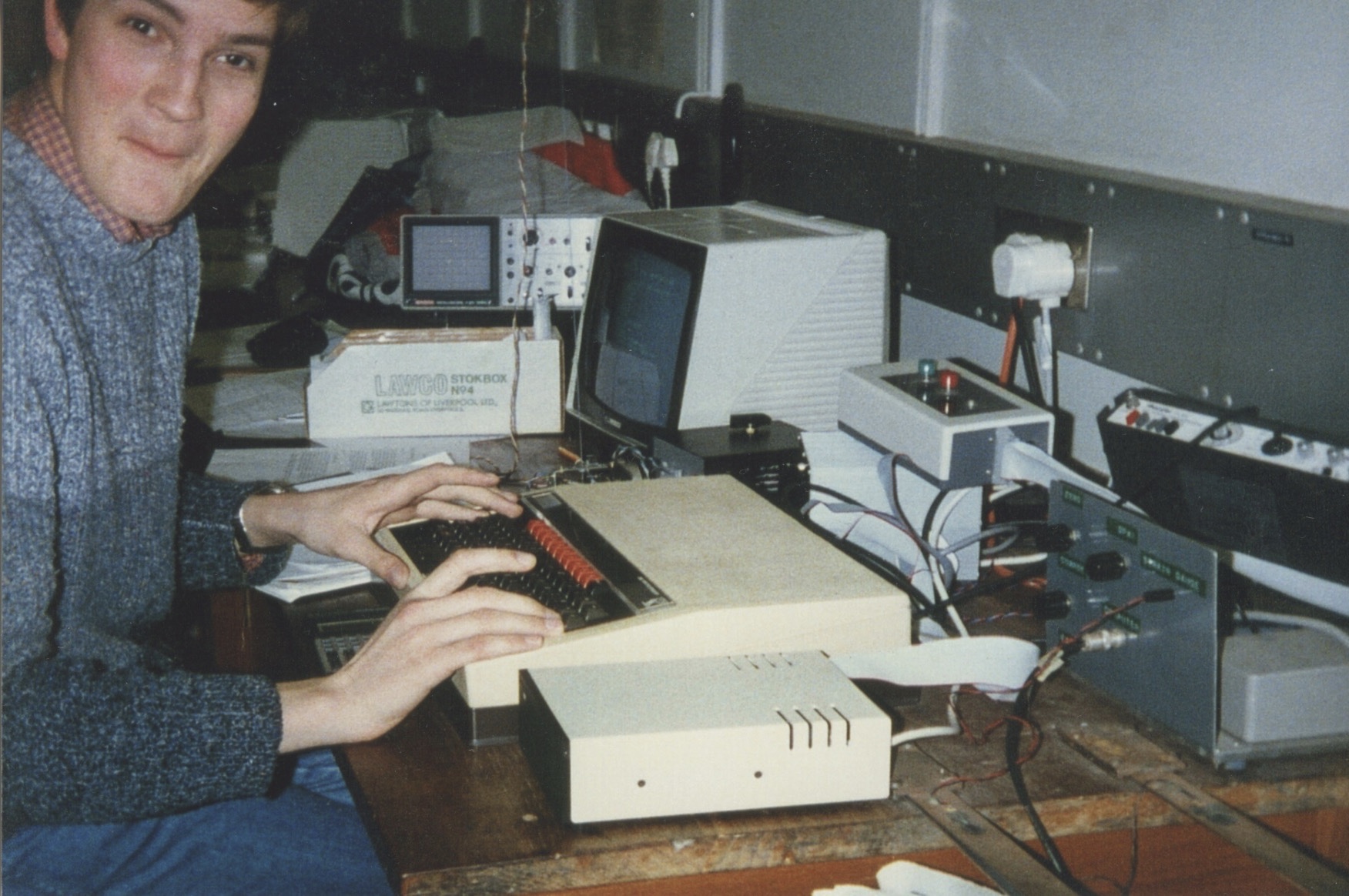
I ended up getting a job as a “systems analyst programmer” at IMI Computing in Maidenhead, programming in COBOL, and hated it. I disliked programming and was not good at it. However, after about a year, I had an idea to call up my former personal tutor, a Professor Malcolm Cooper. My luck was in because a student from my physics class at Warwick had started a PhD a year previously but for personal reasons had had to drop out. I was offered a PhD studentship. It was that easy.
Professor Cooper worked in the field of Compton Scattering and was an expert in the field. His team used intense x-rays from an electron synchrotron to probe the electrons around atoms and find out about bonding. In this way, his team offered confirmation to theoretical models.
My first task was to build a device that could concentrate and intensify the available x-ray source to provide quicker data collection rates. It was called a focussing x-ray monochromator. I was seconded to the engineering department to cut slices from a large single crystal of silicon and attempt to machine it into a shape like protruding teeth attached to a base that can be bent into an arc. This would focus a broader beam of x-rays into a much more intense one.
I had no experience of machining silicon, which is naturally brittle anyway, and as soon as it was bent, it broke into several pieces. So that idea was going nowhere.
At the beginning of my second year, an opportunity arose to work with a researcher at the Rutherford Appleton Laboratory’s Neutron Spallation Source called ISIS. RAL is based about 18 miles south of Oxford. The research being done was to develop a similar experimental technique that would work with neutrons instead of electrons. As neutrons interact strongly with the nucleus and not the electron shell, this would provide a way to measure the distributions of velocities of nuclei in a sample and hence be able to test models of bonding.
I began my secondment to the Rutherford Appleton Laboratory in 1990 and worked under Dr Jerry Mayers. The facility uses a proton synchrotron to fire protons at a metal target. This strips neutrons from the target in a process called spallation.
The instrument was called eVS, standing for electron-volt spectrometer. The neutron beam came in at one end, scattered from the sample in a large evacuated chamber, and the scattered beam was picked up by detectors arranged around the outside. The machine operated in what is called time-of-flight. Neutrons, having mass, have an energy which depends on their speed therefore by measuring the total time of flight of a neutron from arrival, scattering and to detection allows the energy transfer to be determined. The clever bit was how individual neutrons could be picked out. Metal foils were placed around the outside of the sample chamber just before the detectors. These were either gold or uranium foils which absorb neutrons strongly at so-called resonances. By taking the difference between a ‘foil in’ and a ‘foil out’ run, the difference gave those neutrons arriving with a specific energy. As the neutrons arrive in a pulse, the arrival time is known precisely so energy transfer can be calculated.
The computing side was complex for me and I relied on Jerry Mayers to do most of this though he was disappointed that I could not take this on. By 1993, I had sufficient data to write up my thesis on the development of eVS as a valuable experimental technique in condensed matter physics. However, I battled with the computing and data analysis side and it showed. I feel that I was lucky to be awarded my PhD. During my viva, I was questioned at length about who did most of the data analysis. I found these questions very stressful.
I remained seconded to RAL as a postdoc until the end of 1996. I lacked motivation and had personal problems which got in the way of my work. Because I found it so hard, I felt that I was not highly regarded by colleagues. So it was in 1995 that I was recruited by Voluntary Service Overseas to teach mathematics and physics in Zimbabwe.
In 2004, I began working at Waterford Kamhlaba United World College in Swaziland. This is a school about five hours drive from Johannesburg set amongst the mountains of a small landlocked country the size of Wales. WK, as it is known, was the place that Nelson Mandela chose to have his children educated. As a United World College, it recruits its students worldwide and they come to Swaziland to take the IB Diploma, the international alternative to A-level. These students get academic scholarships and come from far and wide. It also recruits younger students for the lower school from nearer home. Most of the students aged 12 to 16 are from South Africa and neighbouring countries with a sizeable number coming from Ethiopia and some from Europe.
A large proportion of the students boarded. In fact, most of the IB students did as most of them came from outside Africa. I lived on campus which was outside the capital city Mbabane on a hillside. The weather was hot in summer and cold and misty in winter.
In 2006, I began fostering two boys aged 5 and 9 who had been living in the paediatric ward of Mbabane General Hospital. The younger child was there because he had been beaten round the head with a frying pan by his step-mother. The older child had been resident there for about two years and had serious health problems. There are over 100 000 orphans in Swaziland, and if you know anything about the health crisis in sub-Saharan Africa, you will know why. I’m not going to elaborate. The only place for these orphans is the street or some underfunded government institution. There are multiple Church run orphanages in the country, mainly funded by American evangelical churches. However, there are far too many orphans. There is no culture of adoption in Swaziland. People rely on an extended family network and orphans tend to be looked after by distant relations but usually in an exploitative relationship.
Beketele, Sakhile and Paddy on my veranda at WK
There was another teacher at the school who had adopted a baby so I knew that adoption was a possibility. I had been working with the school on a community service project at the hospital. I discuss the adoption in more detail in another post.
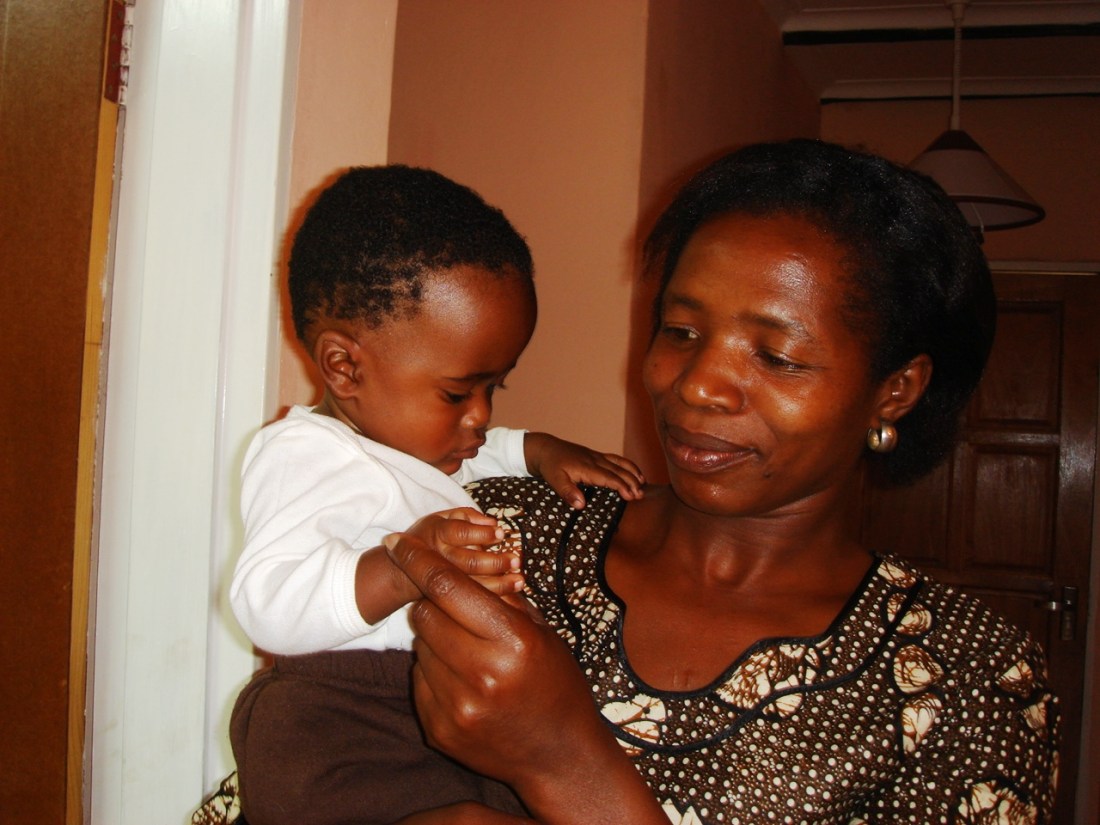
Beketele was a woman whom I employed to look after my two boys when I was teaching. She also cleaned the flat and did the washing. I paid her well compared to other teachers and I treated her well as she did a great job. There were some staff who underpaid their workers and that did not impress me.
After I left Swaziland, I lost touch with Beketele. I enjoyed the chats I had with her. I would ask her how to pronounce certain words and she would tell me about Swazi culture. I was sorry to lose touch with her when I left Swaziland in 2007. I returned on holiday in 2013 and tried to locate her, placing an advert in the Swazi Times. I then heard from the housekeeper at WK that she was living in South Africa. I never did find her but I hope life has treated her well.
I thought that I’d post some photos that I have taken with a few comments made on each picture. I will use each photo as a discussion point as people often say to me that I have done so much travelling and worked in so many different places that I should write about it. Only, I find it hard sometimes to know where to start. So using my photos as a talking point seems to be a good solution.
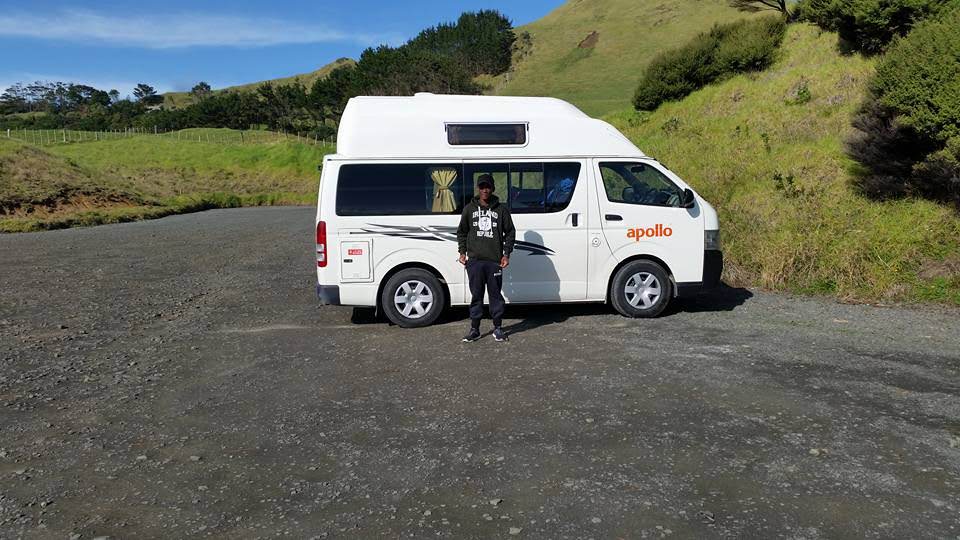
This is my son Paddy and was taken in 2017 on the west coast of North Island in New Zealand. I adopted my son in Swaziland in 2006 so he has now been part of my life for twelve years. We hired this van from a rather unscrupulous outfit as it turned out. It had clocked almost 200 000 km by the time I had the pleasure of driving it. It actually had cobwebs under the bonnet. I love New Zealand. I first visited the country in 2003 on a round the world trip. I wanted to show Paddy what it had to offer.
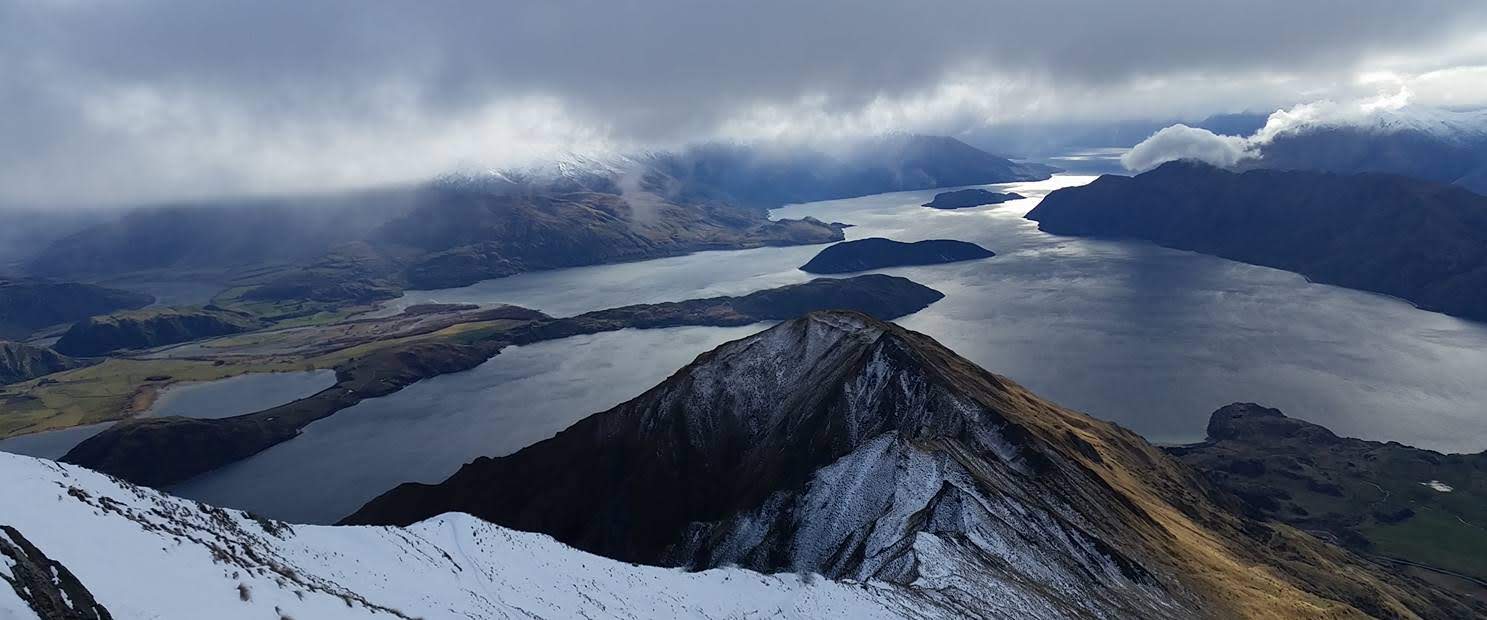
This was taken from the top of Roy’s Peak near Wanaka. This is in the middle of winter and there were not many people climbing this 1 km high mountain that day. The snow was pretty deep near the top. This view in my opinion is stunning.
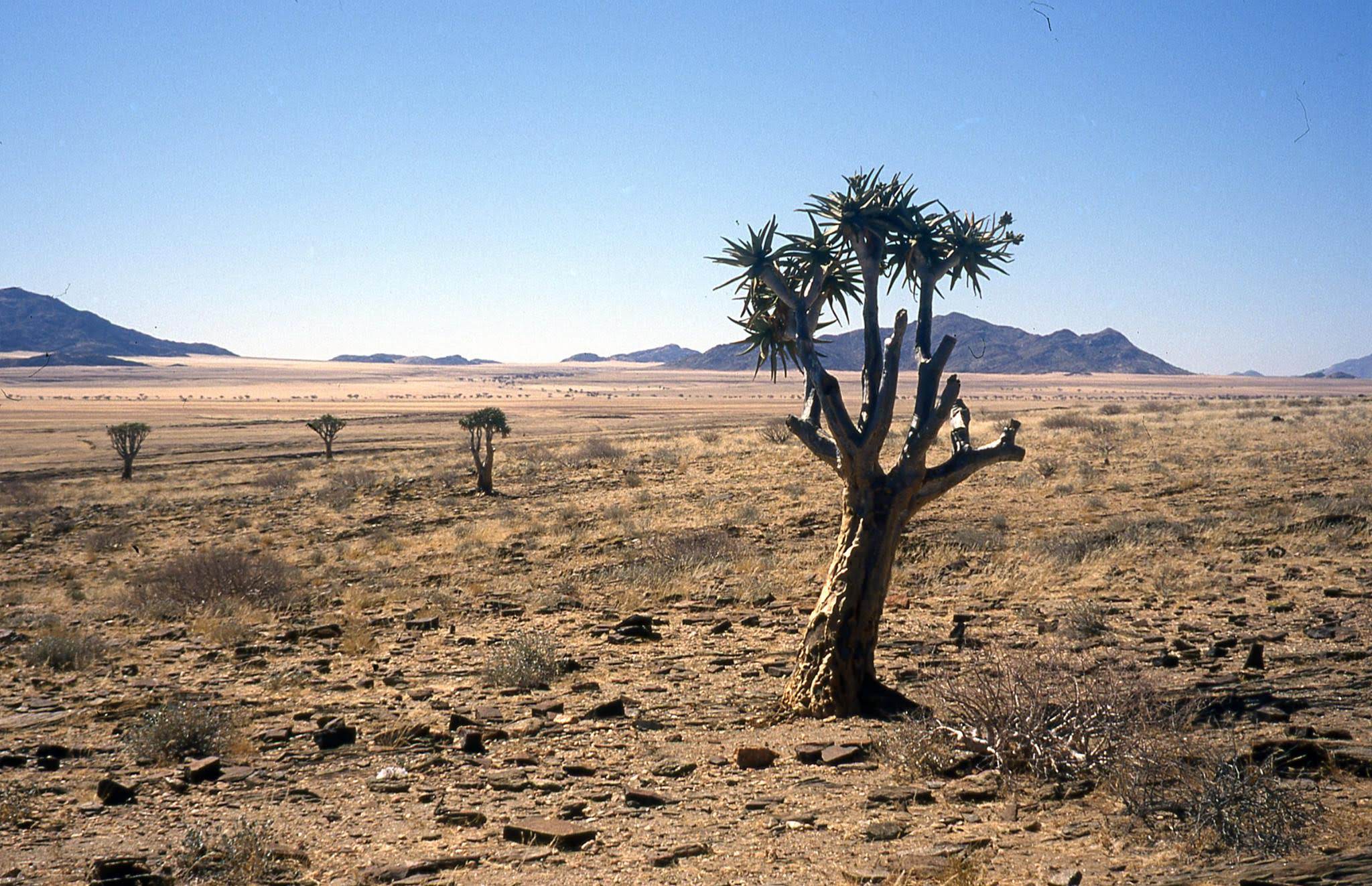
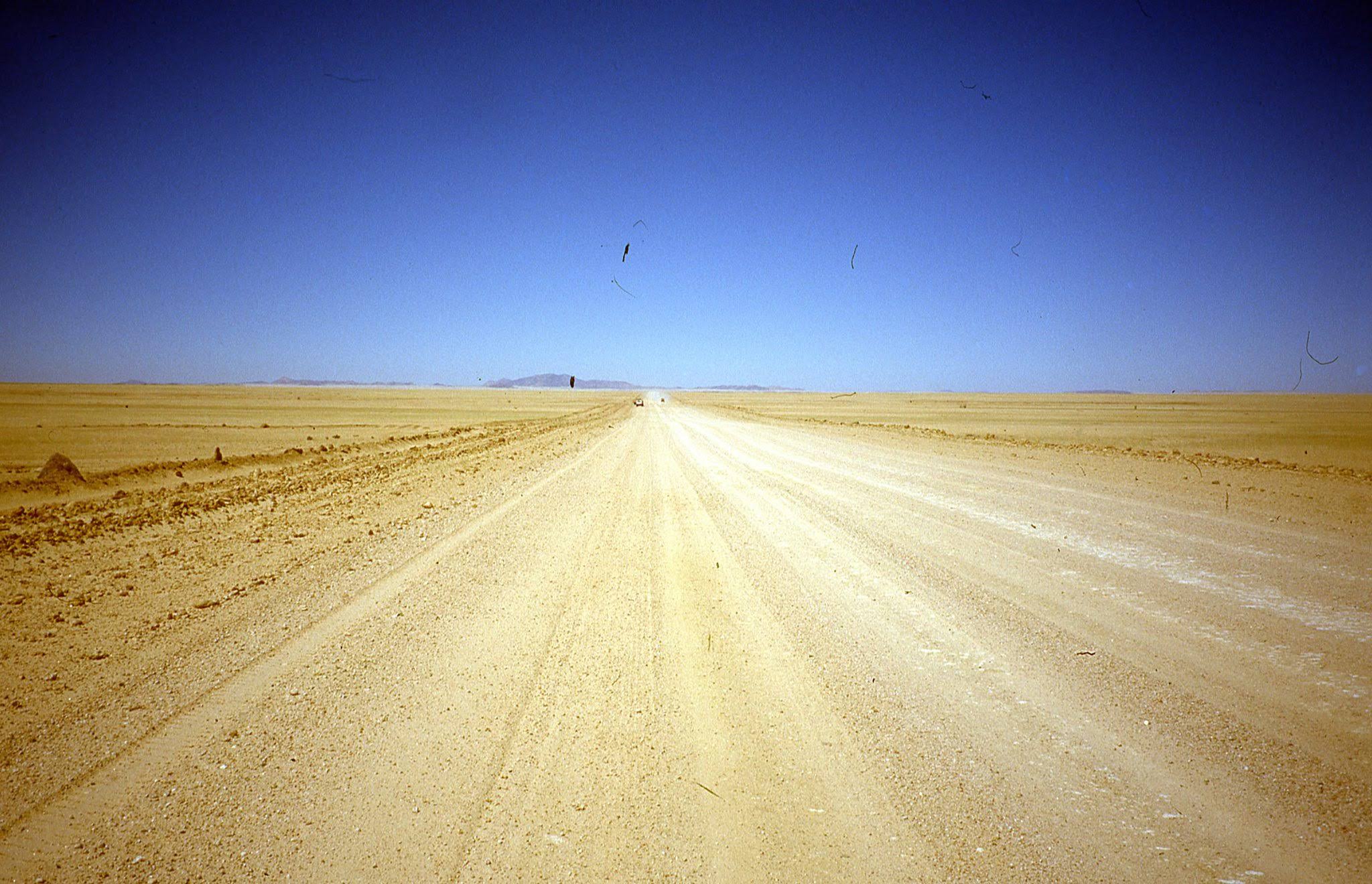
In 1997, I was living in Zimbabwe and took a road trip that year through Namibia with a house mate and some people we met in Cape Town. It was my first time seeing Namibia and what struck me was how flat and arid much of the country was. In many cases, the roads continued in a straight unbroken line as far as the eye could see. At night, distances were deceptive. A light on the horizon would take a fifteen or twenty minutes to come into view even driving at 100 kph because it would be 30 km away.
You had to be particularly careful driving on the dirt roads. We had hired a VW Golf from Cape Town and had been warned about speeding on the dirt roads as cars frequently overturned killing those inside. One of those amongst us was a twenty-something English woman who, whenever she was taking turns driving, would drive at breakneck speed. This made me very nervous and no matter how many times I asked her to slow down, she would not do so.
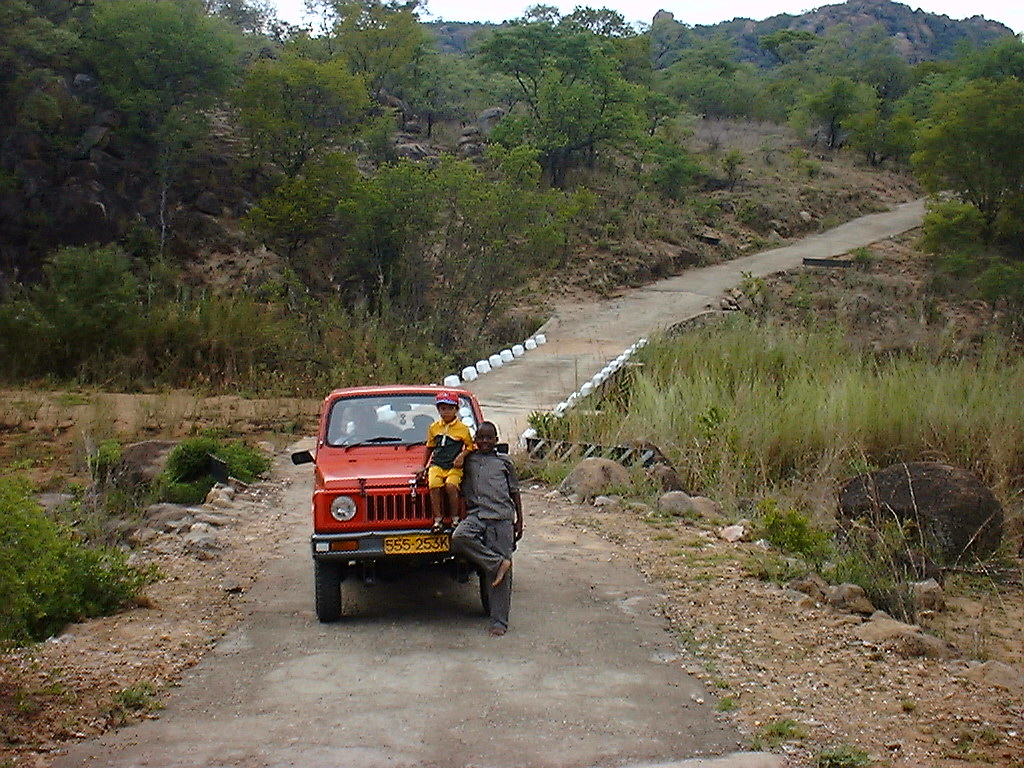
This photo was taken in about 2001 in Matopos National Park, near Bulawayo, Zimbabwe. It shows my friend Tim Cherry (behind the wheel), his son Andy (with the red cap) and my friend Nontando’s son Kelvin. I met Tim and Nontando whilst teaching in Zimbabwe in 1996 and 1997. When I began teaching there, 1 GBP was worth about 10 Zimbabwe Dollars. By 2002, the exchange rate was something like 60 000 000 000 dollars to a pound.
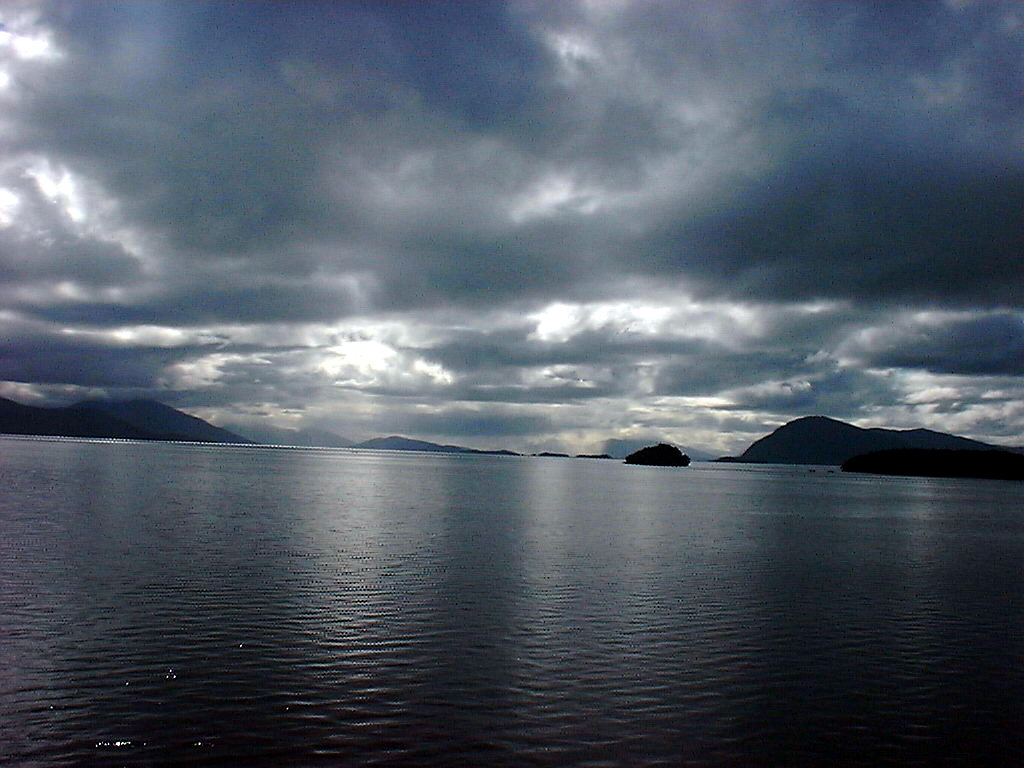
This photo was taken from aboard a ship that I took from Puerto Montt to Puerto Natales in southern Chile. It took three days and wove its way through these fjords. I was in Chile as part of my round the world trip in 2003. I had got the idea of taking this voyage from reading the book by John McCarthy and Brian Keenan who, when held in captivity by an Islamic terror group, had discussed what they would do on their release. They talked about setting up a yak farm in Patagonia. So it was that five years after their release, they did in fact travel to Chile and covered this vast and diverse country by almost every mode of transport possible. They took this same ship that I did and it was this that gave me the idea to take the same journey through the Chilean fjords.
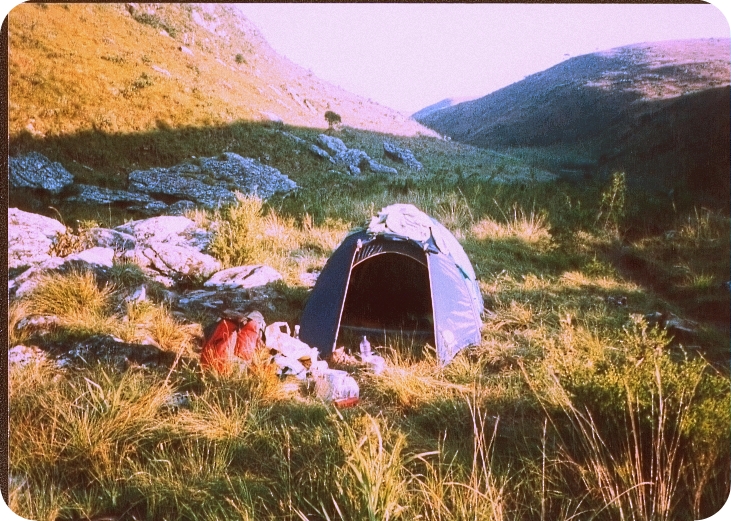
This rather retro-looking shot is of my campsite in the Chimanimani Mountains of the Eastern Highlands in Zimbabwe. I think this was in 1996, my first year in the country. I was hiking on my own and had rather a heavy rucksack. At one point, I stumbled and badly sprained my ankle. The pain was so bad that by the time I had descended, I decided to camp for the night as I could no longer walk. A couple of young German women hiked past where I was camping, in a place where you would definitely not choose to set up a tent, and I remember trying to impress on them that I was in trouble and needed help. They could not speak English nor I German so they just stared at me and walked off without attempting to understand me.
About six years later, I had reason to have my ankle x-rayed after another bad sprain and the doctor asked when I had broken my ankle. It turned out that I had fractured my fibula in my lower leg in 1996. No wonder it was so bloody painful.
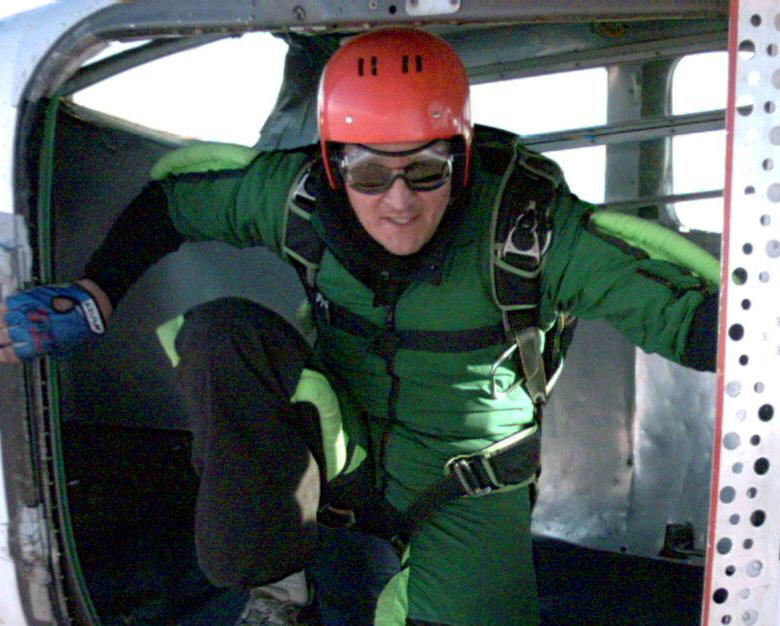
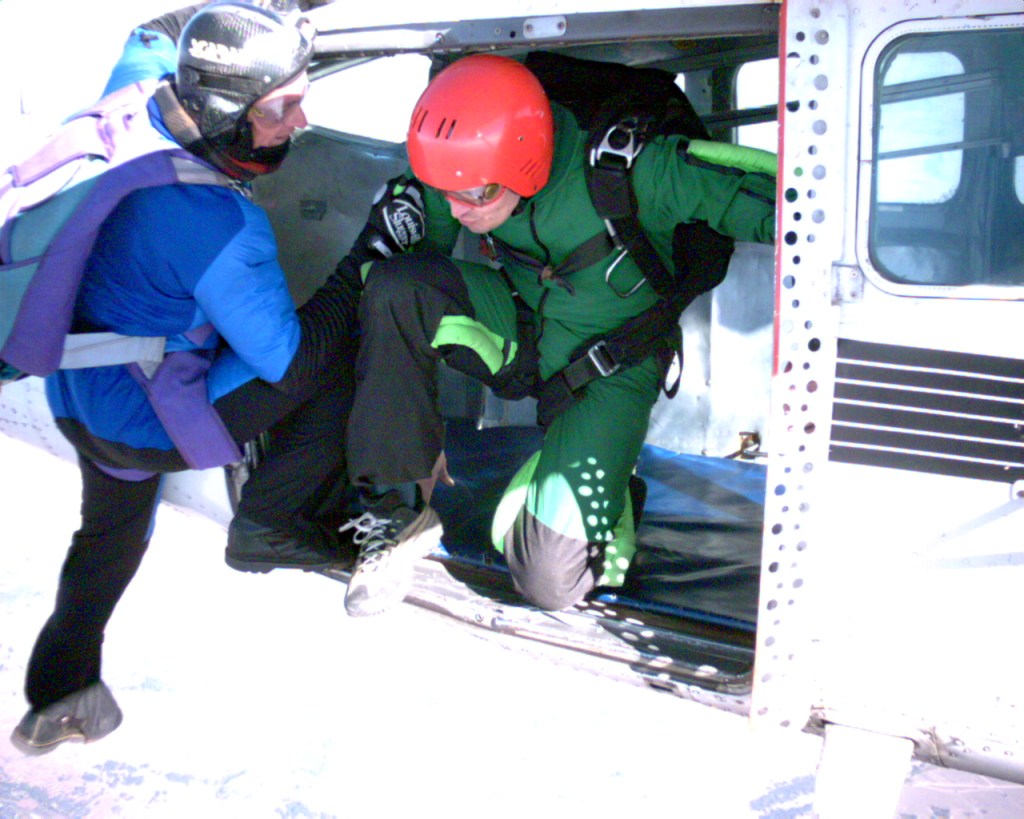
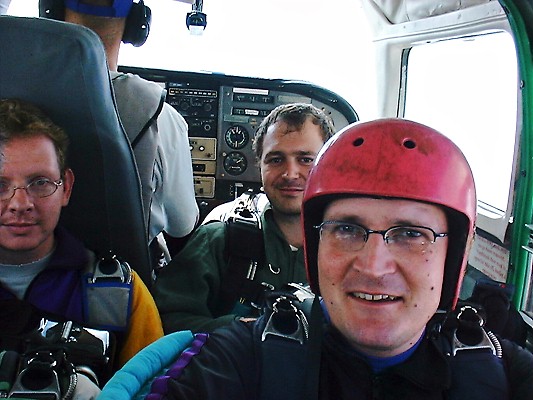
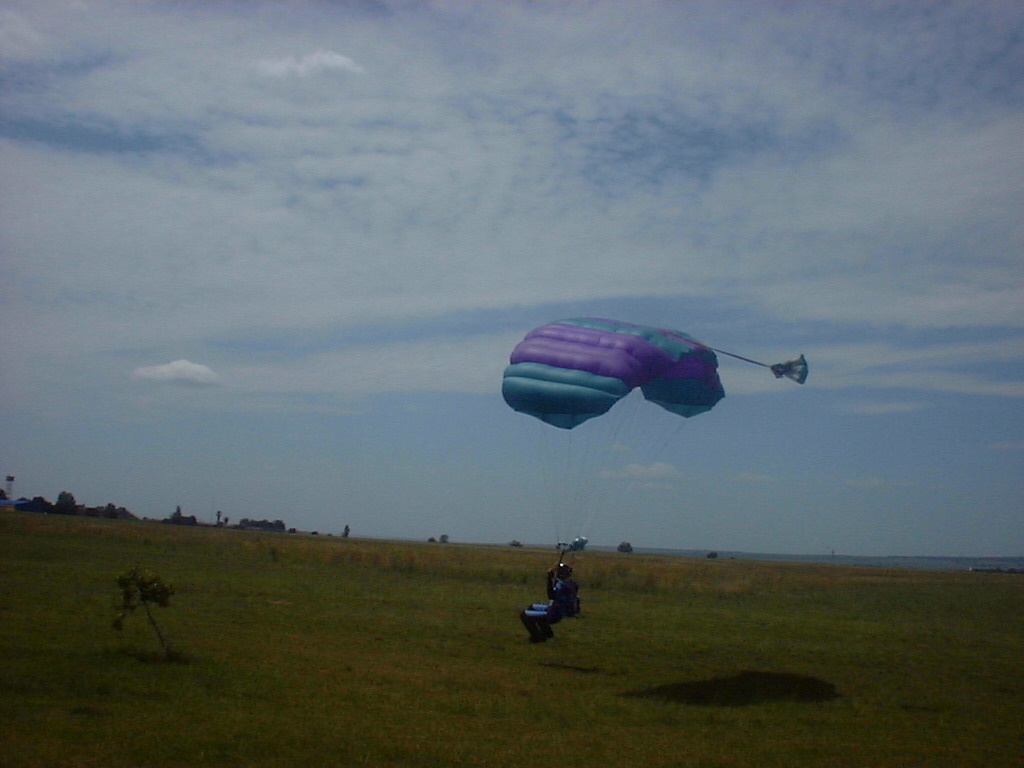
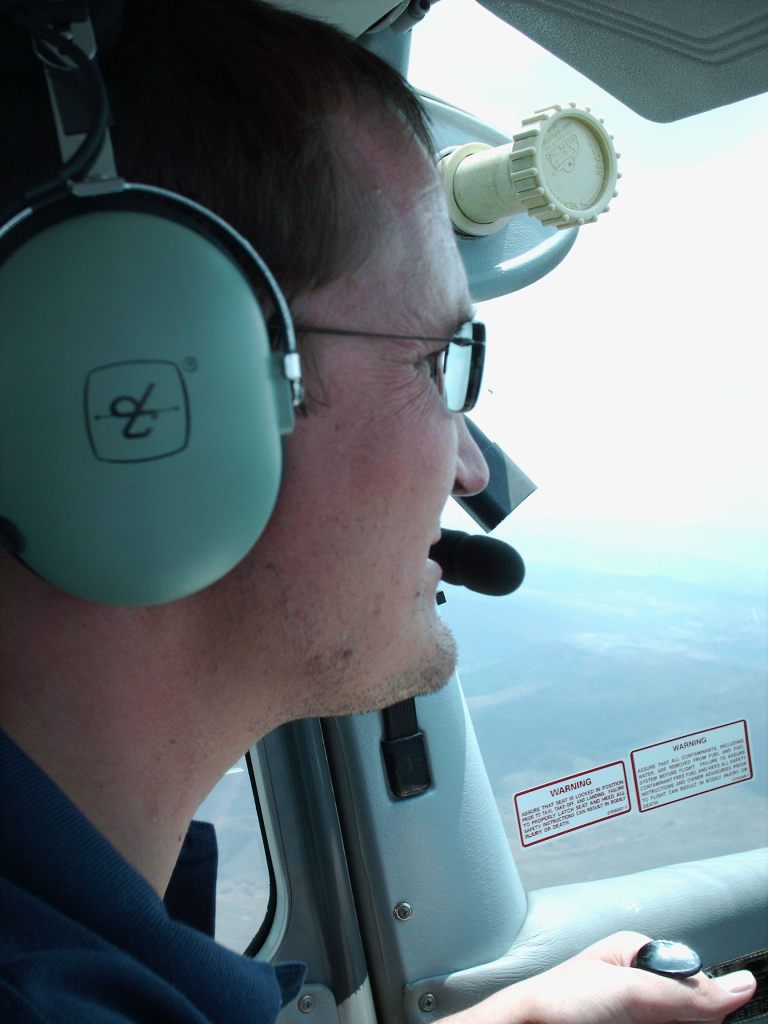
Skydiving Witbank 2002Advanced FreefallAll the gear and no ideaMy first rigIn the Cessna 210Francois doing his thingFlying in South AfricaPort Elizabeth about to land
In 2003 on my round the world trip, I decided to learn to fly in Port Elizabeth. I studied at Algoa Flying School. It took about five weeks and flying was done in Cessna 150s. The previous year, I had learned to skydive at Witbank Skydiving Club in Mpumulanga Province, South Africa. I continued to skydive there when I began working in Swaziland as it was only about a four hour drive. I haven’t flown myself since 2006 as it is so expensive. I stopped skydiving about the same time when I adopted my son as I didn’t have the time. I found the kind of people who skydived in South Africa very macho and there was a fair bit of racism at the club so I wasn’t sorry to stop going there.
Fluffy was a cat that I acquired when I was living in Hungary. I lived in Hungary for three years from 2008 whilst working as a maths and physics teacher in Bratislava. There were a number of feral cats that I used to feed in the village where I lived. One gave birth to a litter of kittens in my living room, and fluffy was the runt of the litter. She died in December 2018.
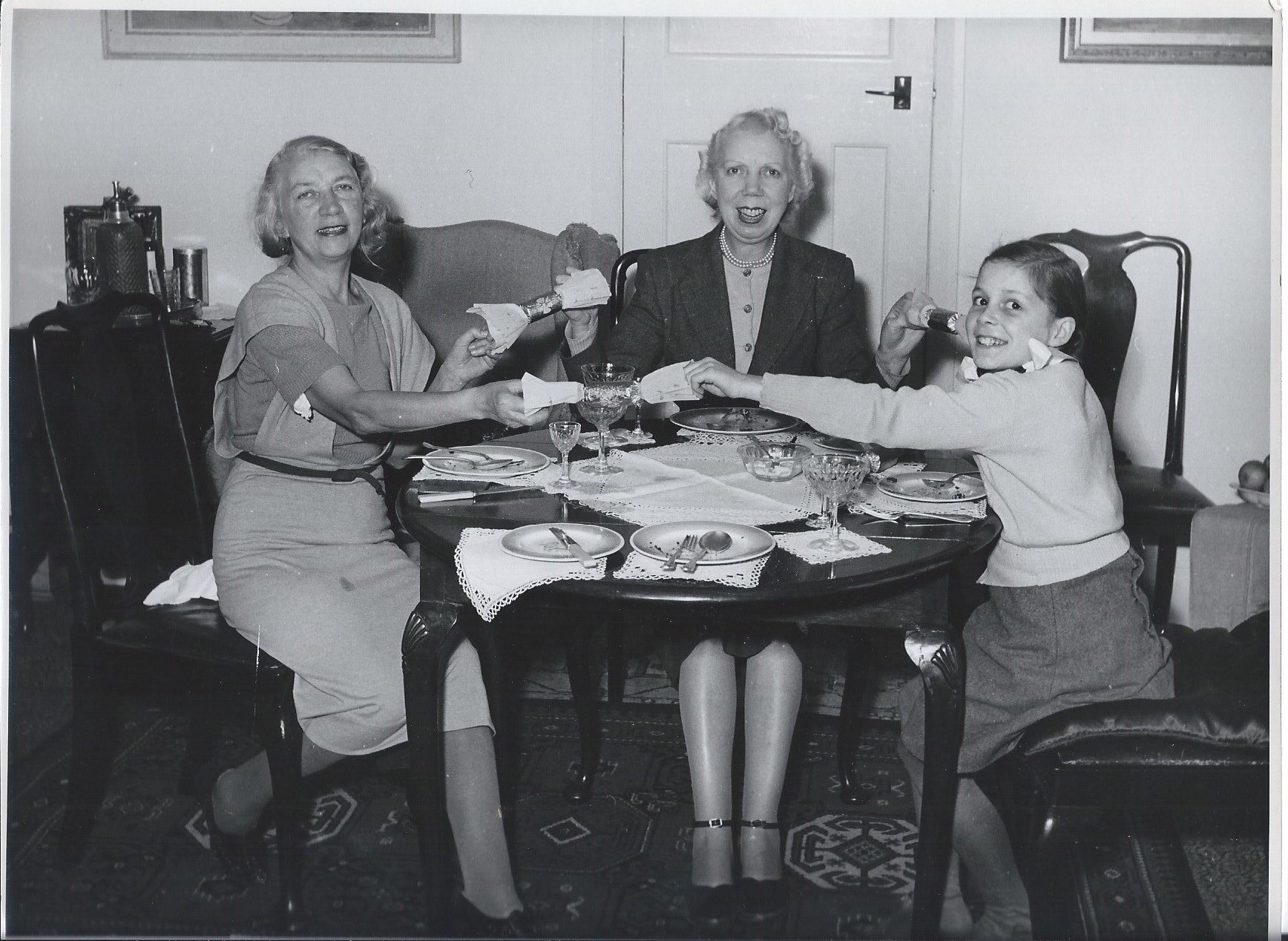
This photo was taken in about 1950, and shows my mother and her two aunts. This is probably taken in Slough where one of her aunts lived at the time. On the left is Edith and in the middle is Ada.
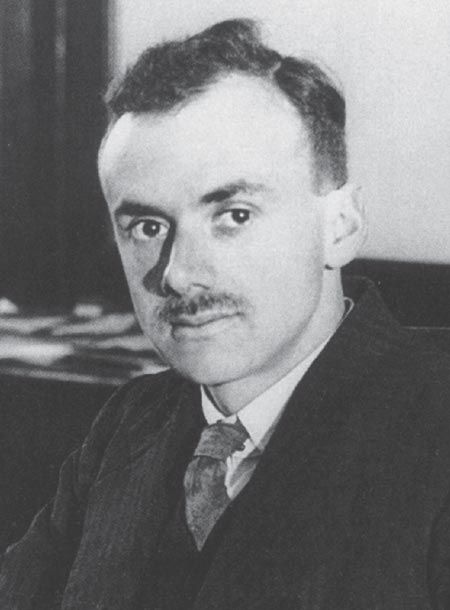
Some of these people are known for their academic brilliance and others for their bravery in standing up for what they believe is right. There is no particular order to the list that I present below. It is just as it comes.
Paul Erdős was a brilliant and eccentric Hungarian mathematician who had a long and productive career. He spent most of his adult life living out of a suitcase and worked ceaselessly. He was truly single-minded in his devotion to the subject.
Paul Erdös
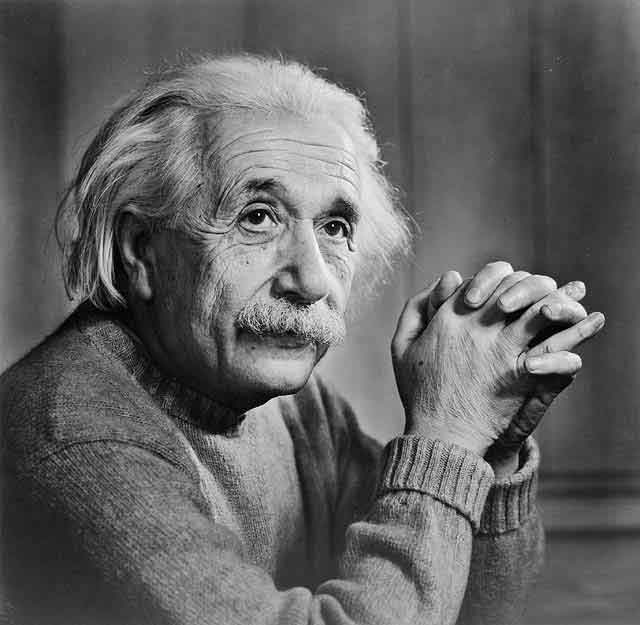
Albert Einstein revolutionised physics in the twentieth century. He was responsible for shaking up its foundations and introducing relativity. The idea behind special relativity theory is very simple. The laws of physics must be the same as seen by any observer in the universe. He was also a respected social commentator. He believed in compromise as the best approach to any problem.



















 Meanderings of a peripatetic maths teacher